Experts Say Regional Rainfall Patterns Will Decide Crop Performance More Than Overall Monsoon Deficit
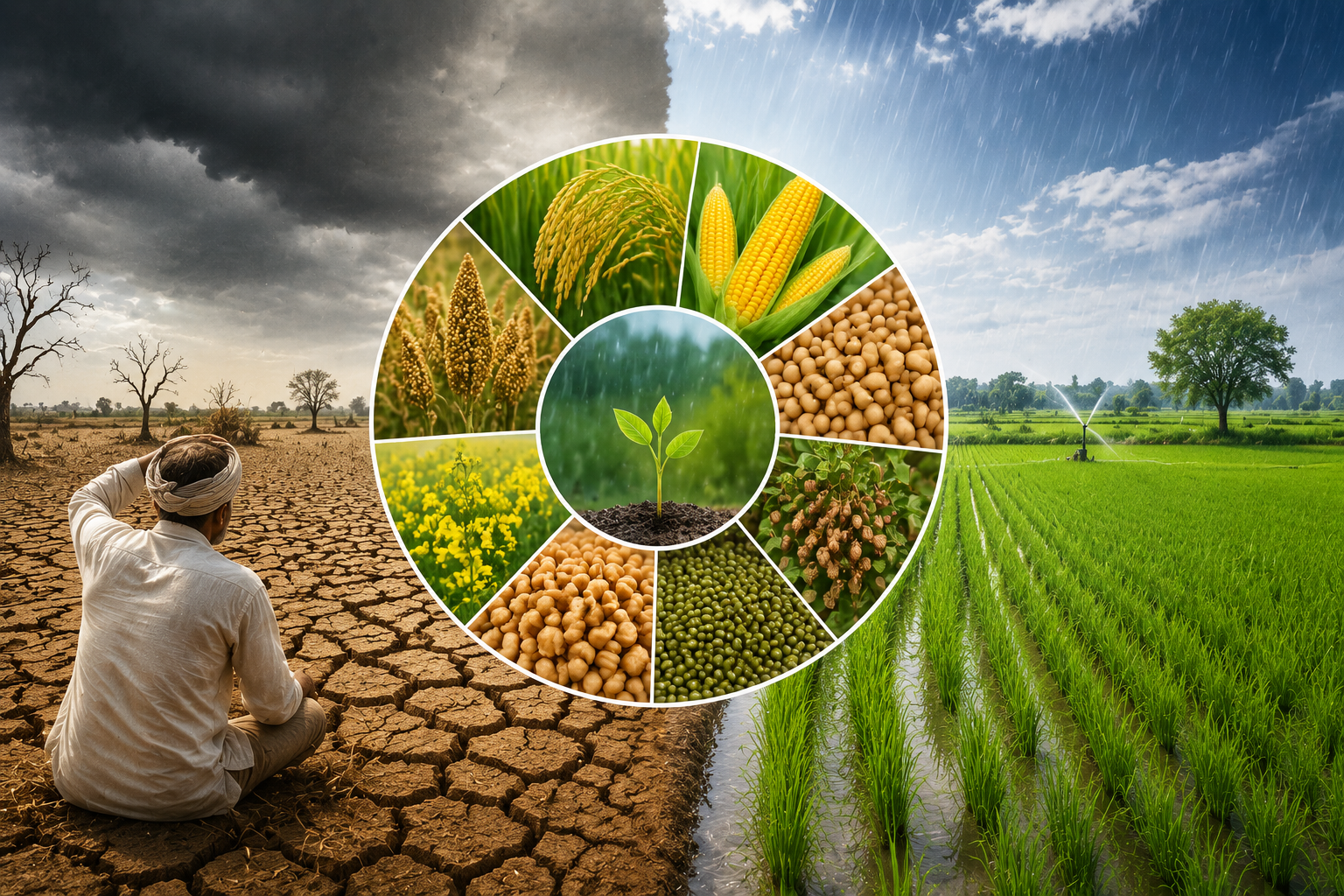
As India enters the crucial phase of the southwest monsoon, concerns are growing over the possible impact of El Niño on agricultural production. While a weak monsoon is often associated with lower crop yields, agricultural experts believe the actual impact this year will depend largely on where and when rainfall occurs, rather than simply the total amount of rainfall received during the season.
Contrary to conventional belief, crops that require large quantities of water—such as paddy and maize—may not necessarily suffer the greatest losses. Instead, oilseeds, pulses and several rain-fed crops could face greater challenges if rainfall remains deficient across central and western India, where irrigation coverage is relatively low.
The evolving weather situation is being closely monitored by farmers, policymakers, commodity traders and investors, as the performance of the kharif season has significant implications for food inflation, rural incomes and overall economic growth.
Understanding El Niño and Its Impact on India
El Niño is a naturally occurring climate phenomenon caused by the warming of sea surface temperatures in the central and eastern Pacific Ocean.
Historically, El Niño has often been linked with weaker southwest monsoon rainfall over the Indian subcontinent. Although every El Niño event does not produce the same outcome, it generally increases the likelihood of below-normal rainfall and uneven precipitation across different regions.
For an agriculture-dependent country like India, where nearly half of the cultivated land still relies on rainfall, even moderate disruptions in monsoon patterns can influence crop production and farm incomes.
Rainfall Distribution More Important Than Rainfall Quantity
Experts believe one of the biggest misconceptions about weak monsoons is that all crops are affected equally.
In reality, the geographical distribution and timing of rainfall play a far more important role than seasonal rainfall averages.
If eastern and southern India receive timely and adequate rainfall during critical sowing and transplantation periods, crops such as paddy may perform relatively well despite an overall rainfall deficit.
However, prolonged dry conditions across central and western India could significantly affect crops grown largely under rain-fed conditions.
Therefore, localized rainfall patterns may determine the overall agricultural outcome this season.
Why Paddy May Not Be the Worst Affected
Paddy is generally considered India's most water-intensive crop.
However, much of India's rice cultivation takes place in states such as West Bengal, Odisha, Bihar, Chhattisgarh, Andhra Pradesh, Telangana and Tamil Nadu, where irrigation facilities and monsoon reliability are comparatively better.
Large irrigation networks, reservoirs and canal systems provide additional support during periods of rainfall deficiency.
As a result, even under an El Niño scenario, paddy production could remain relatively stable if rainfall remains favourable across these key producing regions.
Oilseeds Could Face the Biggest Challenge
Agricultural experts believe oilseed crops may be among the most vulnerable this year.
Major soybean and groundnut-producing states—including Madhya Pradesh, Maharashtra, Rajasthan and Gujarat—depend heavily on monsoon rainfall and have lower irrigation coverage compared with eastern India.
Soybean, in particular, requires adequate soil moisture during sowing and early vegetative growth.
Delayed rainfall or prolonged dry spells could reduce acreage, lower productivity and increase India's dependence on imported edible oils.
Any significant decline in domestic oilseed production may also contribute to higher edible oil prices and broader food inflation.
Pulses Also Under Pressure
Pulses represent another crop category facing elevated weather-related risks.
Major pulse varieties such as tur (arhar), urad and moong are predominantly cultivated in rain-fed areas with limited irrigation infrastructure.
Moisture stress during flowering and pod development can significantly reduce yields.
Given India's already tight supply-demand balance in pulses, any production shortfall could increase imports and place upward pressure on retail prices.
The performance of the pulse crop will therefore be closely watched by both policymakers and commodity markets.
Maize and Millets Depend on Timely Rainfall
Although maize requires substantial water, experts note that its sensitivity depends largely on rainfall timing rather than total seasonal precipitation.
If adequate rainfall occurs during sowing and early crop establishment, maize can withstand moderate rainfall deficiencies later in the season.
Similarly, coarse cereals and millets are relatively drought-resistant but remain vulnerable to extended dry spells during flowering and grain formation.
The government's increasing emphasis on millets may help improve resilience in drought-prone regions over the long term.
Irrigation Coverage Determines Crop Resilience
One of the key differentiating factors between crop performance under weak monsoon conditions is irrigation availability.
Regions with extensive irrigation infrastructure—including canals, tube wells and reservoirs—are better positioned to withstand temporary rainfall shortages.
Rain-fed districts, however, remain heavily dependent on timely monsoon rainfall for successful crop establishment and development.
Expanding irrigation coverage continues to be one of India's most important long-term strategies for reducing climate-related agricultural risks.
Implications for Food Inflation and the Economy
The performance of the kharif season has a direct bearing on India's economy.
Lower agricultural production can affect:
-
Food inflation
-
Rural household incomes
-
Consumer spending
-
Government procurement
-
Agricultural exports
-
Edible oil imports
-
Monetary policy decisions
Since agriculture supports a large share of India's population, monsoon performance remains one of the country's most closely monitored economic indicators.
Government Monitoring and Farmer Preparedness
The Central Government and state agricultural departments are closely tracking rainfall distribution, reservoir levels and weekly sowing progress.
Authorities are encouraging farmers to adopt climate-resilient practices such as:
-
Drought-tolerant crop varieties
-
Efficient water management
-
Crop diversification
-
Improved irrigation techniques
-
Timely agronomic advisories
These measures are intended to reduce weather-related production risks while improving long-term agricultural sustainability.
Outlook
Although El Niño has increased uncertainty surrounding this year's kharif season, experts caution against drawing premature conclusions.
The eventual outcome will depend largely on rainfall distribution during the crucial months of July and August, when most crop establishment and vegetative growth occur.
If monsoon activity strengthens across major agricultural regions, production losses could remain limited. However, prolonged rainfall deficits in central and western India may disproportionately affect oilseeds and pulses, potentially influencing food prices, rural demand and overall economic growth.
For policymakers, investors and commodity markets, the coming weeks will be critical in determining how India's agricultural sector navigates another challenging monsoon season and whether timely rainfall can mitigate the risks posed by El Niño.