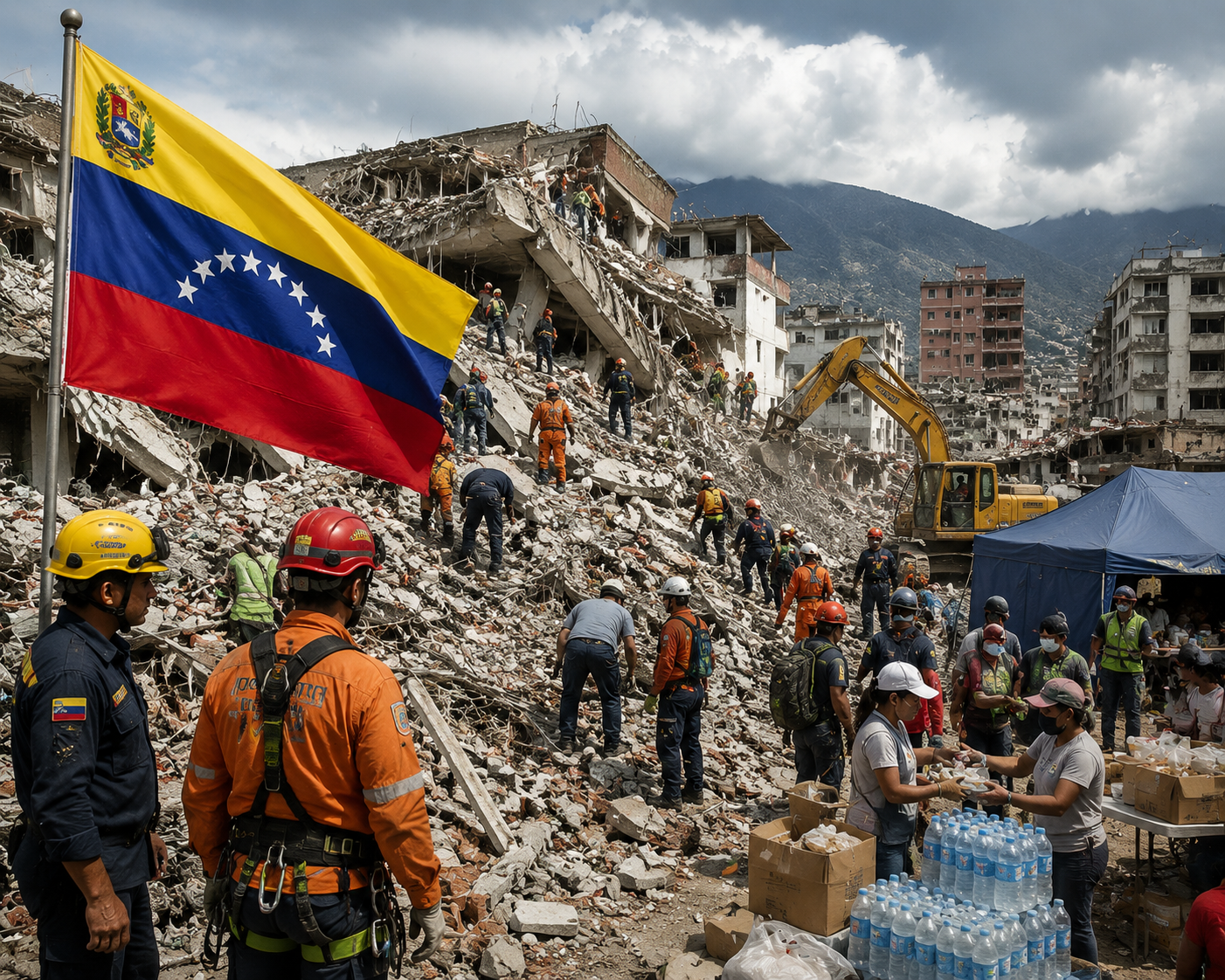
Aftershocks Continue to Shake Disaster Zone While Thousands Remain Homeless and Authorities Race Against Time to Support Survivors
Venezuela is entering a critical phase of disaster response as rescue teams continue searching through collapsed buildings following last week's devastating twin earthquakes, while humanitarian agencies warn that the country now faces a prolonged recovery challenge. With the crucial rescue window rapidly closing, the focus is gradually shifting from emergency search operations to providing shelter, healthcare and essential supplies to thousands of displaced residents.
The powerful back-to-back earthquakes caused widespread destruction across several regions, leaving homes, public infrastructure and commercial buildings severely damaged. Although emergency workers remain hopeful of finding survivors, experts note that the likelihood of successful rescues declines significantly after the first few days following a major seismic event.
The situation became more challenging after a 4.6-magnitude aftershock struck the disaster-hit northern state of La Guaira, raising fresh concerns about structural safety and complicating ongoing rescue efforts.
Search for Survivors Continues Despite Narrowing Rescue Window
Emergency response teams, military personnel, firefighters and volunteers remain engaged in intensive search operations across affected areas.
Rescue efforts currently involve:
- Removing debris from collapsed buildings.
- Using specialised equipment to detect trapped individuals.
- Conducting structural assessments before entering damaged buildings.
- Providing emergency medical treatment to rescued victims.
- Coordinating rescue operations with local authorities.
While the first 72 hours following an earthquake are generally regarded as the most critical period for locating survivors, rescue teams continue operations wherever there is a possibility of finding people alive.
Aftershock Adds Fresh Challenges
A 4.6-magnitude aftershock rattled the affected region, creating additional risks for both rescue personnel and residents.
Aftershocks can significantly complicate recovery efforts by:
- Triggering further building collapses.
- Weakening already damaged structures.
- Delaying search operations.
- Increasing safety risks for emergency workers.
- Heightening fear among displaced communities.
Seismologists note that aftershocks are common following major earthquakes and may continue for days or even weeks depending on geological conditions.
Humanitarian Crisis Deepens
As rescue efforts gradually transition into relief operations, humanitarian organisations are increasingly concerned about the long-term impact of the disaster.
Thousands of families have reportedly lost their homes and are now dependent on emergency assistance.
Immediate humanitarian priorities include:
- Temporary shelter.
- Safe drinking water.
- Food supplies.
- Medical assistance.
- Sanitation facilities.
- Essential medicines.
- Psychological counselling.
Relief agencies warn that rebuilding communities could take several years.
Pressure on Government Resources
The disaster has placed considerable strain on Venezuela's emergency response capabilities.
Managing a large-scale natural disaster requires coordinated efforts involving:
- National disaster management agencies.
- Healthcare providers.
- Local governments.
- Civil defence authorities.
- International humanitarian organisations.
- Community volunteers.
With thousands requiring assistance simultaneously, efficient coordination remains essential for ensuring timely delivery of relief.
Infrastructure Suffers Extensive Damage
The earthquakes have caused significant damage to critical infrastructure across affected regions.
Reports indicate disruptions to:
- Residential housing.
- Roads and bridges.
- Electricity networks.
- Water supply systems.
- Communication infrastructure.
- Public buildings.
- Healthcare facilities.
Restoring these essential services will be crucial for accelerating recovery and supporting displaced populations.
Importance of the First 72 Hours
Disaster management experts consistently highlight the first three days after a major earthquake as the most important period for rescue operations.
During this timeframe:
- Survival rates are generally highest.
- Rescue teams prioritise collapsed structures.
- Medical intervention can save critically injured victims.
- Access to food, water and breathable air significantly improves survival chances.
Although rescues become increasingly difficult over time, successful recoveries have occasionally occurred well beyond the initial rescue window.
Communities Unite in Relief Efforts
Alongside official rescue agencies, local communities have played a vital role in supporting disaster response.
Volunteers have been assisting by:
- Distributing food and drinking water.
- Providing temporary accommodation.
- Helping remove debris.
- Supporting elderly and vulnerable residents.
- Assisting humanitarian organisations.
Community participation continues to strengthen relief efforts during the ongoing emergency.
Economic Impact Expected to Be Significant
Beyond the humanitarian consequences, the earthquakes are expected to have a substantial economic impact.
Potential challenges include:
- Reconstruction costs.
- Loss of residential property.
- Business disruptions.
- Infrastructure rebuilding.
- Reduced local economic activity.
- Increased public expenditure.
Recovery programmes will require considerable financial resources over the coming years.
Long Road to Reconstruction
Once emergency operations conclude, authorities will face the enormous task of rebuilding affected communities.
Reconstruction priorities are expected to include:
- Housing redevelopment.
- Repairing transportation infrastructure.
- Restoring public utilities.
- Rebuilding schools and hospitals.
- Strengthening disaster resilience.
Experts stress that reconstruction provides an opportunity to build safer, more earthquake-resistant infrastructure capable of reducing future disaster risks.
International Humanitarian Assistance May Expand
As assessments of the disaster continue, international humanitarian organisations are expected to evaluate additional support requirements.
Potential assistance could include:
- Emergency funding.
- Medical teams.
- Relief supplies.
- Technical expertise.
- Reconstruction support.
- Disaster risk management assistance.
International cooperation often plays a critical role in accelerating recovery after major natural disasters.
Strengthening Disaster Preparedness
The tragedy also underscores the importance of investing in disaster preparedness and resilient infrastructure.
Key lessons include the need for:
- Improved building standards.
- Early warning systems.
- Emergency response planning.
- Public awareness programmes.
- Urban resilience initiatives.
- Stronger coordination among emergency agencies.
Such measures can significantly reduce both human and economic losses during future disasters.
Outlook
Rescue operations are expected to continue as long as authorities believe there is a possibility of finding survivors. In the weeks ahead, attention will increasingly shift toward humanitarian relief, infrastructure restoration and long-term reconstruction as Venezuela begins the challenging process of rebuilding affected communities.