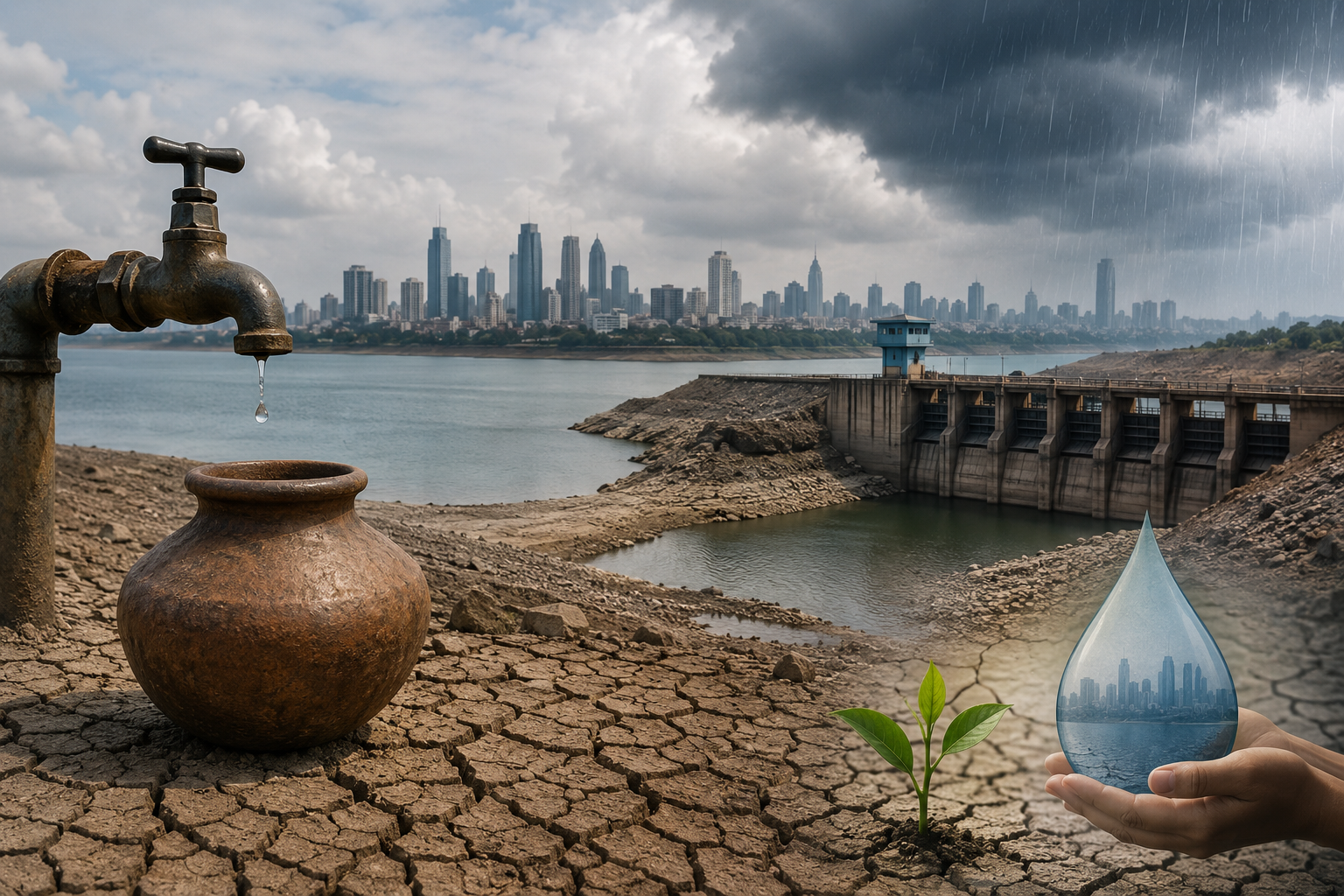
BMC Intensifies Water Conservation Measures While Awaiting Strong Monsoon Rains to Replenish Key Reservoirs
Mumbai is facing mounting concerns over its water supply after the combined storage level in the city's seven drinking water reservoirs dropped to less than 7% of total live capacity. The sharp decline, caused by a delayed southwest monsoon and below-normal rainfall during the early part of the season, has prompted the Brihanmumbai Municipal Corporation (BMC) to strengthen water conservation measures and closely monitor reservoir levels.
According to official data released by the BMC's Hydraulic Engineer's Department, the reservoirs together held approximately 100.28 billion litres of water, representing only 6.93% of their total usable storage capacity. Although reservoir levels remain marginally better than the corresponding period in 2024, they are significantly lower than the 39.5% storage recorded during the same period last year.
Seven Reservoirs Sustain Mumbai's Daily Water Needs
Mumbai depends entirely on seven major reservoirs for its drinking water supply:
- Bhatsa
- Upper Vaitarna
- Middle Vaitarna
- Modak Sagar
- Tansa
- Tulsi
- Vihar
Together, these reservoirs have a combined live storage capacity of nearly 1.45 trillion litres and provide approximately 4,000 million litres of potable water every day to Mumbai and several adjoining metropolitan areas.
Given the city's large population and continuous demand, maintaining adequate reservoir storage before the end of the monsoon season remains critical.
Delayed Southwest Monsoon Impacts Reservoir Recharge
The delayed arrival of the southwest monsoon has emerged as the primary reason behind the low reservoir levels.
Mumbai generally receives monsoon rains around June 10, allowing reservoirs to begin refilling after the summer season. This year, however, the monsoon arrived later than usual, while rainfall during the initial weeks remained below expectations across several reservoir catchment areas.
Meteorological forecasts have also pointed to the possibility of developing El Niño conditions later in the year, raising concerns that rainfall distribution could remain uneven during the remainder of the monsoon season.
Storage Levels Vary Across Reservoirs
Water availability differs considerably among the seven reservoirs.
Among the major reservoirs:
- Vihar currently holds the highest percentage of live storage.
- Tulsi has benefited from relatively stronger rainfall.
- Modak Sagar has also recorded gradual improvement following recent showers.
In contrast, Upper Vaitarna continues to remain below its Lower Drawdown Level (LDL), meaning usable live storage above the minimum operating level has been exhausted. Authorities are currently utilising water stored below the LDL to help maintain the city's daily water supply.
Recent Rainfall Brings Limited Relief
Heavy rainfall over the past few days has offered some encouragement, particularly across reservoir catchment regions.
Significant rainfall has been recorded around:
- Tulsi
- Vihar
- Modak Sagar
- Bhandup Complex
While these rains have slowed the depletion of water reserves, officials believe that consistent and widespread rainfall over the coming weeks will be necessary to substantially improve storage levels before peak summer demand returns.
Water Cuts Already in Effect
To conserve available resources, the Brihanmumbai Municipal Corporation has already implemented phased water restrictions.
The measures include:
- A 10% reduction in water supply across Mumbai from May 15.
- A 20% cut in water supply for industrial and commercial users from June 17.
- Enhanced monitoring of reservoir inflows.
- Strict implementation of water management guidelines issued by Maharashtra's Water Resources Department.
Officials have appealed to residents, commercial establishments and industries to minimise water wastage until reservoir levels improve.
Climate Variability Highlights Long-Term Challenges
The recurring decline in reservoir storage has once again highlighted Mumbai's growing vulnerability to changing weather patterns.
Experts believe increasing climate variability, delayed monsoon onset and uneven rainfall distribution are making urban water management more challenging. Alongside infrastructure upgrades, greater emphasis on rainwater harvesting, wastewater recycling, leak reduction and efficient distribution systems will be essential to strengthen the city's long-term water security.
Rapid urbanisation and rising demand are expected to further increase pressure on available freshwater resources in the coming years.
Outlook
The next few weeks will play a decisive role in determining Mumbai's water situation for the remainder of the year. If the southwest monsoon gathers momentum and delivers widespread rainfall across reservoir catchments, storage levels could recover significantly, reducing the need for stricter water rationing.
However, if rainfall continues to remain below normal, civic authorities may be compelled to extend existing water cuts or introduce additional conservation measures to ensure uninterrupted drinking water supply. Until then, prudent water usage by households, businesses and industries will remain critical in helping the city manage its available reserves effectively.