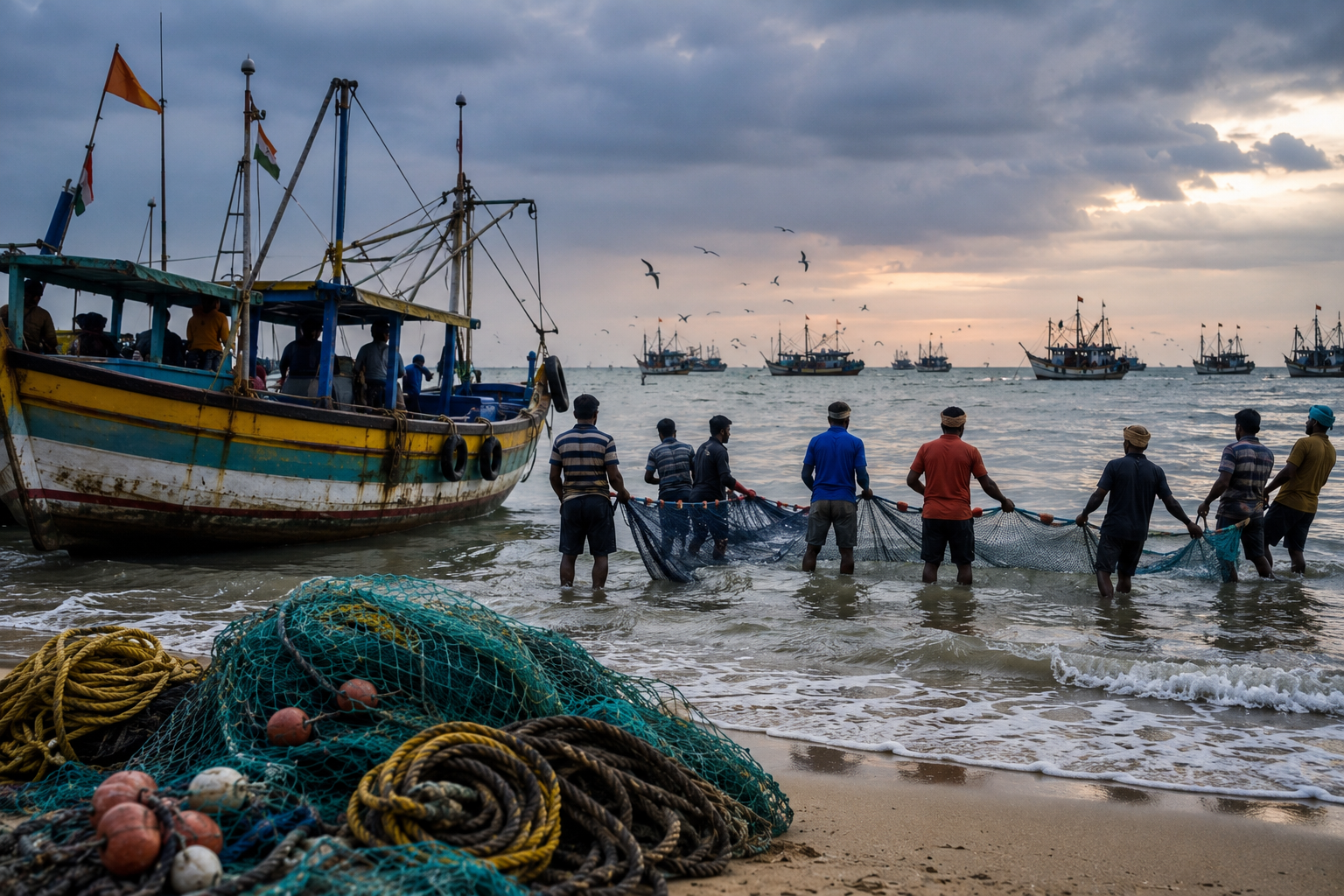
Delayed southwest monsoon prompts state to prolong restrictions on mechanised fishing vessels, aiming to safeguard fish breeding, strengthen marine biodiversity, and ensure long-term sustainability of the fisheries sector
The Maharashtra government has extended the annual monsoon fishing ban on mechanised and motorised fishing boats until August 15, citing the delayed onset of the southwest monsoon and the need to protect marine resources during the critical breeding season. The decision is expected to support fish stock regeneration, preserve marine biodiversity, and strengthen the long-term sustainability of the state's fishing industry.
Announcing the extension in the Maharashtra Legislative Assembly, Fisheries Minister Nitesh Rane said the revised timeline follows a government order issued after assessing the impact of the delayed monsoon on marine ecosystems. The move extends the Centre's original fishing ban, which was applicable from June 1 to July 31 along India's western coastline.
Fishing Ban Extended to Support Marine Breeding Season
Seasonal fishing restrictions are imposed every year to prevent large-scale commercial fishing during the spawning period of several marine species. With the southwest monsoon arriving later than usual this year, authorities determined that extending the ban would provide fish populations additional time to complete their breeding cycle.
Under the revised order, mechanised and motorised fishing vessels will remain prohibited from operating in Maharashtra's coastal waters until August 15.
Officials believe the extension will contribute to healthier fish populations and improve future fish catches once commercial fishing resumes.
Sustainable Fisheries Remain Government Priority
The extension reflects Maharashtra's broader commitment to sustainable fisheries management.
According to the Fisheries Department, protecting breeding grounds during the monsoon season is essential for maintaining ecological balance and ensuring the long-term availability of commercially important fish species.
By reducing fishing pressure during reproduction, authorities aim to preserve marine biodiversity while securing future livelihoods for thousands of fishermen who depend on healthy fish stocks.
Delayed Monsoon Influences Marine Conservation Measures
The southwest monsoon plays a crucial role in shaping marine ecosystems along India's western coastline.
This year's delayed onset has affected ocean temperatures, water currents, and breeding cycles of several fish species. Experts note that such climatic variations require flexible management strategies rather than relying solely on fixed seasonal schedules.
The government's decision reflects an adaptive approach that takes changing environmental conditions into account while framing conservation policies.
Importance of Maharashtra's Fisheries Sector
Maharashtra is among India's leading marine fishing states, with an extensive coastline supporting thousands of fishing families, seafood processing units, exporters, and allied industries.
The fisheries sector contributes significantly to employment generation, coastal livelihoods, food security, and export earnings.
Although seasonal bans temporarily affect commercial fishing activity, they are widely regarded as essential for maintaining long-term productivity and preventing overexploitation of marine resources.
Marine Biodiversity Benefits from Seasonal Restrictions
Marine scientists have consistently supported annual fishing bans as an effective conservation tool.
During the monsoon months, many commercially valuable fish species migrate closer to coastal waters for spawning. Restricting mechanised fishing during this period reduces disturbance, protects juvenile fish, and allows marine populations to recover naturally.
Healthy marine ecosystems also support broader biodiversity by maintaining ecological balance across coastal habitats.
Climate Change Adds New Challenges
Climate change is increasingly influencing India's marine environment through changing rainfall patterns, rising sea temperatures, ocean acidification, and shifting fish migration routes.
These environmental changes are affecting breeding seasons, fish availability, and the overall productivity of coastal fisheries.
Experts believe adaptive fisheries management—including flexible seasonal bans, scientific monitoring, and ecosystem-based conservation—will become increasingly important as climate-related challenges intensify.
Support Measures for Fishing Communities
Recognising the temporary impact of seasonal restrictions, governments often implement welfare programmes to assist fishing communities during the ban period.
These initiatives may include financial assistance, livelihood support schemes, infrastructure development, insurance coverage, skill training, and improvements in cold storage, fish processing, and marketing facilities.
Strengthening the resilience of coastal communities remains an important component of sustainable fisheries policy.
Blue Economy and Long-Term Growth
The extension also aligns with India's broader Blue Economy strategy, which seeks to balance economic development with marine conservation.
Sustainable fisheries, coastal tourism, maritime infrastructure, renewable ocean energy, aquaculture, and marine biotechnology are emerging as key pillars of the country's ocean-based economic growth.
Protecting fish breeding grounds through scientifically managed seasonal bans supports both environmental sustainability and long-term economic development.
Outlook
The Maharashtra government's decision to extend the monsoon fishing ban until August 15 highlights the growing importance of climate-responsive fisheries management. While the temporary restrictions may reduce fishing activity in the short term, they are expected to strengthen fish populations, improve future catches, and safeguard marine biodiversity.
As environmental conditions continue to evolve, policymakers are likely to place greater emphasis on scientific conservation measures that support both ecological sustainability and the long-term prosperity of India's fisheries sector.