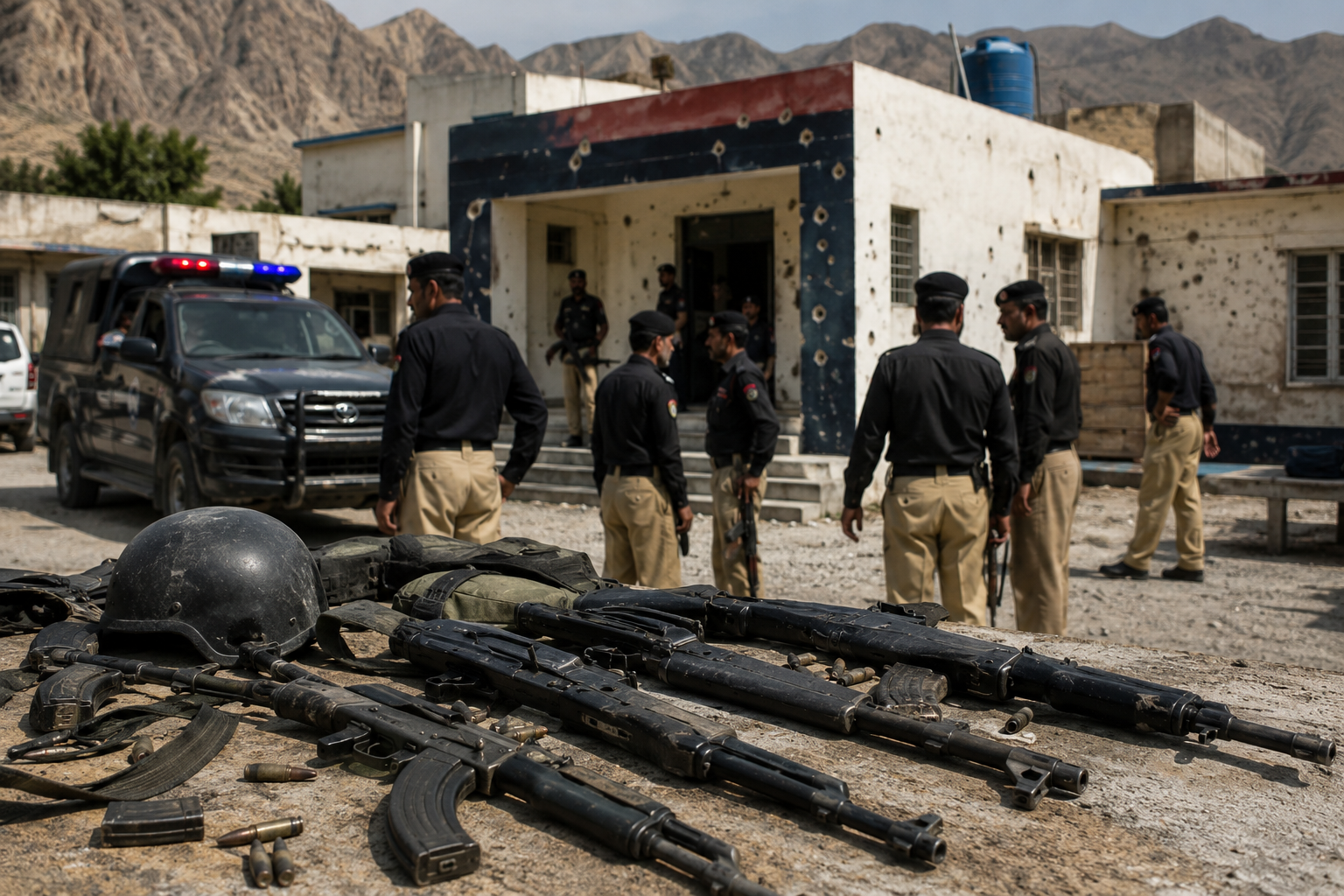
Internal inquiry finds officers failed to resist armed attackers who looted weapons and ammunition, raising fresh concerns over security preparedness in Balochistan
Pakistan has dismissed 14 police personnel in the country's restive Balochistan province after an internal investigation found they failed to resist an armed militant assault on a police station in the strategic port city of Gwadar. The disciplinary action comes after suspected militants successfully overpowered police officers, looted a large cache of official weapons and ammunition, and escaped without facing any resistance.
The incident has once again highlighted the fragile security situation in Balochistan and intensified scrutiny of law enforcement preparedness in one of Pakistan's most strategically important regions.
Inquiry Reveals Serious Operational Negligence
The investigation was led by Gwadar Superintendent of Police (Security) Abdul Waheed, who chaired the inquiry committee tasked with examining the circumstances surrounding the June 7 attack.
According to the committee's findings, the 14 dismissed officials—including sub-inspectors and other police personnel—were found guilty of gross negligence, corruption, irresponsible conduct, and violations of established security protocols.
Officials concluded that despite being stationed at the police facility, the personnel failed to offer any meaningful resistance when unidentified armed men launched the assault.
The inquiry described the officers' actions as a serious breach of professional responsibility, prompting immediate disciplinary measures.
Militants Escape with Government Weapons
The attack reportedly occurred during the night when heavily armed assailants entered the police station, overpowered security personnel, and seized government-issued firearms, ammunition, and other official equipment before fleeing the area.
Authorities stated that the attackers completed the operation without encountering armed resistance, raising concerns over the effectiveness of security arrangements at police installations located in high-risk areas.
Security agencies have launched efforts to recover the stolen weapons and identify those involved in planning and executing the attack.
Gwadar's Strategic Importance Raises Security Concerns
Gwadar occupies a critical position on Pakistan's southwestern coast and is home to the country's deep-water port overlooking the Arabian Sea. The city serves as a major hub for regional trade and infrastructure development and holds strategic importance due to its proximity to international shipping routes.
Because of its economic and geopolitical significance, security agencies maintain a strong presence in the region. Any successful attack on government security infrastructure is therefore viewed as a significant operational setback.
The latest incident is expected to trigger a review of security protocols at police stations and other sensitive government facilities across the province.
Balochistan Continues to Face Militant Violence
Balochistan has experienced decades of insurgency, militant attacks, and security challenges. Law enforcement agencies, military installations, infrastructure projects, and government offices have frequently been targeted by armed groups operating in the region.
Authorities have repeatedly strengthened counterterrorism operations and increased security deployments, but the province continues to witness periodic attacks that expose vulnerabilities within local security systems.
The Gwadar incident highlights the ongoing challenges of maintaining law and order in strategically sensitive areas.
Accountability Measures Signal Tougher Discipline
The dismissal of the 14 officers demonstrates Pakistan's efforts to strengthen accountability within its police force following serious operational failures.
Security analysts believe that disciplinary action alone may not be sufficient unless accompanied by improved training, modern surveillance systems, intelligence sharing, and better-equipped personnel.
Strengthening emergency response procedures and ensuring strict compliance with operational protocols will be essential to reducing future security risks.
Broader Implications for National Security
The incident has also reignited discussions about the need for stronger institutional reforms within Pakistan's security apparatus.
Experts argue that police stations located in conflict-prone regions require enhanced physical protection, advanced monitoring systems, rapid-response capabilities, and continuous security audits to counter increasingly sophisticated militant threats.
Improved coordination between local police, intelligence agencies, and paramilitary forces is expected to become a key focus in future security planning.
Outlook
The dismissal of 14 police personnel following the Gwadar police station attack underscores the seriousness with which Pakistani authorities are addressing internal security failures. As investigations continue and efforts to recover the stolen weapons intensify, the incident is likely to prompt broader reforms aimed at improving operational readiness and strengthening the protection of critical security infrastructure.
With Gwadar remaining a strategically important city for Pakistan's economic and security interests, enhancing law enforcement capabilities and restoring public confidence will remain a priority for authorities in the months ahead.