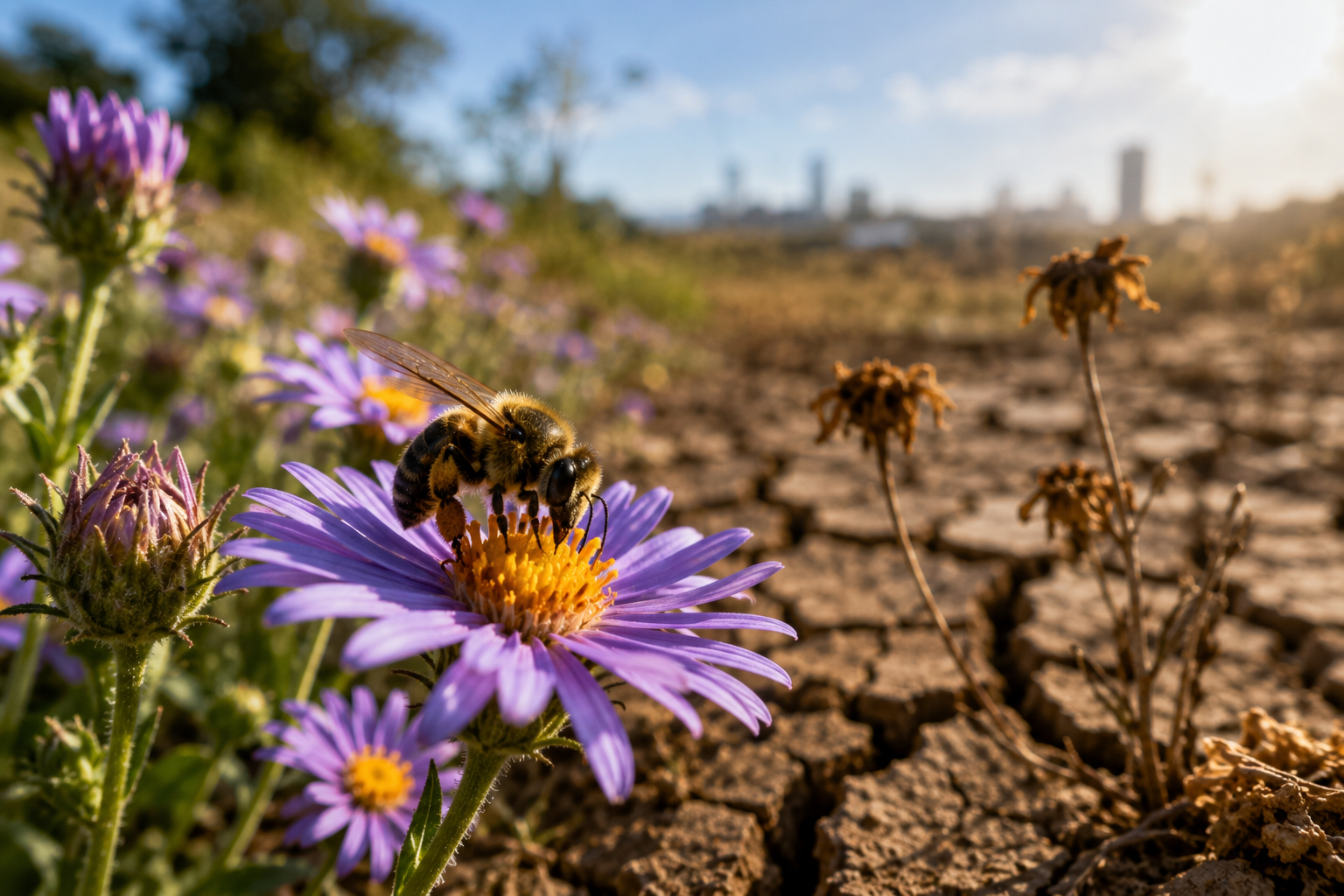
Scientists warn that changing pollen quality, shifting flowering seasons, and rising temperatures could disrupt bee populations, biodiversity, and global food production
Climate change is creating an unexpected challenge for one of nature's most important pollinators. While blooming flowers may appear plentiful, researchers say the nutritional value of pollen and nectar is changing, making it increasingly difficult for bees to obtain the balanced diet they need to survive.
A growing body of scientific research suggests that climate-driven changes in plant nutrition, combined with shifting flowering patterns and rising temperatures, are placing significant stress on bee populations—particularly solitary bees, which account for the vast majority of bee species worldwide.
Scientists believe that protecting pollinators will be critical not only for preserving biodiversity but also for safeguarding global agriculture and food security.
Most Bee Species Are Solitary, Not Hive-Dwellers
When people think of bees, honeybee colonies and large hives often come to mind. However, researchers point out that nearly 90% of the world's bee species are solitary, meaning they do not live in colonies or produce honey.
Each female solitary bee independently builds nests, collects pollen and nectar, and raises her offspring without assistance from worker bees. Because they lack the support systems found in honeybee colonies, solitary bees are often more vulnerable to environmental disturbances.
Despite receiving less public attention, these insects are responsible for pollinating thousands of wild plant species and numerous agricultural crops.
Nutrition Matters More Than the Number of Flowers
Scientists emphasize that an abundance of flowers does not automatically translate into healthy bee populations.
Just like humans require balanced nutrition, bees depend on the right combination of proteins, carbohydrates, lipids, amino acids, vitamins, and minerals. Pollen provides essential proteins and nutrients, while nectar serves as their primary energy source.
Different flowering plants produce pollen with varying nutritional compositions. Bees therefore need access to a diverse range of plant species throughout the year to meet their dietary requirements.
A landscape filled with flowers but lacking nutritional diversity may still leave bees undernourished.
Climate Change Is Altering Pollen and Nectar Quality
Rising global temperatures, changing rainfall patterns, increasing atmospheric carbon dioxide, prolonged droughts, and extreme weather events are affecting the nutritional composition of flowering plants.
Researchers suggest that climate stress can reduce protein concentrations in pollen while altering sugar levels and nutrient balances in nectar.
These subtle changes may significantly affect bee health by reducing reproductive success, weakening immune systems, slowing larval development, and shortening adult lifespans.
Scientists warn that these nutritional shifts could become more pronounced as climate change accelerates.
Flowering Seasons Are Becoming Less Predictable
Climate change is also disrupting the natural timing of flowering seasons.
Many plants are blooming earlier or later than usual due to changing weather conditions. If bees emerge when preferred flowers are no longer blooming—or before they have flowered—they may struggle to find sufficient food during critical stages of their life cycle.
This mismatch between flowering periods and bee activity, often referred to as a "phenological mismatch," increases the risk of starvation and population decline.
Rising Temperatures Increase Bees' Nutritional Needs
Climate change affects not only the food available to bees but also their own nutritional requirements.
Higher temperatures increase metabolic activity, meaning bees may require more energy and different nutrient combinations simply to maintain normal body functions.
Researchers describe this challenge as "moving nutritional goalposts"—both the nutritional quality of available food and the bees' dietary needs are changing simultaneously.
As a result, even landscapes that previously supported healthy bee populations may no longer provide adequate nutrition.
Why Pollinators Matter to the Global Economy
Pollinators contribute directly to the production of many fruits, vegetables, nuts, seeds, spices, coffee, and oilseed crops that form a significant part of the global food supply.
According to international estimates, pollinators support agricultural production worth hundreds of billions of dollars annually. Healthy bee populations help improve crop yields, enhance food quality, and support rural livelihoods.
Any sustained decline in pollinator numbers could increase farming costs, reduce crop productivity, and affect food availability across global markets.
Biodiversity Faces Growing Pressure
The ecological importance of bees extends far beyond agriculture.
Thousands of wild flowering plants depend on pollinators for reproduction. These plants, in turn, provide food and shelter for birds, mammals, insects, and countless other species.
Declining bee populations could trigger cascading effects throughout ecosystems, reducing biodiversity and weakening the resilience of forests, grasslands, and natural habitats.
Scientists warn that protecting pollinators is essential for maintaining healthy ecosystems capable of adapting to future climate challenges.
Conservation Requires Diverse Habitats
Researchers recommend increasing the diversity of flowering plants rather than simply planting more flowers.
Conservation efforts should focus on:
-
Expanding native flowering plant habitats.
-
Protecting natural grasslands and forests.
-
Reducing excessive pesticide use.
-
Restoring pollinator corridors.
-
Promoting year-round flowering species.
-
Encouraging sustainable agricultural practices.
Urban gardens, parks, roadside vegetation, and agricultural landscapes can all contribute to healthier bee populations when managed with pollinator-friendly practices.
Outlook
As climate change continues to reshape ecosystems worldwide, scientists are urging greater attention to the hidden nutritional challenges facing pollinators. Protecting bees will require more than preserving flower abundance—it will depend on maintaining diverse, nutrient-rich habitats capable of supporting their changing dietary needs.
With bees playing a vital role in agriculture, biodiversity, and ecosystem stability, ensuring their long-term survival will be essential for strengthening food security, supporting sustainable farming, and building resilience against future environmental change.