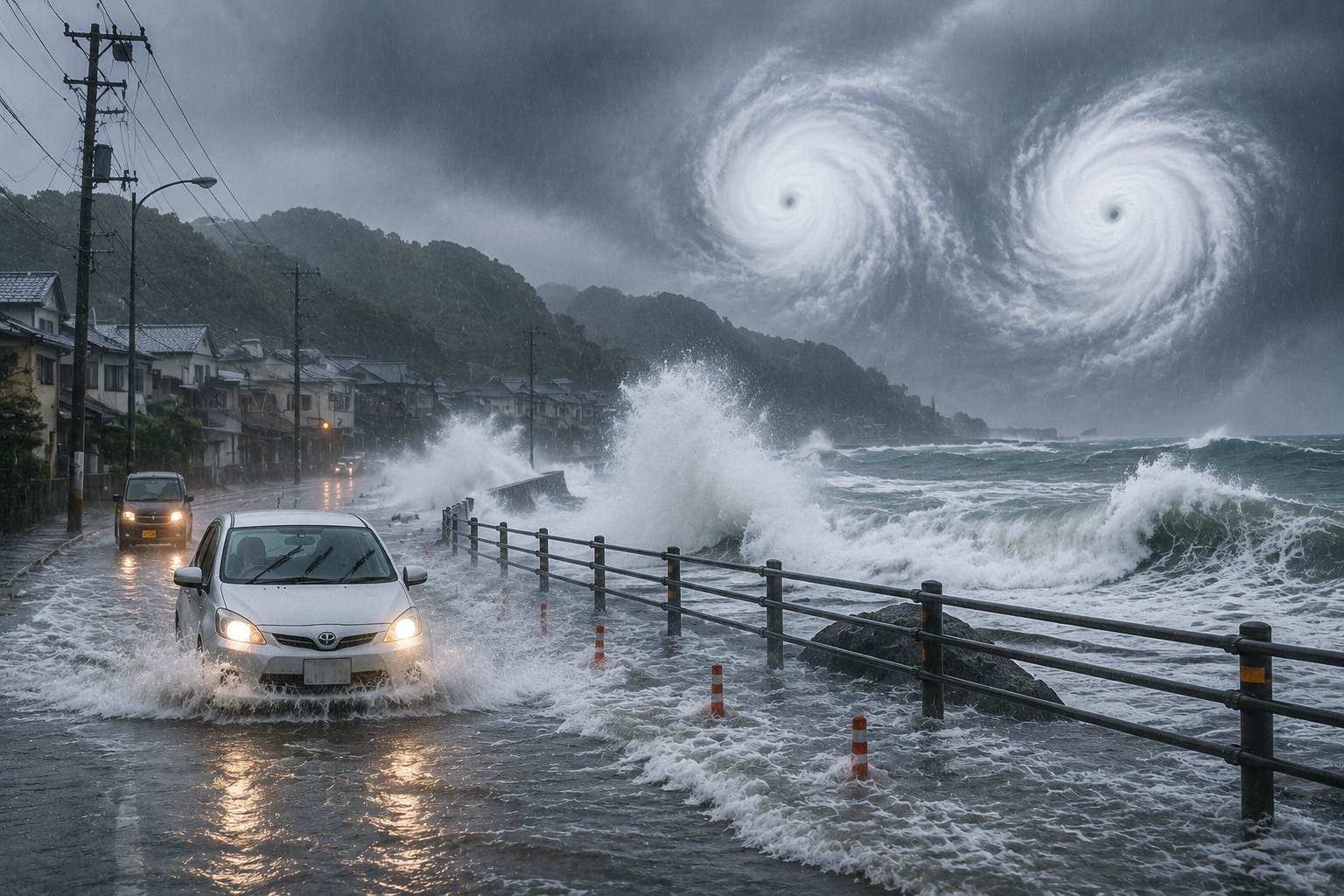
Mekkhala and Higos intensify seasonal rain front; flooding risks rise across western and central Japan
Japan is facing a fresh wave of severe weather as two tropical storms—Mekkhala and Higos—move toward its main islands, strengthening an already stalled seasonal rain front and triggering widespread heavy rainfall, flooding, and disruption concerns.
The Japan Meteorological Agency (Japan Meteorological Agency) has warned that both systems could converge toward the Tokyo metropolitan region by Saturday, significantly increasing the risk of prolonged downpours.
Storm Mekkhala and Higos Drive Dual Weather Threat
Meteorological agencies reported that the two tropical systems are moving in close proximity, amplifying rainfall intensity across affected regions.
Key developments:
-
Storm Mekkhala located off Amami Island, moving northeast
-
Storm Higos tracking nearby in a parallel path
-
Combined systems intensifying moisture flow into mainland Japan
-
Seasonal rain front becoming more active and stationary
This rare overlap of weather systems is expected to extend rainfall duration and widen the impact zone.
Western Japan Faces Early Flooding and Disruption
Heavy rainfall has already begun affecting western parts of Japan, where water accumulation and flooding risks are rising.
Reported impacts include:
-
Localized flooding in residential and low-lying zones
-
Disruptions to road and rail transportation
-
Reduced visibility and travel delays
-
Increased landslide risk in mountainous areas
Authorities have urged residents in vulnerable regions to remain cautious as conditions may worsen overnight.
Tokyo Region on High Alert for Weekend Deluge
Forecast models suggest that both storms are likely to influence weather conditions across the Tokyo metropolitan region by Saturday.
Expected risks:
-
Intense and continuous rainfall bands
-
Urban flooding in drainage-heavy districts
-
Transport network delays and possible suspensions
-
Strong winds accompanying storm movement
Emergency response teams have reportedly been placed on standby as precautionary measures intensify.
Seasonal Rain Front Amplifies Extreme Weather Risk
Japan’s seasonal rain front, which typically brings prolonged monsoon-like conditions, is currently stalled over the country. The interaction with incoming tropical systems is significantly increasing weather volatility.
Meteorologists warn:
-
Saturated soil conditions may trigger sudden landslides
-
River levels could rise rapidly within hours
-
Rainfall intensity may remain elevated over multiple days
-
Localised flooding risk remains high in coastal and urban zones
Infrastructure and Economic Activity at Risk
Severe weather events in Japan often have broader economic implications due to disruptions in transport, logistics, and industrial operations.
Potential impact areas:
-
Commuter rail and bullet train delays
-
Supply chain interruptions in manufacturing hubs
-
Airport delays and flight cancellations
-
Retail and service sector slowdown during peak rainfall
Given Japan’s tightly integrated logistics network, even short-term disruptions can ripple through regional supply chains.
Public Safety Measures Intensified
Authorities have issued advisories urging residents to stay alert and prepare for emergency conditions.
Safety recommendations:
-
Avoid travel in flood-prone or mountainous areas
-
Monitor official weather alerts regularly
-
Prepare emergency supplies and backup power sources
-
Follow evacuation instructions if issued
Local governments are coordinating with disaster response units to ensure rapid deployment if conditions deteriorate.
Outlook: Prolonged Instability Expected Over Weekend
With Storm Mekkhala and Higos continuing their approach, Japan is expected to remain under heightened weather stress through the weekend. The combination of tropical systems and a stationary seasonal rain front could result in sustained heavy rainfall, flooding, and transportation disruptions across multiple regions.
Authorities continue to monitor the situation closely as the country prepares for potentially one of the more intense monsoon-linked weather phases of the season.