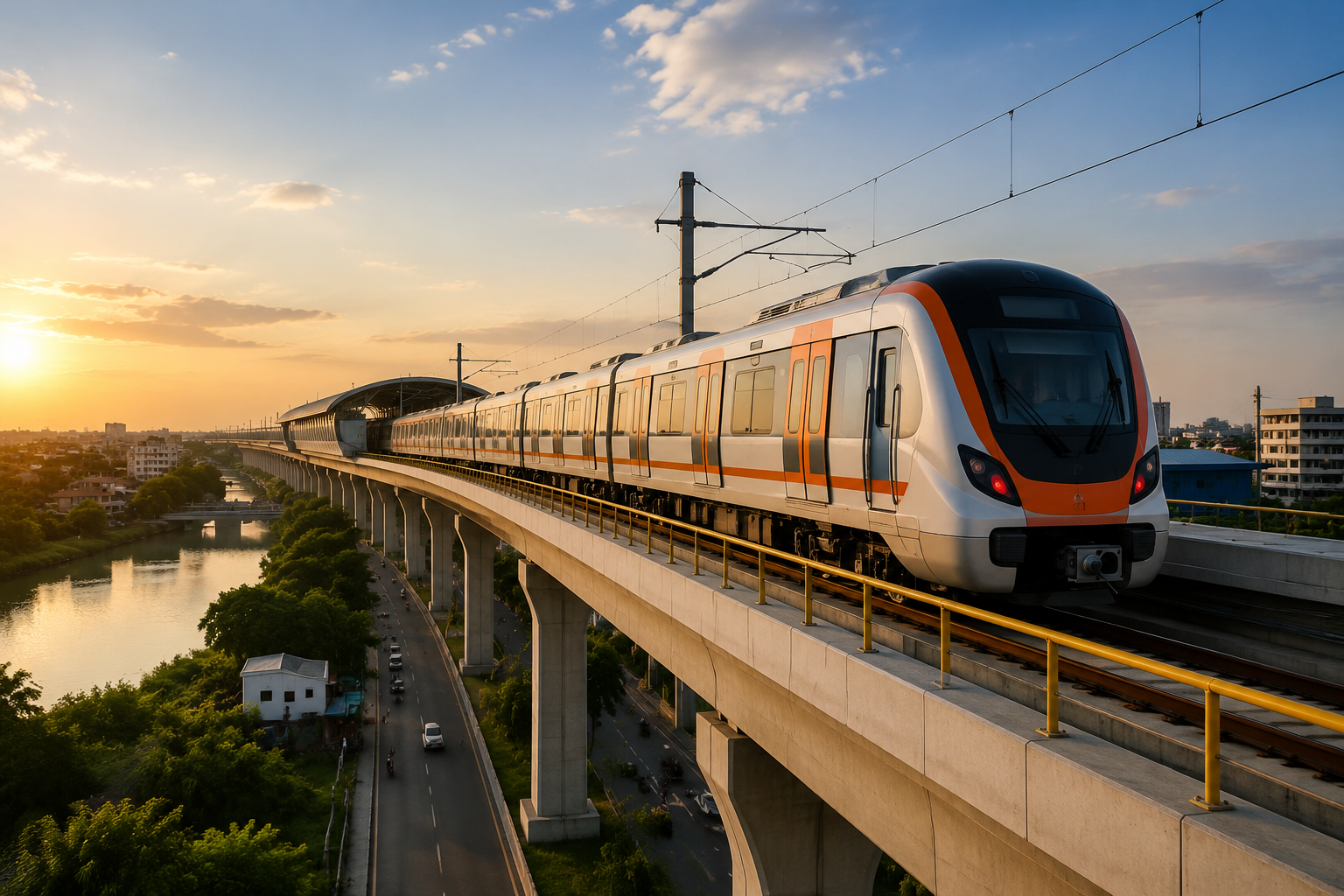
Maharashtra cabinet clears 1.4 km elevated corridor to strengthen regional transit network
The Maharashtra Cabinet Sub-Committee on Infrastructure has approved the extension of the Nagpur Metro Phase-II North Corridor from Kanhan River to Kanhan town, marking a further step in expanding urban mobility infrastructure in the Nagpur region.
The proposed 1.4 km elevated corridor carries an estimated project cost of ₹310.35 crore, according to an official release. The approval reflects the state government’s continued push toward improving last-mile connectivity and integrating suburban growth centers with core urban transport systems.
Strategic Push for Last-Mile Urban Connectivity
Small extension, high strategic value for suburban integration
Although the stretch is relatively short at 1.4 km, the extension plays an important role in completing the network connectivity of the northern corridor under Phase-II of the Nagpur Metro expansion.
The new alignment is expected to improve direct access between Kanhan town and central Nagpur, reducing dependence on road-based transport and improving commuter efficiency. The elevated design also aims to minimize land acquisition challenges while ensuring seamless integration with existing metro infrastructure.
Urban planners view such extensions as critical “gap-filling infrastructure” that enhances the overall utility of large-scale metro investments.
Cabinet Approval Strengthens Infrastructure Pipeline
Government of Maharashtra continues focus on metro-led urban development
The approval was granted by the infrastructure sub-committee of the Government of Maharashtra, reinforcing the state’s ongoing commitment to metro-led urban transformation.
Maharashtra has been actively expanding metro rail projects across key cities, with Nagpur emerging as one of the early adopters of a structured metro expansion framework among tier-2 cities. The latest approval indicates continued policy support for phased corridor extensions rather than only large standalone projects.
Project Economics: High Cost for Short Distance
₹310 crore investment highlights elevated construction intensity
The 1.4 km extension, despite its limited length, involves a significant capital outlay of ₹310.35 crore, translating into a high per-kilometre cost. This is primarily due to:
- Elevated viaduct construction requirements
- Integration with existing operational corridors
- Station and systems alignment costs
- Urban land constraints in semi-developed zones
- Signaling, electrification, and safety systems
Infrastructure experts note that metro extensions in expanding suburban pockets often show higher unit costs due to complex engineering and integration requirements rather than distance alone.
Regional Growth and Economic Impact
Improved connectivity likely to support real estate and local commerce
The extension from Kanhan River region to Kanhan town near the Kanhan River is expected to enhance mobility for daily commuters and strengthen economic linkages with Nagpur city.
Key expected impacts include:
- Faster commuter movement between suburban and urban zones
- Improved accessibility for residential clusters in Kanhan town
- Potential uplift in local real estate demand
- Growth in small-scale commercial activity near transit points
- Greater workforce mobility for peripheral populations
Over time, improved metro access is also expected to support transit-oriented development along the corridor.
Infrastructure Investment Perspective
Metro expansion strengthens long-term urban asset creation
From an investment and infrastructure standpoint, continued expansion of the Nagpur Metro reflects a broader national trend of sustained public capex in urban transport systems.
Such projects typically generate long-term economic benefits through:
- Productivity gains from reduced travel time
- Increased urban land value appreciation
- Lower congestion and logistics inefficiencies
- Higher public transport adoption rates
While metro projects do not generate immediate financial returns, they are considered high-multiplier infrastructure assets that support regional economic growth over decades.
Outlook
Incremental expansions to define next phase of metro growth
The Kanhan extension reinforces a key trend in India’s urban infrastructure strategy—moving from large corridor creation to targeted last-mile connectivity upgrades.
As Nagpur continues to expand its metro footprint, future phases are likely to focus on deeper suburban integration, feeder network development, and improved multimodal connectivity.
For investors tracking infrastructure development themes, sustained metro expansion across tier-2 cities like Nagpur signals continued government commitment to long-term urban transformation and capital expenditure-driven growth.