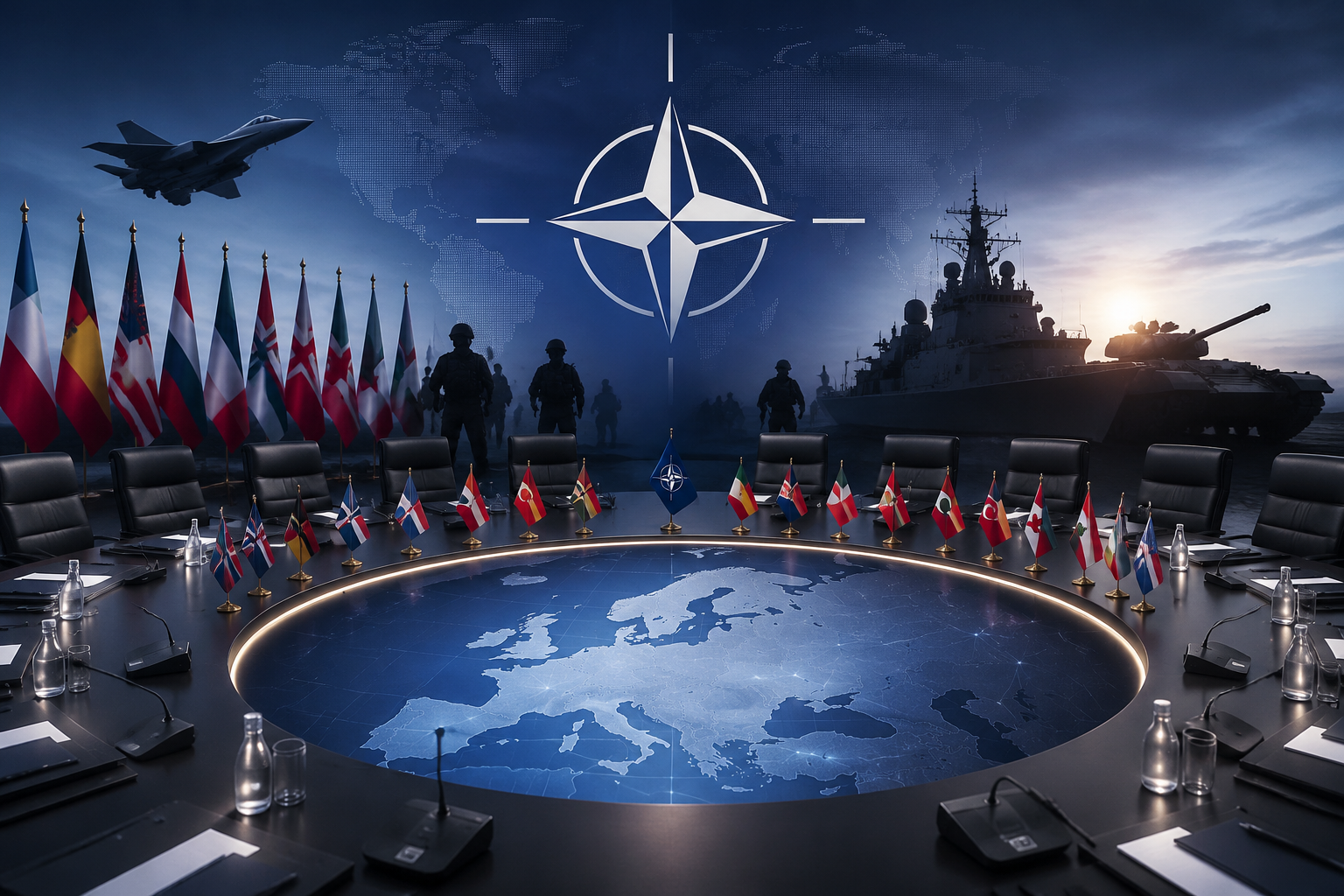
Ankara Summit Set to Redefine NATO’s Strategic Direction Amid Rising Geopolitical Pressure
The upcoming NATO summit in Ankara on July 7–8 is emerging as a critical turning point for global geopolitics and defence markets, as alliance members confront rising tensions over defence spending, military readiness, and long-term US commitment to Europe.
At the centre of discussions is the challenge of maintaining cohesion within NATO while responding to intensifying security threats from Russia, ongoing support for Ukraine, and uncertainty over the future role of US forces in Europe.
NATO’s deputy supreme allied commander in Europe, Air Chief Marshal Sir John Stringer, has emphasized that the summit must demonstrate unity while pushing member states toward stronger and more credible defence commitments.
Rising Transatlantic Tensions and US Military Posture Review
A major source of uncertainty ahead of the summit is the evolving US defence strategy in Europe. US Defence Secretary Pete Hegseth recently criticized several NATO allies for restricting the use of military bases in operations linked to Iran and announced a surprise six-month review of US troop deployment across Europe.
This review has raised concerns among European policymakers about possible reductions or restructuring of US military presence in NATO’s eastern flank, particularly in the Baltic region—an area considered critical for deterring Russian aggression.
While Washington maintains that troop adjustments are part of long-term strategic planning, European military officials say frequent policy shifts create uncertainty that complicates defence planning and readiness.
Europe Steps Up Defence Spending Amid Strategic Pressure
In response to shifting US priorities and increasing security threats, European NATO members have significantly increased defence spending commitments over recent years. With the exception of a few outliers, most allies are moving toward higher military budgets and accelerated weapons production.
Countries like Estonia and Finland—both sharing direct borders with Russia—have become vocal advocates for stronger deterrence. Finnish military leadership has stressed that credibility depends not just on spending targets but on building real operational capability.
A key focus area is ammunition production, particularly 155mm artillery shells, where several European nations are reportedly ramping up output to levels not seen in decades.
This industrial shift signals a broader transformation in Europe’s defence ecosystem, potentially benefiting defence contractors, ammunition manufacturers, and aerospace suppliers across the region.
Strategic Gaps: Can Europe Replace US Military Capabilities?
Despite increased spending, NATO officials acknowledge that replacing certain US military capabilities remains a significant challenge. The United States continues to provide critical assets such as long-range bomber aircraft, advanced surveillance systems, and strategic strike capabilities that are not easily replicated by European forces.
However, NATO leadership suggests that capability gaps could be partially offset through a diversified “multi-system” approach—combining land, air, naval, and missile systems across multiple countries rather than relying on single-point US dominance.
This evolving structure may reshape procurement patterns across Europe, increasing demand for:
-
Long-range missile systems
-
Air defence networks
-
Intelligence, surveillance, and reconnaissance (ISR) technologies
-
Naval strike capabilities
-
Defence electronics and AI-based warfare systems
Defence Planning Uncertainty and the Need for Stability
Military leaders from Finland and Sweden have warned that inconsistent strategic planning weakens defence preparedness. Sudden policy changes—such as shifting US troop deployment plans—create operational inefficiencies and complicate long-term logistics planning.
Officials stress that NATO must move beyond broad declarations and instead focus on clear, enforceable capability commitments. The emphasis is shifting from “spending promises” to “deliverable military output.”
Swedish defence leadership has called for a clearer roadmap outlining how deterrence responsibilities will be distributed among member states in the coming decade, often referred to informally as the transition toward a “NATO 3.0” structure.
UK Defence Spending Debate Adds Political Pressure
Internal political developments within the United Kingdom have further highlighted divisions over defence funding priorities. Recent ministerial resignations over proposed spending plans have raised questions about whether the UK can meet NATO’s long-term defence investment target of 3.5% of GDP.
While the UK government has reaffirmed its commitment to NATO obligations, debates continue over the pace and scale of military budget expansion. NATO leadership has made it clear that credible defence planning requires measurable pathways, not just future commitments.
Market Implications: Defence Sector in Focus
For investors, the NATO summit represents more than a geopolitical event—it is a potential catalyst for sustained growth in the global defence sector.
Key investment themes emerging from the summit include:
1. European Defence Manufacturing Expansion
Increased ammunition production and rearmament cycles are likely to benefit European defence contractors, particularly those involved in artillery, missiles, and battlefield systems.
2. US-Europe Defence Supply Chain Realignment
Any recalibration of US troop presence could trigger higher European procurement of American defence technology, especially in aerospace and surveillance systems.
3. Long-Term NATO Modernization Cycle
The shift toward integrated multi-domain warfare will drive demand for AI-based defence systems, cybersecurity infrastructure, and advanced communication networks.
4. Defence ETFs and Institutional Flows
Global institutional investors are expected to maintain strong allocation toward defence-focused ETFs as geopolitical risk premiums remain elevated.
Conclusion: Credibility and Capability Now Define NATO’s Future
As the Ankara summit approaches, the core challenge for NATO is no longer just political unity—but the translation of commitments into credible military capability.
With shifting US policies, rising European defence budgets, and escalating security concerns in Eastern Europe, the alliance stands at a strategic inflection point.
For global markets, the outcome of the summit will likely reinforce one dominant trend: sustained structural growth in the defence sector, driven by long-term geopolitical realignment rather than short-term conflict cycles.