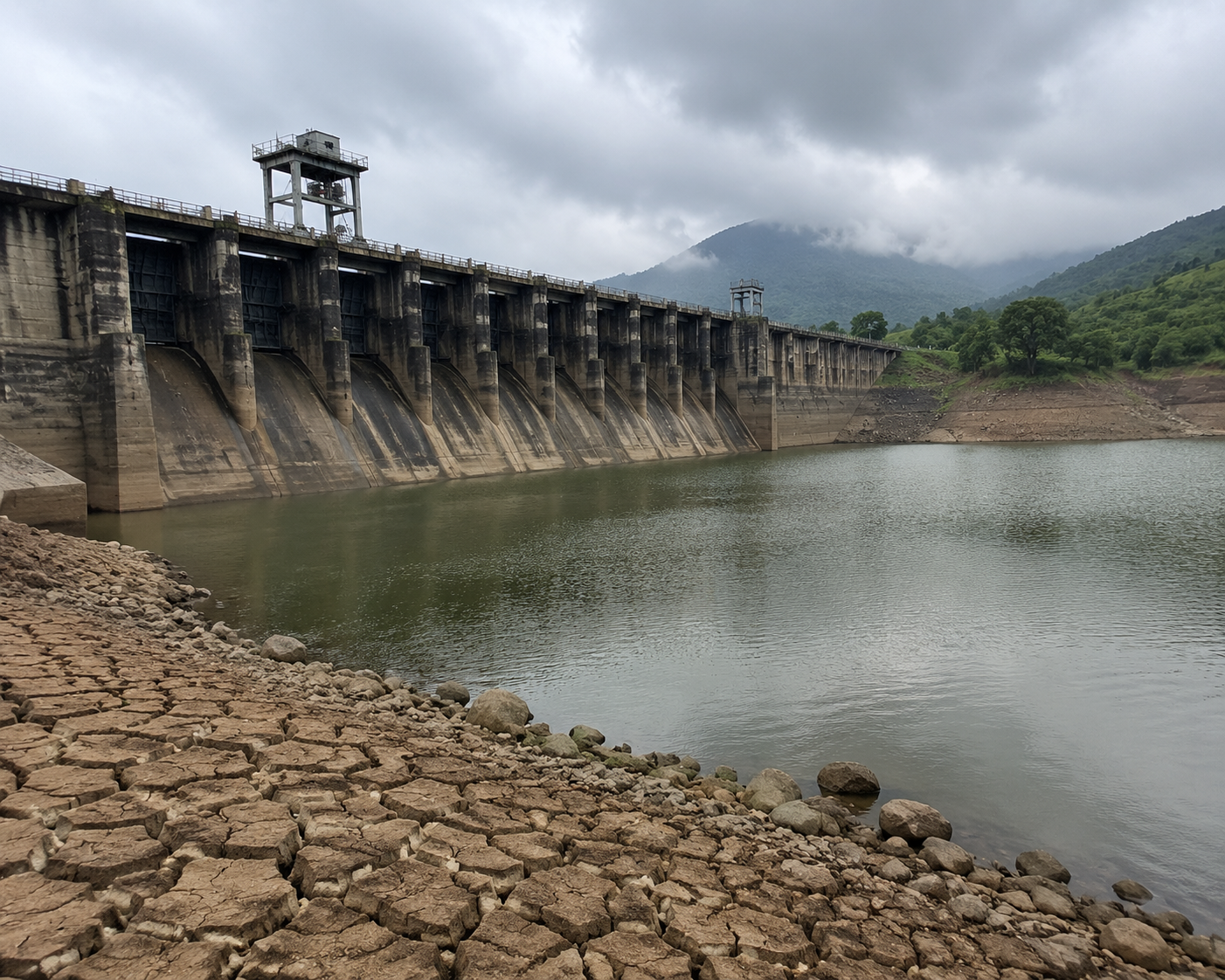
Nationwide Reservoir Storage Falls Further in Late June
Water storage across India’s major reservoirs continued to decline during the week ending June 25, 2026, reflecting the impact of a weak and uneven monsoon season.
According to official data, storage in 166 monitored reservoirs dropped to 48.405 billion cubic metres (BCM) from 50.457 BCM in the previous week, marking a continued downward trend in water availability.
The decline comes at a critical time when early monsoon inflows are typically expected to replenish key water bodies.
Storage Trend Below Last Year but Above Long-Term Average
Despite the weekly decline, reservoir storage remains:
-
Lower than the same period last year
-
Slightly above the 10-year average storage levels
This indicates that while conditions are not yet severe, the buffer is gradually narrowing due to weak rainfall distribution in June.
The last instance of higher-than-last-year storage was recorded in the week ending May 29, 2026, after which levels have consistently trended lower.
Regional Imbalance in Reservoir Performance
Water storage conditions vary significantly across India, reflecting uneven monsoon coverage:
-
Eastern India (27 reservoirs) remains below long-term average levels
-
Southern India (47 reservoirs) also reports weaker-than-normal storage
-
Other regions show mixed performance depending on rainfall intensity
This regional divergence highlights how monsoon variability is directly impacting water availability across sectors.
Weak Monsoon Phase Shows Early Signs of Stabilisation
After a prolonged lull, the southwest monsoon has shown tentative signs of improvement in select pockets.
The India Meteorological Department (India Meteorological Department) has indicated that:
-
Rainfall is expected to remain below normal in most parts of India in the near term
-
South Peninsular and Northeast India may receive near-normal to above-normal rainfall
-
Monsoon conditions may become favourable again between July 2 and July 8
This suggests a possible recovery window after an extended weak phase.
Rainfall Deficit Remains a Key Concern
Despite some improvement in forecasts, the broader rainfall picture remains weak.
Key highlights:
-
Overall rainfall deficiency stands at 42% (June 1–25, 2026)
-
Large spatial variation in rainfall distribution
-
Delayed and uneven monsoon advancement across regions
This persistent deficit is affecting early-season water replenishment in reservoirs.
Implications for Agriculture and Hydropower
Lower reservoir levels combined with weak rainfall could have wider economic and sectoral implications:
-
Agriculture: Delayed sowing and irrigation stress for kharif crops
-
Hydropower: Reduced generation potential in water-dependent regions
-
Urban supply: Pressure on municipal water systems in vulnerable areas
-
Rural economy: Increased dependence on rainfall consistency
Agriculture-heavy states remain particularly exposed to monsoon variability.
Monsoon Recovery Window in Early July
Forecast models suggest a potential improvement in rainfall activity from early July, which could help stabilise inflows into reservoirs.
Key monitorable factors include:
-
Spread and intensity of rainfall across central India
-
Catchment inflows into major reservoirs
-
Continuity of monsoon advancement across northern regions
However, experts caution that short bursts of rainfall may not be sufficient to fully offset the seasonal deficit.
Key Takeaway
India’s reservoir levels are steadily declining due to weak monsoon progress and uneven rainfall distribution. While early July may bring some recovery in precipitation, sustained rainfall will be crucial to restore water storage levels and reduce risks to agriculture, hydropower, and urban water supply.