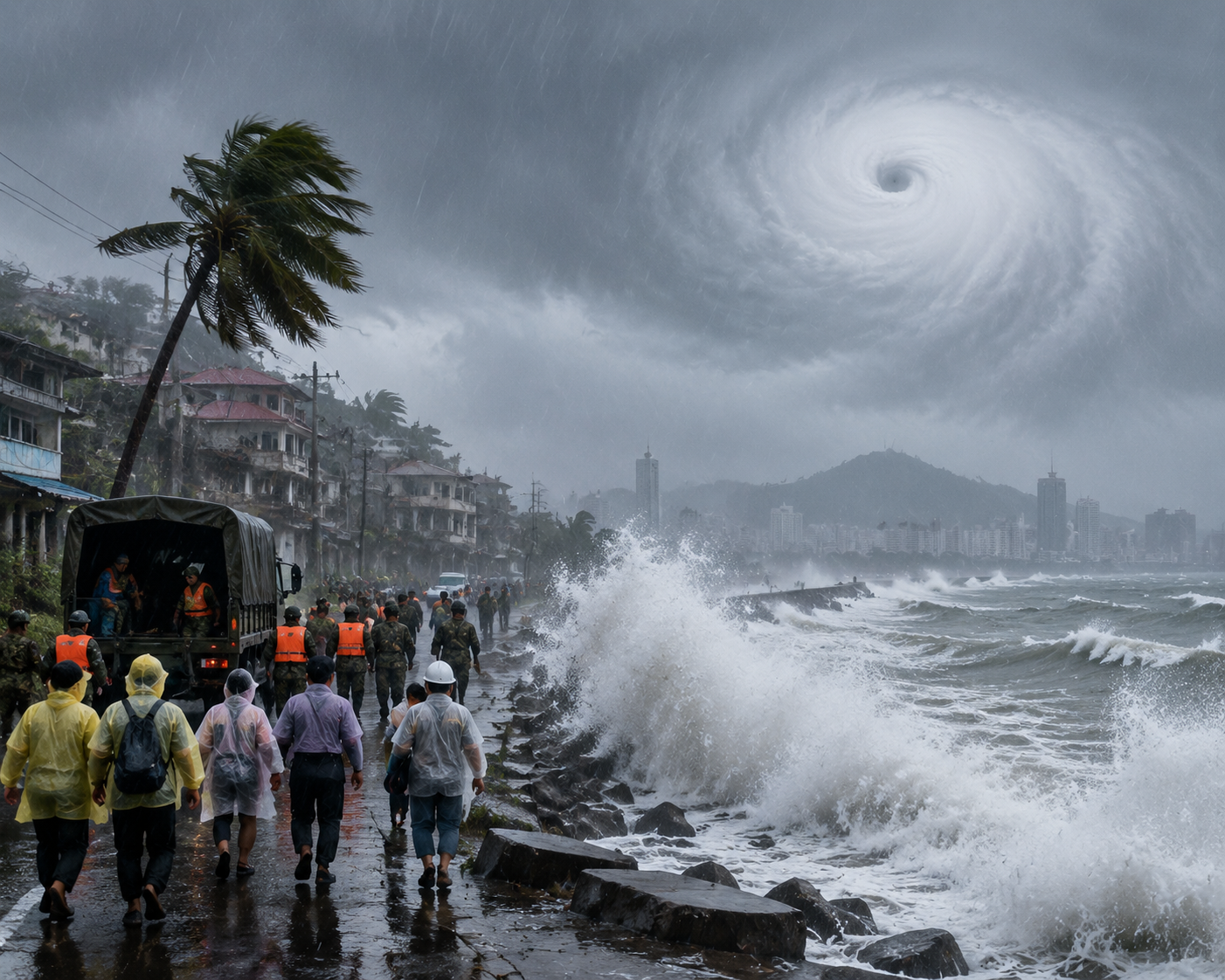
Severe Tropical Storm Disrupts Japan and Taiwan
A powerful tropical storm, Mekkhala, has triggered widespread disruption across East Asia, forcing Japan to evacuate more than 2.2 million people amid rising flood and landslide risks.
The storm, currently near Japan’s Ryukyu Islands, had earlier moved across Taiwan, bringing torrential rainfall that shut down large parts of the island and disrupted daily life for millions.
Mass Evacuations and Emergency Alerts in Japan
Japanese authorities have issued large-scale evacuation orders as heavy rain and strong winds continue to batter southern regions.
Key measures include:
-
Evacuation of more than 2.2 million residents
-
Flood and landslide warnings across multiple prefectures
-
Alerts for rising river levels and slope instability
-
Emergency shelter activation in high-risk zones
Meteorological agencies have warned that prolonged rainfall may increase the risk of flash floods in already saturated areas.
Transport and Infrastructure Severely Affected
The storm has caused major disruptions to Japan’s transport network:
-
Over 200 flights cancelled
-
Dozens of train services suspended
-
Multiple expressways closed due to flooding risk
Authorities have also cautioned that continued rainfall could further delay restoration of normal transport operations.
Industrial activity has also been affected, with precautionary shutdowns in select manufacturing facilities in southern Japan.
Taiwan Faces Heavy Rainfall and Widespread Closures
Before moving toward Japan, Mekkhala caused severe weather conditions across Taiwan, particularly in southern regions including Kaohsiung, Tainan, and Pingtung.
Impacts included:
-
Closure of offices and schools affecting nearly 6 million people
-
Flooding in urban and rural areas
-
Suspension of key railway sections in southern Taiwan
-
Disruption to local transport and daily services
The rainfall intensity in some rural areas reached near-record levels, worsening drainage and flood conditions.
Semiconductor Hub Taiwan Remains Operational Amid Disruptions
Despite severe weather conditions, Taiwan’s critical technology infrastructure remained largely stable.
TSMC confirmed that it had activated emergency preparedness protocols across its facilities. The company stated that its operations continued normally, despite precautionary closures in nearby administrative regions.
Taiwan’s semiconductor industry remains a key node in global supply chains, making operational stability crucial during extreme weather events.
Barrier Lake Risk Adds Fresh Concern in Hualien
Authorities in eastern Taiwan’s Hualien region are closely monitoring a rapidly filling barrier lake formed due to landslide activity.
Key developments:
-
Evacuation of nearly 200 residents in downstream areas
-
Monitoring of potential dam breach risk
-
Increased emergency preparedness following past flood incidents
Barrier lakes pose significant risks as sudden breaches can trigger flash floods and mudflows downstream.
Extended Rainfall Forecast Raises Ongoing Risk
Meteorological agencies forecast continued rainfall over Taiwan for at least the coming week, though intensity is expected to gradually reduce.
While the storm has disrupted daily life, seasonal typhoons also play a critical role in replenishing water reservoirs, which often face shortages after dry winter months.
Economic and Supply Chain Implications
The storm’s impact extends beyond immediate weather disruptions, with potential short-term effects on regional economies:
-
Temporary suspension of manufacturing activity
-
Logistics and shipping delays across East Asia
-
Aviation network disruptions
-
Reduced workforce availability in affected regions
Given East Asia’s central role in global electronics production, even short disruptions can have broader supply chain implications.
Key Takeaway
Typhoon Mekkhala has triggered one of the largest evacuation responses in recent months across Japan and Taiwan, highlighting increasing climate-related risks in the region. While emergency response efforts continue, attention is now shifting toward transport recovery, industrial stability, and potential supply chain impacts.