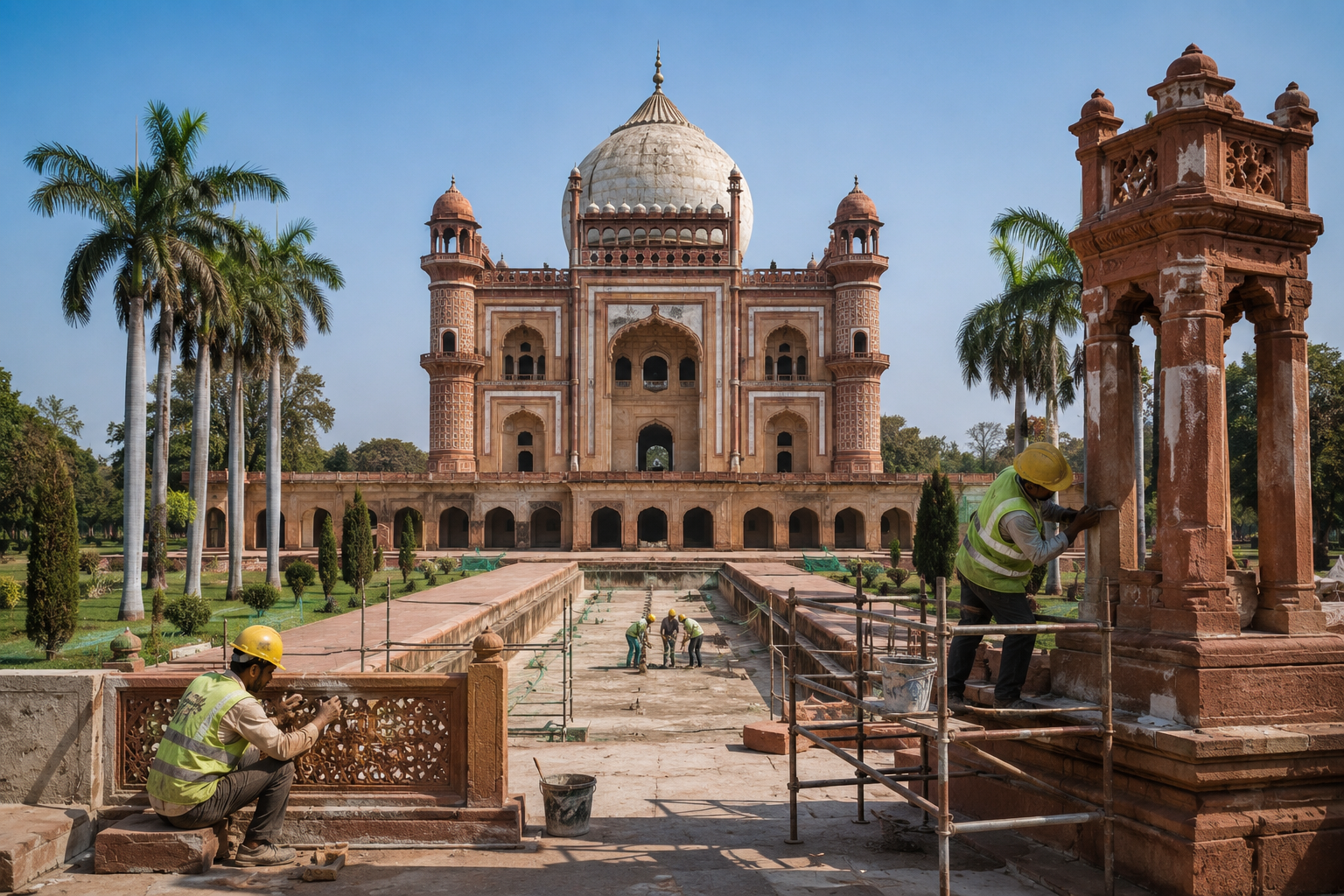
ASI and World Monuments Fund Join Hands to Preserve Iconic Late-Mughal Monument
One of Delhi's most celebrated heritage landmarks, the Safdarjung Tomb, is set to undergo an extensive restoration and conservation programme aimed at preserving its architectural legacy and enhancing visitor experience. The project, estimated to cost around ₹5 crore, is being jointly undertaken by the Archaeological Survey of India (ASI) and the World Monuments Fund (WMF).
Constructed in 1754 for Nawab Safdarjung, a prominent statesman in the Mughal court and the Nawab of Awadh, the monument is regarded as one of the finest examples of late-Mughal architecture in India. Over the centuries, exposure to environmental factors and natural ageing has led to deterioration in various sections of the monument.
Major Conservation Work Planned
The restoration project will include structural repairs to strengthen the monument and prevent further deterioration. Conservation teams will also focus on restoring damaged architectural features, including decorative elements, stonework and ornamental designs that have suffered due to weathering and pollution.
Officials associated with the project said the conservation exercise is among the most comprehensive restoration initiatives undertaken at the monument in recent decades.
Revival of Ancient Water System
A key highlight of the project is the revival of the tomb's historic water system. Mughal gardens traditionally featured intricate water channels and fountains, which played an important role in the overall architectural design.
Experts will work towards restoring these traditional hydraulic systems to recreate the original aesthetic appeal of the monument. The initiative is expected to significantly enhance the heritage experience for visitors.
Landscaping to Enhance Visitor Experience
Apart from structural conservation, landscaping activities are also being undertaken across the monument complex. Authorities aim to improve the surrounding gardens, pathways and public spaces to create a more engaging and aesthetically pleasing environment for tourists.
The restoration project is targeted for completion by July 30 and is expected to strengthen Delhi's heritage tourism appeal while ensuring the long-term preservation of one of the city's most iconic monuments.
Heritage Preservation Gains Momentum
The restoration of Safdarjung Tomb reflects a broader emphasis on preserving India's historical and cultural assets. With increasing awareness about heritage conservation and tourism, such initiatives are becoming crucial for protecting monuments that represent the country's rich architectural legacy.
Once completed, the project is expected to restore much of the monument's original grandeur, allowing future generations to appreciate a significant chapter of India's Mughal history.