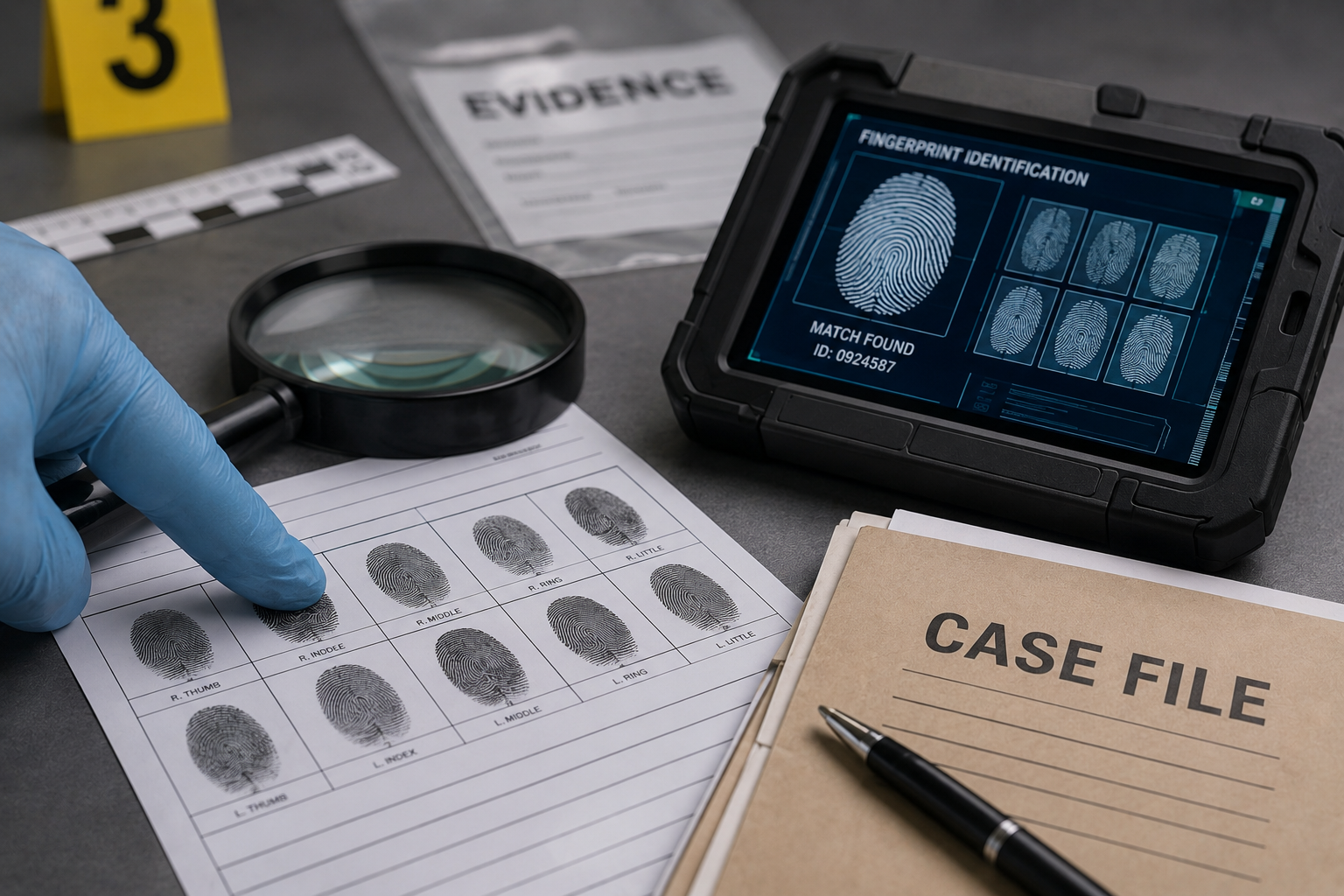
NCRB Report Shows Sharp Drop in Faulty Fingerprint Records; NAFIS Database Crosses 11 Million Entries as Digital Policing Gets a Boost
India's forensic and criminal identification capabilities have taken a significant leap forward, with the National Crime Records Bureau (NCRB) reporting a dramatic improvement in the quality of fingerprint submissions to the National Automated Fingerprint Identification System (NAFIS). The latest data reveals that the proportion of defective fingerprint slips, which had steadily increased over the past decade, fell sharply to just 0.3% in 2024, marking one of the most notable improvements in the country's forensic infrastructure.
The development coincides with the government's continued push towards technology-driven policing. Last week, Union Home Minister Amit Shah launched the "Abhigyan" mobile application during the All India Fingerprint Conference, enabling police personnel to scan thumb impressions using portable devices for instant verification through NAFIS.
Together, these initiatives are expected to improve criminal investigations, enhance biometric identification and strengthen evidence-based policing across India.
NAFIS Emerges as India's Largest Fingerprint Repository
The National Automated Fingerprint Identification System has witnessed remarkable growth over the past decade.
According to the NCRB report:
- NAFIS contained approximately 3.2 million fingerprint records in 2012.
- By 2026, the database had expanded to 11.2 million records.
- Between 2012 and 2024, law enforcement agencies submitted nearly 11 million fingerprint slips for verification.
The expanding database has significantly strengthened the ability of police agencies to identify repeat offenders, solve pending cases and link suspects across different jurisdictions.
Defective Fingerprint Rate Drops to Historic Low
One of the most encouraging findings in the NCRB report is the substantial improvement in fingerprint quality.
Data shows that:
- Around 11% of all fingerprint submissions between 2012 and 2024 were classified as defective.
- The defective rate gradually increased from 10% in 2013 to nearly 39% in 2023, raising concerns about the quality of evidence collected at the field level.
- However, in 2024, the defective submission rate declined dramatically to just 0.3%, reflecting a major improvement in collection standards and verification procedures.
Experts believe the sharp decline may be attributed to improved training, better equipment, stricter quality control and increased adoption of digital technologies.
Fingerprint Matching Continues to Support Criminal Investigations
Fingerprint evidence remains one of the most reliable forms of forensic identification used by police agencies.
According to NCRB statistics:
- Around 142 fingerprint traces were successfully matched for every 1,000 fingerprint slips submitted to NAFIS during the review period.
Successful matches help investigators:
- Identify repeat offenders.
- Connect suspects to multiple crime scenes.
- Verify criminal histories.
- Strengthen forensic evidence presented in courts.
- Accelerate investigations across state boundaries.
As the database continues to grow, the efficiency of biometric matching is expected to improve further.
'Abhigyan' App to Modernise Field Investigations
The launch of the Abhigyan mobile application represents another major milestone in India's digital policing initiatives.
The application enables field officers to:
- Capture thumb impressions using handheld devices.
- Instantly compare fingerprints with the NAFIS database.
- Identify suspects in real time.
- Reduce manual verification processes.
- Improve the speed and accuracy of criminal investigations.
The technology is expected to be particularly useful during raids, routine policing and field verification exercises.
State-Wise Trends Show Mixed Performance
The NCRB report highlights variations in fingerprint quality across states.
States recording higher shares of defective fingerprint submissions over the years include:
- Madhya Pradesh
- Maharashtra
- Punjab
While Madhya Pradesh and Maharashtra recorded significant improvements in reducing defective submissions in 2024, Punjab remained the only major state where the reduction was comparatively limited.
The findings underline the importance of continued investment in forensic training and technological upgrades across all states.
Crime Categories Generating the Highest Fingerprint Records
The report also provides insights into the types of offences where fingerprint evidence is most frequently collected.
For the year 2023:
Offences Against the Human Body
- Grievous hurt cases accounted for 31% of fingerprint slips in this category.
Offences Against Property
- Theft-related offences contributed 23% of fingerprint submissions.
Special and Local Laws
- Cases registered under the Narcotic Drugs and Psychotropic Substances (NDPS) Act represented 2.3% of fingerprint records.
These figures highlight the widespread use of fingerprint evidence across a diverse range of criminal investigations.
Why Fingerprint Quality Matters
The effectiveness of any automated biometric identification system depends heavily on the quality of fingerprint impressions collected at the source.
Poor-quality fingerprints can result in:
- Failed biometric matches.
- Delays in criminal investigations.
- Increased workload for forensic laboratories.
- Reduced effectiveness of automated systems.
- Difficulty in identifying suspects.
The dramatic reduction in defective submissions indicates that police agencies have substantially improved collection practices and adherence to forensic protocols.
Technology Driving the Future of Crime Investigation
Modern policing increasingly relies on digital forensic tools to improve efficiency and accuracy.
Technologies now being integrated into law enforcement include:
- Automated fingerprint identification.
- Mobile biometric applications.
- Facial recognition systems.
- Artificial intelligence-based crime analytics.
- Digital criminal databases.
- Interstate data-sharing platforms.
The integration of these technologies is expected to significantly enhance India's ability to investigate and prevent crime.
Challenges That Still Need Attention
Despite encouraging progress, experts believe several areas require continued focus.
These include:
- Regular forensic training for field personnel.
- Standardised fingerprint collection procedures.
- Upgrading forensic laboratories.
- Strengthening cybersecurity for biometric databases.
- Ensuring privacy and data protection.
- Improving interoperability among state police systems.
Addressing these challenges will further improve the effectiveness of India's digital policing framework.
Outlook
The latest NCRB findings indicate that India's fingerprint identification ecosystem is becoming more efficient and technologically advanced. The sharp fall in defective fingerprint submissions in 2024, coupled with the expansion of the National Automated Fingerprint Identification System (NAFIS) and the rollout of the Abhigyan mobile application, marks an important milestone in the country's efforts to modernise law enforcement.
As biometric databases continue to expand and digital tools become more deeply integrated into policing, investigators are expected to benefit from faster suspect identification, stronger forensic evidence and improved coordination across jurisdictions. While continued investment in infrastructure, training and data security remains essential, the progress achieved in recent years reflects India's growing emphasis on technology-led, evidence-based criminal investigations.