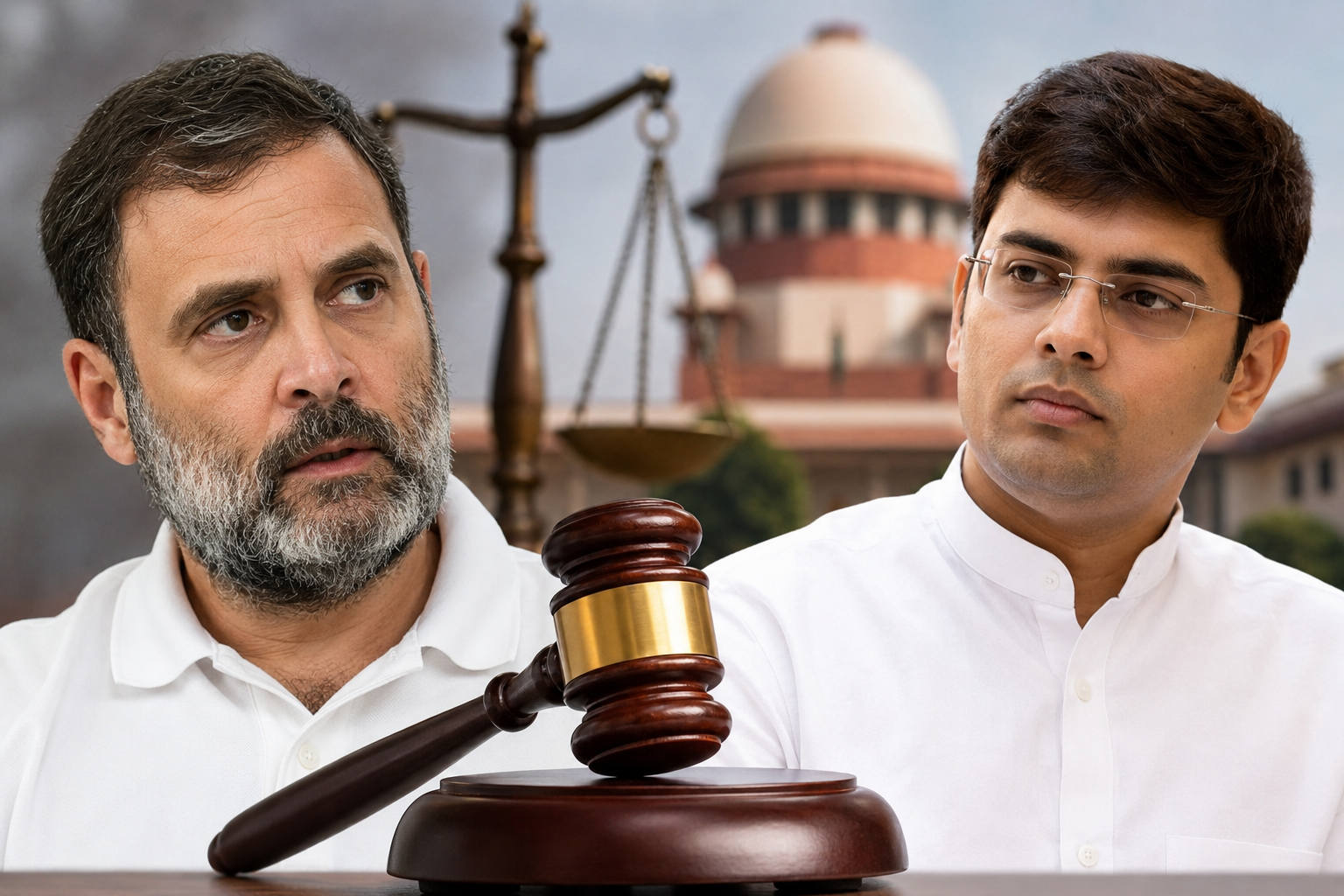
Congress Leader Says Alleged 2018 Statement Was Not Directed at Kartikeya Singh; High Court to Hear Petition Challenging Summons
Congress leader and Leader of Opposition in the Lok Sabha Rahul Gandhi has expressed regret before the Madhya Pradesh High Court in connection with a criminal defamation case filed by Kartikeya Singh, son of Union Agriculture Minister and former Madhya Pradesh Chief Minister Shivraj Singh Chouhan. The development comes ahead of the High Court's hearing on Gandhi's petition seeking to quash the summons issued against him and the ongoing defamation proceedings.
The case stems from a speech delivered by Rahul Gandhi during an election rally in Jhabua in 2018, where Kartikeya Singh alleges that his name was wrongly associated with the Panama Papers controversy, thereby harming his reputation.
Defamation Case Originates from 2018 Election Speech
The legal dispute dates back to the 2018 Madhya Pradesh Assembly election campaign.
According to the complaint, Rahul Gandhi allegedly referred to Kartikeya Singh while speaking about the Panama Papers leak during a public rally in Jhabua. The complainant contends that the statement falsely linked him to the international financial controversy and caused serious damage to his personal and public reputation.
Based on the complaint, the special court designated to hear cases involving Members of Parliament (MPs) and Members of Legislative Assembly (MLAs) in Bhopal issued summons directing Gandhi to appear before the court.
Rahul Gandhi Files Petition Before High Court
Following the issuance of summons, Rahul Gandhi approached the Jabalpur Bench of the Madhya Pradesh High Court, seeking to have both the summons and the criminal defamation proceedings set aside.
In his latest application submitted through legal counsel, Gandhi expressed regret over the statement in question and clarified that it was not intended to refer to Kartikeya Singh.
The application argues that there was no intention to defame the complainant and requests the High Court to consider this clarification while deciding the matter.
High Court to Hear the Matter
The Madhya Pradesh High Court is scheduled to hear Rahul Gandhi's petition on Thursday.
During the previous hearing, the High Court directed that the records from the lower court be placed before it for examination. Those records have now been produced as directed.
Legal representatives from both sides are expected to present their arguments on whether the criminal defamation proceedings should continue.
Complainant Maintains Allegations
Kartikeya Singh has maintained that the remarks made during the 2018 election campaign directly affected his reputation.
His legal team argues that associating his name with the Panama Papers controversy caused reputational harm and therefore constitutes criminal defamation under Indian law.
Advocate Sankalp Kochhar appeared before the High Court on behalf of the complainant.
Understanding Criminal Defamation in India
Criminal defamation is governed by Sections 499 and 500 of the Bharatiya Nyaya Sanhita (previously the Indian Penal Code), which deal with making or publishing statements that allegedly harm another person's reputation.
To establish criminal defamation, courts generally examine:
- Whether the statement was made or published.
- Whether it referred to the complainant.
- Whether it harmed the complainant's reputation.
- Whether any statutory exceptions or legal defences apply.
- Whether there was malicious intent or absence of due care.
Courts also consider the context in which the statement was made, particularly during political speeches and election campaigns.
Political Speeches Frequently Face Judicial Scrutiny
Election campaigns often involve vigorous political criticism, allegations and public debate. However, political leaders remain subject to the same legal standards governing defamation.
Indian courts have repeatedly emphasized the importance of balancing:
- Freedom of speech.
- Political expression.
- Individual reputation.
- Constitutional protections.
- Public interest.
Each case is assessed on its own facts and the available evidence.
Legal Importance of the High Court Proceedings
The High Court's decision will primarily determine whether sufficient legal grounds exist to continue the criminal proceedings or whether the complaint should be quashed at the preliminary stage.
Such petitions generally involve judicial examination of:
- The contents of the alleged statement.
- The surrounding circumstances.
- The legal ingredients of defamation.
- The procedural validity of the complaint.
- Whether continued prosecution is warranted.
The High Court's observations may also provide guidance on the treatment of political speech in defamation cases.
Political and Legal Implications
Although the matter remains sub judice, it has attracted public attention because it involves prominent political figures from two major national parties.
The case also highlights how statements made during election campaigns can result in prolonged legal proceedings, particularly when allegations are perceived to affect an individual's reputation.
The outcome may have implications for future political communication and the manner in which public speeches are interpreted in courts.
What Happens Next?
The High Court is expected to:
- Hear arguments from both parties.
- Examine the lower court records.
- Consider Rahul Gandhi's application expressing regret.
- Decide whether the summons and criminal proceedings should continue.
Until a judicial decision is delivered, the matter will remain under consideration before the Madhya Pradesh High Court.
Outlook
Rahul Gandhi's expression of regret before the Madhya Pradesh High Court marks a significant development in the long-running defamation case filed by Kartikeya Singh over remarks allegedly made during the 2018 Assembly election campaign. The upcoming hearing will determine whether the criminal proceedings initiated by the Bhopal court should continue or be set aside.
Beyond the immediate legal dispute, the case underscores the delicate balance between political speech, public criticism and the protection of individual reputation under Indian law. As courts continue to examine such matters, the judgment could contribute to the evolving jurisprudence on defamation, political accountability and freedom of expression in India's democratic framework.