State Government Highlights Rising Challenge of Forest Conservation Amid Climate Concerns
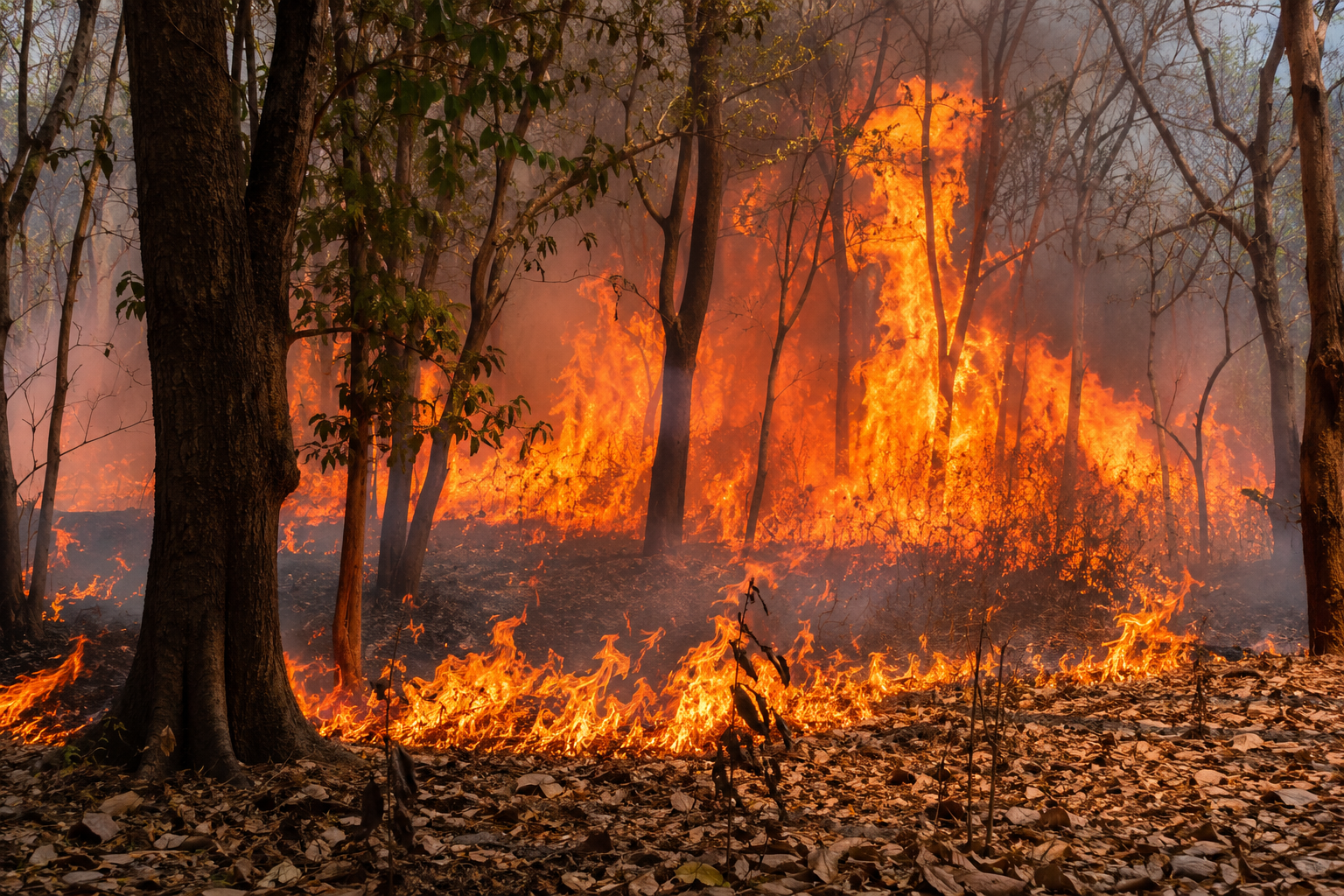
Maharashtra reported more than 5,100 forest fire incidents during the financial year 2023-24, resulting in damage to over 11,580 hectares of forest land, Forest Minister Ganesh Naik informed the Legislative Assembly on Thursday.
The revelation came in response to questions raised by legislators, including Shiv Sena (UBT) MLA Bhaskar Jadhav, Shiv Sena leader Nilesh Rane, and BJP MLA Prashant Thakur regarding the increasing incidence of forest fires across the state.
Over 11,500 Hectares of Forest Land Impacted
In a written reply submitted in the Assembly, Naik stated that a total of 5,117 forest fire cases were recorded during 2023-24, affecting 11,580.707 hectares of forest area.
The figures underscore the scale of environmental challenges confronting Maharashtra, which is home to diverse ecosystems ranging from the Western Ghats to dry deciduous forests and tiger reserves.
Forest fires not only destroy vegetation but also adversely affect wildlife habitats, biodiversity, and the ecological balance of the region.
Growing Environmental Concerns
Experts have pointed out that rising temperatures, prolonged dry spells, and changing weather patterns linked to climate change are increasing the vulnerability of forests to fire incidents.
In many cases, forest fires are triggered by human activities such as unattended campfires, disposal of burning cigarette butts, illegal burning of vegetation, and agricultural practices near forest boundaries.
The increasing frequency of extreme weather events has further heightened concerns about the long-term sustainability of forest ecosystems.
Impact on Biodiversity and Wildlife
Forest fires pose a significant threat to wildlife by destroying habitats and disrupting food chains. Several species of birds, reptiles, insects, and small mammals are particularly vulnerable during fire incidents.
Repeated fires can also degrade soil quality, reduce natural regeneration capacity, and affect water retention in forest areas, ultimately impacting the broader ecosystem.
Environmentalists warn that large-scale forest degradation could have far-reaching consequences for climate resilience and biodiversity conservation.
Government Strengthens Fire Prevention Mechanisms
To address the issue, the Maharashtra Forest Department has implemented several preventive and monitoring measures. These include:
-
Deployment of dedicated fire watchers during peak summer months.
-
Use of satellite-based fire detection and early warning systems.
-
Creation and maintenance of fire lines to restrict the spread of fires.
-
Community participation initiatives involving local residents and forest-dependent communities.
-
Increased patrolling and awareness campaigns in vulnerable regions.
The department has also been leveraging technology and real-time monitoring systems to improve response times and minimize damage.
Economic and Ecological Implications
Beyond environmental damage, forest fires can have significant economic implications. They can adversely affect tourism, forest-based livelihoods, and the availability of non-timber forest produce, which supports thousands of rural households.
The destruction of forests also contributes to carbon emissions, undermining efforts to combat climate change and meet sustainability goals.
Need for a Long-Term Conservation Strategy
Experts have emphasized the need for an integrated forest management approach combining technology, policy support, community engagement, and climate adaptation strategies.
Strengthening forest infrastructure, enhancing surveillance capabilities, and promoting awareness among local communities are considered crucial for reducing future fire incidents.
Outlook
As climate-related risks continue to intensify, Maharashtra faces the challenge of balancing development needs with environmental conservation. Proactive forest management, technological interventions, and stronger community participation will play a vital role in protecting the state's invaluable forest resources in the years ahead.