Beijing Reiterates Commitment to Regional Stability Through Diplomacy
China has reaffirmed its steadfast support for Pakistan's diplomatic initiatives aimed at easing tensions between Iran and the United States, underscoring the growing role of regional powers in promoting peace and stability in the Middle East.
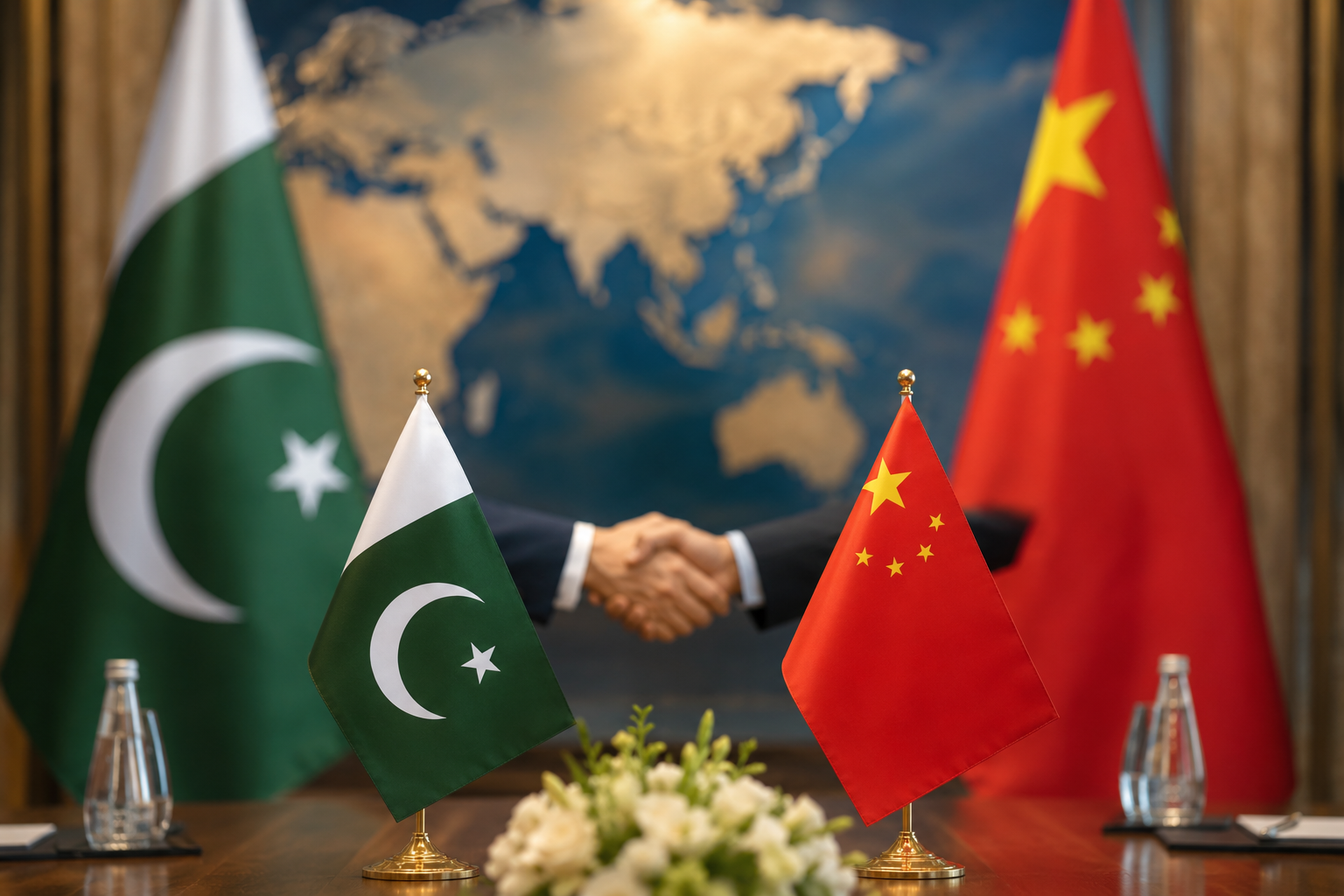
The reaffirmation came during a telephonic conversation held on Wednesday between Pakistan's Deputy Prime Minister and Foreign Minister Ishaq Dar and Chinese Foreign Minister Wang Yi. According to a statement issued by Pakistan's Foreign Office, the leaders exchanged views on recent developments concerning the Iran-US peace process and broader regional security dynamics.
Focus on Iran-US Peace Process
A major focus of the discussion was the first round of high-level talks between Iran and the United States held in Switzerland. The negotiations, facilitated through mediation efforts by Pakistan and Qatar, are being viewed as an important step toward reducing tensions and reopening diplomatic channels between the two countries.
The talks assume significance at a time when geopolitical uncertainties in the Middle East continue to impact global energy markets, trade routes, and investor sentiment worldwide.
China Praises Pakistan's Diplomatic Role
During the conversation, Chinese Foreign Minister Wang Yi reportedly commended Pakistan for its persistent and constructive diplomatic engagement. He praised Islamabad's efforts to encourage dialogue and foster an atmosphere conducive to peace and stability in the region.
Wang also assured Pakistan of China's "unwavering support" for initiatives that contribute to conflict resolution through diplomatic means, reaffirming Beijing's commitment to promoting multilateral cooperation and peaceful negotiations.
Strategic Implications for the Region
The growing diplomatic coordination between China and Pakistan reflects the deep strategic partnership between the two nations. Analysts believe that successful mediation efforts could help reduce regional instability, improve energy security, and strengthen economic cooperation across Asia and the Middle East.
A stable Middle East remains crucial for major economies, including China and Pakistan, given the region's importance in global oil supplies, trade corridors, and infrastructure investments.
Market Perspective
While diplomatic developments generally have limited immediate market impact, sustained progress in Iran-US relations could positively influence global crude oil prices by reducing geopolitical risk premiums. Lower volatility in energy markets would be beneficial for emerging economies such as India, which rely heavily on imported crude oil.
Investors will continue to monitor diplomatic developments closely, as any breakthrough in negotiations could have broader implications for commodity prices, inflation trends, and global financial markets.
Outlook
The latest exchange between Beijing and Islamabad highlights the increasing importance of regional diplomacy in addressing complex geopolitical challenges. As negotiations continue, market participants and policymakers alike will watch closely for signs of progress that could contribute to lasting peace and stability in the Middle East.