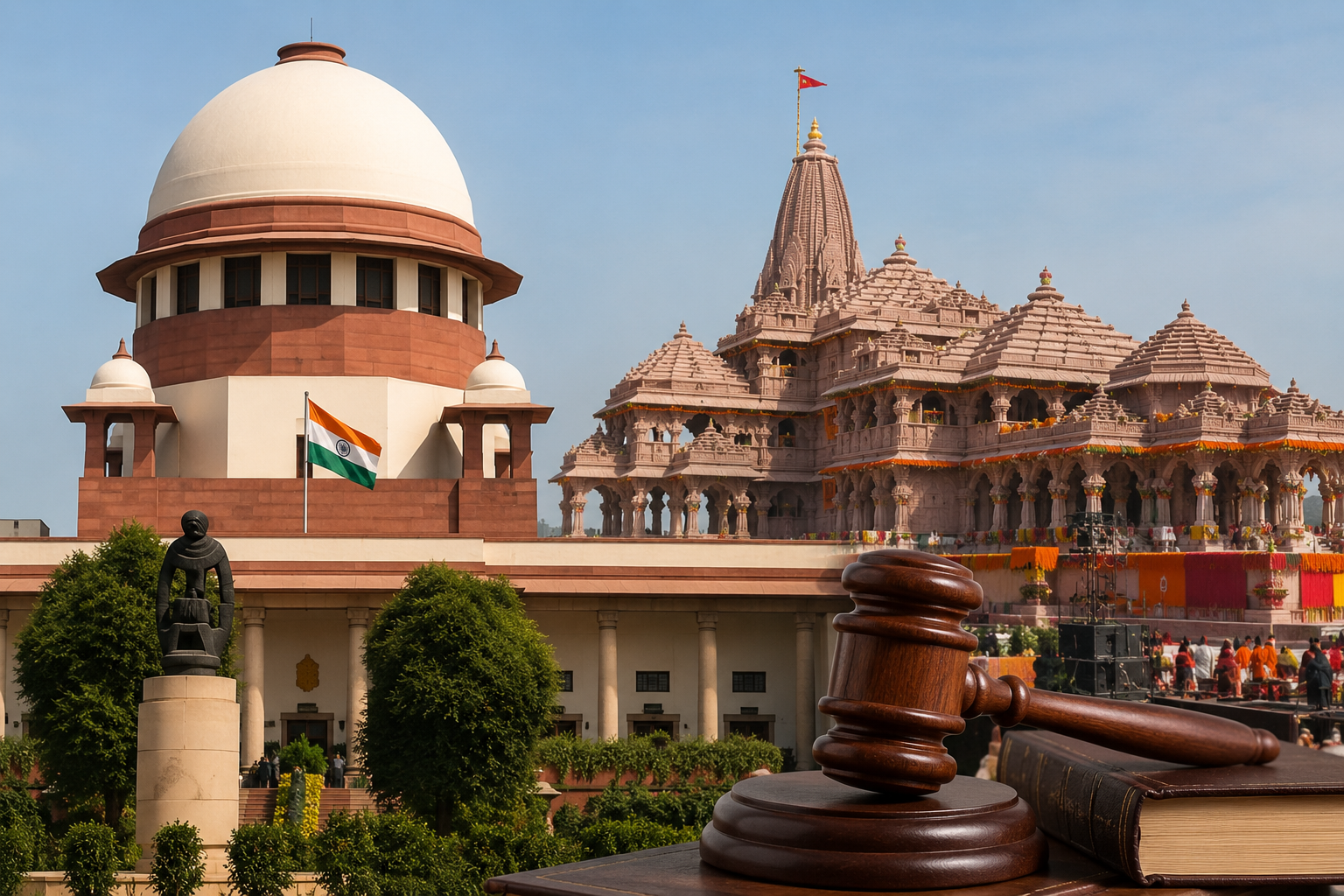
Plea Seeks FIR and CBI-Led SIT Investigation into Alleged Financial Irregularities in Shri Ram Janmbhoomi Teerth Kshetra Trust; Court Yet to Examine Merits
The Supreme Court of India on Thursday asked the petitioners to formally mention on June 29 a plea seeking the registration of a First Information Report (FIR) and the constitution of a CBI-led Special Investigation Team (SIT) to investigate alleged financial irregularities in the Shri Ram Janmbhoomi Teerth Kshetra Trust, the body responsible for overseeing the construction and administration of the Ram Temple in Ayodhya.
The matter was mentioned before a bench comprising Justices B.V. Nagarathna and Joymalya Bagchi, which directed the petitioners to place the matter before the Court on June 29 for consideration regarding its listing.
At this stage, the Supreme Court has not issued any notice, admitted the petition, or made any observations on the allegations contained in the plea. The Court's direction relates solely to the procedural listing of the matter.
Petition Seeks Independent CBI-Led Investigation
The petition has been filed by practising advocates Ajay Kumar Rai and Dinesh Kumar Yadav, who have sought judicial intervention over alleged financial irregularities concerning the Trust.
The petition requests the Supreme Court to direct:
-
Registration of an FIR.
-
Constitution of a CBI-led Multi-Disciplinary Special Investigation Team (SIT).
-
A fair, transparent and time-bound investigation.
-
Examination of alleged financial mismanagement.
-
Investigation into the administration and functioning of the Trust.
According to the petitioners, an independent probe is necessary considering the public importance of the Trust and the significant volume of donations received from devotees across India and abroad.
Allegations Yet to Be Tested in Court
The plea contains allegations relating to the management of donations and the administration of the Trust.
However, it is important to note that:
-
The allegations have not been examined by the Supreme Court.
-
The Court has not expressed any opinion on their merits.
-
No investigation has been ordered.
-
No notice has yet been issued to the Trust or any respondent.
-
No judicial findings have been recorded regarding the claims made in the petition.
The legal process remains at a preliminary stage, and the Court will decide on further proceedings only after considering whether the petition should be formally listed and heard.
Role of the Shri Ram Janmbhoomi Teerth Kshetra Trust
The Shri Ram Janmbhoomi Teerth Kshetra Trust was established following the Supreme Court's landmark 2019 judgment in the Ayodhya land dispute.
The Trust is responsible for:
-
Construction of the Ram Temple.
-
Administration of temple affairs.
-
Management of donations.
-
Development of temple infrastructure.
-
Maintenance of temple assets.
-
Planning future expansion of the temple complex.
The Trust receives voluntary donations from millions of devotees, making financial governance and transparency important aspects of its operations.
Why Financial Transparency Matters
Religious and charitable trusts that receive substantial public contributions are generally expected to maintain robust financial management systems.
Good governance practices typically include:
-
Independent financial audits.
-
Transparent accounting procedures.
-
Proper documentation of donations.
-
Regulatory compliance.
-
Internal financial controls.
-
Periodic review of expenditure.
Such measures help enhance public confidence while ensuring that donated funds are utilized for their intended purposes.
Legal Standards for Ordering Investigations
Indian courts exercise caution before directing criminal investigations into public bodies or charitable institutions.
Before issuing such directions, courts generally examine:
-
Prima facie evidence.
-
Public interest considerations.
-
Availability of alternative legal remedies.
-
Jurisdictional issues.
-
Nature and seriousness of allegations.
Judicial precedents emphasize that investigative agencies should not ordinarily be directed to initiate criminal proceedings unless sufficient legal grounds exist.
What Happens on June 29?
The next important procedural step will take place on June 29, when the petitioners are expected to mention the matter before the Supreme Court.
The Court may then decide whether to:
-
List the petition for hearing.
-
Seek responses from concerned parties.
-
Decline to entertain the plea.
-
Pass any procedural directions considered appropriate.
Only after hearing the parties involved will the Court determine the future course of the matter.
Importance of Public Interest Litigation
The case has been filed as a Public Interest Litigation (PIL), a legal mechanism that enables individuals to raise issues concerning public institutions and governance.
Public Interest Litigations have played an important role in India by addressing matters involving:
-
Public accountability.
-
Institutional transparency.
-
Environmental protection.
-
Administrative reforms.
-
Social justice.
-
Government oversight.
However, courts also ensure that PILs are supported by credible material before directing investigative action.
Broader Governance Implications
The matter has once again highlighted the growing emphasis on governance and accountability across institutions handling significant public funds.
Experts note that large charitable organisations can strengthen public confidence by maintaining:
-
Transparent financial reporting.
-
Strong internal controls.
-
Independent audits.
-
Effective compliance mechanisms.
-
Professional financial management.
Such practices help protect donor interests while reinforcing institutional credibility.
What Observers Will Monitor
Legal experts and observers will closely watch developments after June 29, particularly:
-
Whether the petition is formally listed.
-
Whether notices are issued to respondents.
-
The Court's observations on maintainability.
-
Any directions regarding investigation.
-
Responses filed by the Trust and other authorities.
Until then, the matter remains at a preliminary procedural stage.
Outlook
The Supreme Court's direction asking the petitioners to mention the Ram Temple donation probe plea on June 29 marks the beginning of the judicial process rather than a decision on the allegations themselves. At present, the Court has neither admitted the petition nor ordered any investigation into the Shri Ram Janmbhoomi Teerth Kshetra Trust.
As the legal proceedings move forward, the focus will remain on whether the Court considers the petition fit for hearing and whether any further judicial directions are warranted. Regardless of the outcome, the case underscores the broader importance of transparency, accountability and sound financial governance in institutions that manage substantial public donations and charitable contributions.