Research Highlights India's Central Role in Building a Secure India–Middle East–Europe Economic Corridor to Transform Global Trade and Supply Chains
India has been identified as the "strategic diplomatic driver" of the ambitious India–Middle East–Europe Economic Corridor (IMEC), according to a comprehensive capstone research project prepared by students at Columbia University's School of International and Public Affairs (SIPA). The report describes IMEC as a "rare opportunity" to reshape global trade by moving supply chains away from fragile maritime chokepoints toward resilient, diversified and strategically secure transport corridors.
Prepared in collaboration with the Vishwamitra Research Foundation (VRF), the study argues that India's diplomatic outreach, expanding global partnerships and growing economic influence uniquely position the country to lead one of the world's most transformative infrastructure and connectivity initiatives.
As geopolitical tensions and supply chain disruptions continue to reshape global commerce, the report highlights IMEC as a strategic project capable of redefining trade between Asia, the Middle East and Europe.
IMEC: A New Vision for Global Connectivity
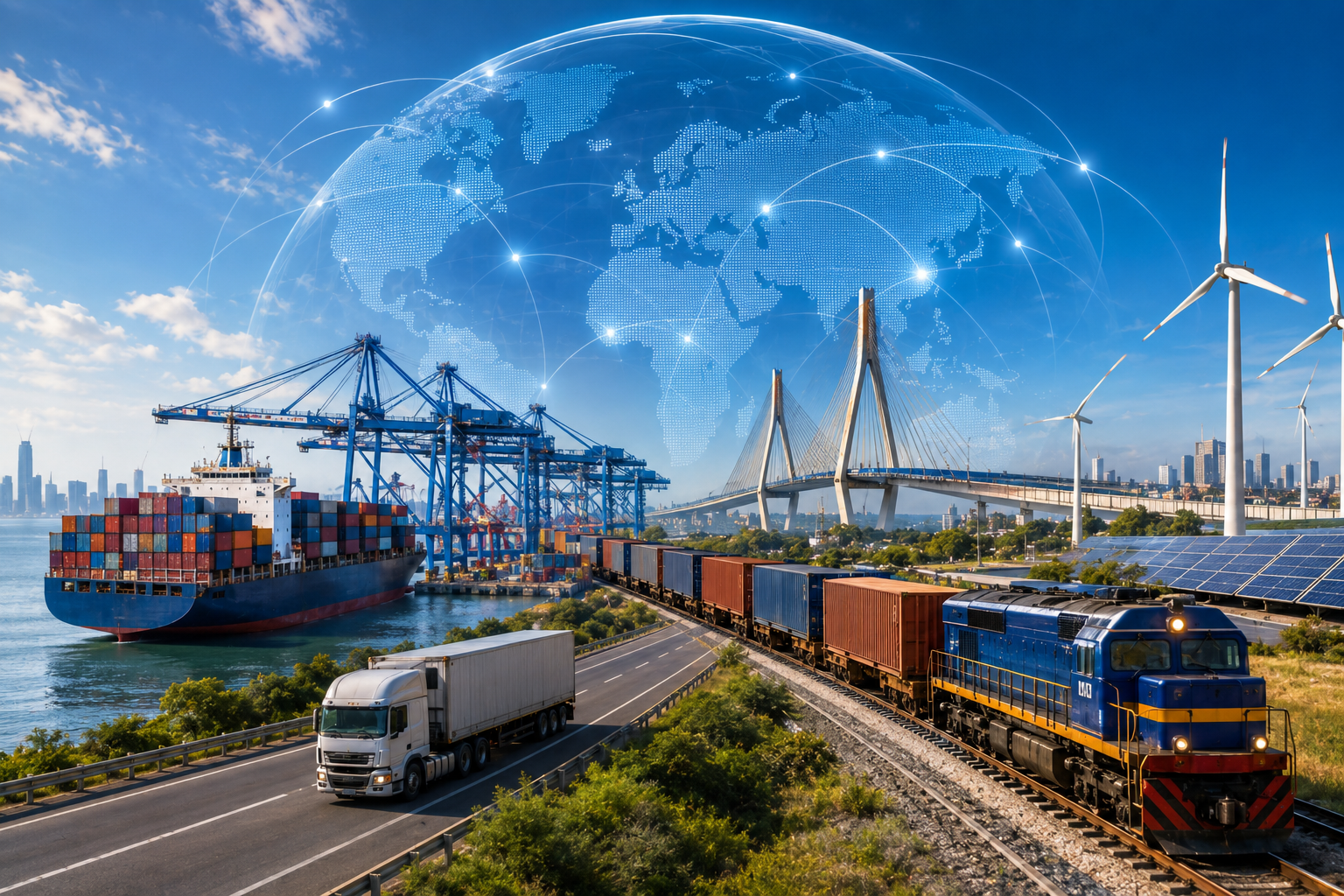
The India–Middle East–Europe Economic Corridor (IMEC) was unveiled as a landmark multinational initiative aimed at creating an integrated transport and logistics network connecting India with Europe through the Middle East.
The corridor is expected to combine:
-
Modern seaports.
-
High-speed freight rail networks.
-
Road transport infrastructure.
-
Digital connectivity.
-
Energy transmission systems.
-
Green hydrogen corridors.
-
Logistics hubs.
The objective is to reduce transportation costs and transit times while creating an efficient and resilient trade route linking some of the world's fastest-growing economic regions.
Columbia University Study Places India at the Centre
The SIPA capstone project, titled "The India–Middle East–Europe Economic Corridor: Strategy and Governance," concludes that India's diplomatic leadership will be one of the defining factors behind the corridor's success.
According to the researchers, India possesses several strategic advantages:
-
Strong relationships with Gulf nations.
-
Expanding economic engagement with Europe.
-
Leadership in the Indo-Pacific.
-
Rapidly growing manufacturing sector.
-
Increasing geopolitical influence.
-
Stable democratic institutions.
The report argues that these strengths enable India to act as the principal diplomatic bridge connecting participating nations while coordinating long-term governance of the corridor.
Reducing Dependence on Fragile Trade Routes
One of the report's strongest observations is that IMEC offers the global economy an opportunity to reduce dependence on vulnerable shipping chokepoints.
Recent disruptions—including geopolitical conflicts, supply chain bottlenecks and maritime security concerns—have exposed the risks associated with concentrated trade routes.
The corridor seeks to create alternative pathways that are:
-
Diversified.
-
Secure.
-
Efficient.
-
Sustainable.
-
Geopolitically resilient.
By distributing cargo flows across multiple transport modes, IMEC could significantly improve the stability of international trade.
Why IMEC Matters for India
For India, the corridor represents a strategic economic opportunity extending far beyond transportation.
Potential benefits include:
-
Faster access to European markets.
-
Expansion of merchandise exports.
-
Growth in manufacturing.
-
Increased logistics efficiency.
-
Higher foreign direct investment (FDI).
-
Enhanced energy security.
-
Greater geopolitical influence.
Improved connectivity is expected to strengthen India's ambition of becoming a global manufacturing and export hub while reducing logistics costs for Indian businesses.
A Major Boost for Manufacturing and Exports
India has been aggressively expanding its manufacturing ecosystem through initiatives such as:
-
Make in India.
-
Production Linked Incentive (PLI) Scheme.
-
PM Gati Shakti National Master Plan.
-
National Logistics Policy.
-
Sagarmala Programme.
-
Bharatmala Project.
IMEC complements these programmes by providing Indian manufacturers with quicker and more reliable access to overseas markets.
Export-oriented sectors expected to benefit include:
-
Engineering goods.
-
Electronics.
-
Pharmaceuticals.
-
Automobiles.
-
Chemicals.
-
Textiles.
-
Food processing.
-
Renewable energy equipment.
Lower logistics costs and faster delivery timelines could significantly improve India's global competitiveness.
Strengthening Supply Chain Resilience
The COVID-19 pandemic, Red Sea disruptions and geopolitical tensions have accelerated efforts to diversify global supply chains.
Governments and multinational corporations are increasingly prioritizing:
-
Trusted trade partners.
-
Alternative shipping routes.
-
Nearshoring and friend-shoring.
-
Supply chain redundancy.
-
Strategic infrastructure investments.
The Columbia study suggests IMEC fits squarely within this emerging global strategy by creating an alternative economic corridor connecting key production and consumption centres.
Strategic Importance Beyond Trade
Apart from commercial benefits, IMEC also carries considerable geopolitical significance.
The corridor is expected to strengthen cooperation across:
-
Economic diplomacy.
-
Energy security.
-
Infrastructure financing.
-
Digital connectivity.
-
Green energy.
-
Regional stability.
By enhancing economic interdependence among participating nations, the initiative could contribute to greater long-term stability across the Indo-Pacific and Middle East regions.
Investment Opportunities Across Multiple Industries
Successful implementation of IMEC could unlock significant investment opportunities across India's infrastructure ecosystem.
Potential beneficiary sectors include:
-
Ports and shipping.
-
Rail infrastructure.
-
Freight logistics.
-
Warehousing.
-
Industrial parks.
-
Renewable energy.
-
Data centres.
-
Smart infrastructure.
-
Engineering and construction.
-
Export-oriented manufacturing.
The corridor is also expected to stimulate private sector participation through public-private partnerships and international infrastructure financing.
Challenges That Need to Be Addressed
While the long-term potential of IMEC is substantial, experts acknowledge that several challenges remain.
These include:
-
Cross-border policy coordination.
-
Infrastructure financing.
-
Regulatory harmonisation.
-
Political stability in participating regions.
-
Customs integration.
-
Security of transport networks.
-
Long-term governance mechanisms.
The Columbia report emphasizes that sustained diplomatic engagement will be essential to ensuring the project's successful execution.
Why Businesses and Investors Are Watching IMEC Closely
Businesses view IMEC as more than an infrastructure initiative—it represents a structural transformation in global trade.
If successfully implemented, the corridor could:
-
Reduce shipping time between India and Europe.
-
Lower logistics costs.
-
Improve supply chain reliability.
-
Expand export opportunities.
-
Increase infrastructure investments.
-
Encourage multinational manufacturing expansion.
-
Strengthen India's role in global value chains.
Investors are expected to closely monitor policy announcements, funding commitments and implementation milestones over the coming years.
Outlook
The Columbia University study reinforces India's emergence as a key architect of the evolving global economic order. By identifying the country as the "strategic diplomatic driver" of the India–Middle East–Europe Economic Corridor (IMEC), the report highlights India's growing influence in shaping international trade, supply chain resilience and regional connectivity.
As global businesses seek secure, diversified and efficient trade routes, IMEC has the potential to become one of the most transformative infrastructure projects of the decade. For India, the initiative offers an opportunity to strengthen exports, attract investment, boost manufacturing and establish itself as a central hub linking Asia, the Middle East and Europe. Continued diplomatic coordination, infrastructure development and international cooperation will be critical in turning the corridor's ambitious vision into a long-term economic reality.