High-Level Talks Focus on Trusted Semiconductor Supply Chains, Emerging Technologies and Strategic Collaboration to Build a Resilient Global Tech Ecosystem
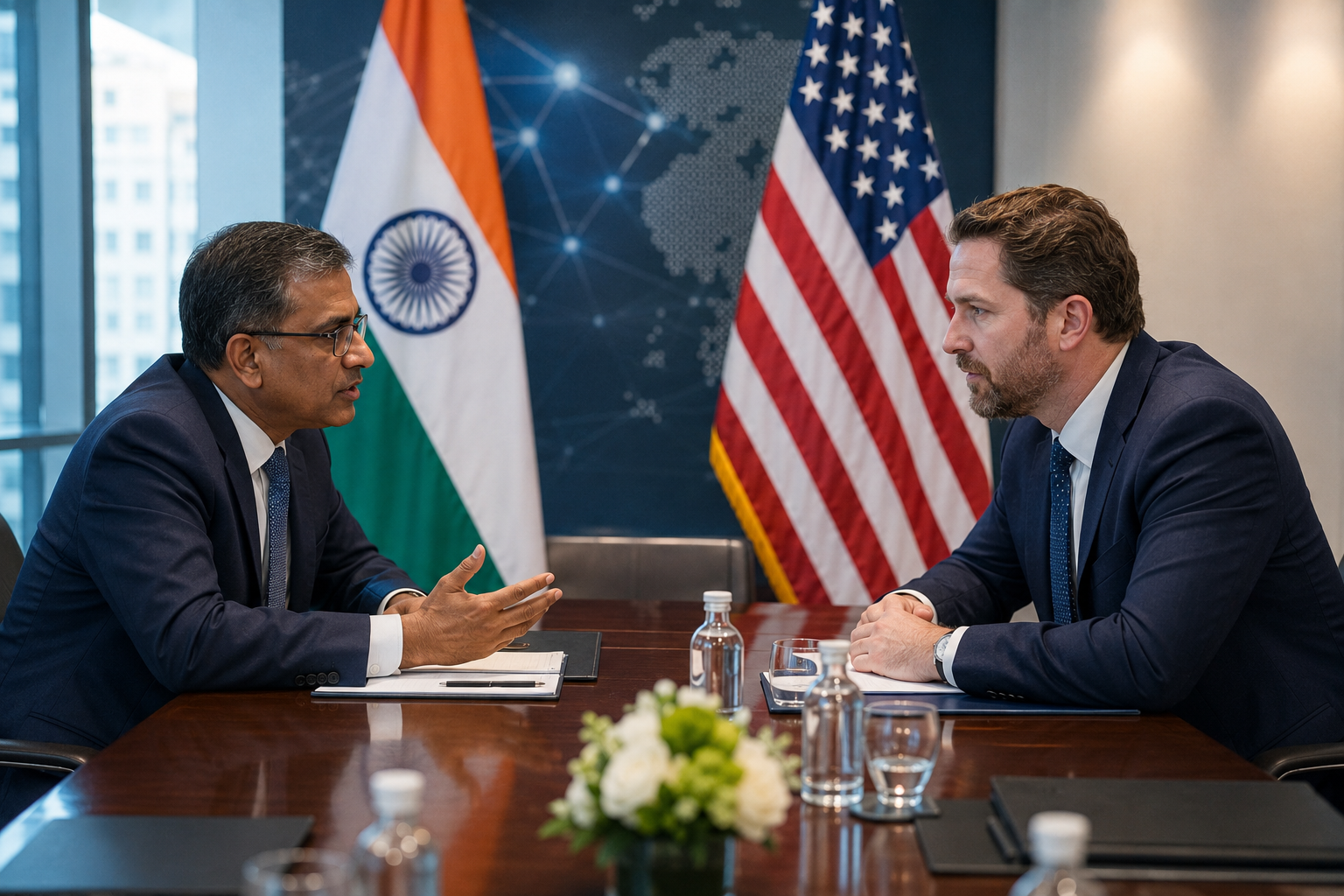
India and the United States have taken another significant step toward deepening their strategic technology partnership, with S. Krishnan, Secretary of the Ministry of Electronics and Information Technology (MeitY), meeting Jacob Helberg, US Under Secretary of State, ahead of the two-day Pax Silica Summit.
The high-level discussions centered on expanding bilateral cooperation in critical and emerging technologies, strengthening trusted semiconductor supply chains, promoting innovation, and building resilient technology ecosystems capable of supporting future economic growth.
The meeting comes at a time when both countries are intensifying efforts to diversify global technology supply chains and reduce dependence on concentrated manufacturing hubs, positioning India as an increasingly important partner in the global semiconductor and electronics manufacturing landscape.
Meeting Focuses on Trusted Technology Cooperation
According to the Embassy of India in the United States, the meeting focused on deepening bilateral technological cooperation across several strategic sectors.
Key areas discussed included:
-
Trusted semiconductor supply chains.
-
Electronics manufacturing.
-
Emerging digital technologies.
-
Secure technology ecosystems.
-
Innovation partnerships.
-
Strategic technology collaboration.
The discussions reflect the growing importance of technology as a central pillar of the India-US strategic partnership, extending beyond traditional trade and defence cooperation.
Pax Silica Summit to Highlight Global Supply Chain Security
The bilateral meeting was held ahead of the Pax Silica Summit, a two-day initiative designed to strengthen cooperation among trusted partners in critical technology sectors.
Hosted by Jacob Helberg, the summit aims to promote:
-
Secure semiconductor ecosystems.
-
Diversified technology supply chains.
-
International collaboration on emerging technologies.
-
Supply chain resilience.
-
Trusted manufacturing partnerships.
The initiative has gained significance as governments worldwide seek to safeguard access to advanced technologies amid rising geopolitical uncertainties and increasing demand for semiconductors.
Semiconductors at the Heart of Strategic Cooperation
Semiconductors have emerged as one of the most strategically important industries globally.
From smartphones and electric vehicles to defence systems and artificial intelligence applications, modern economies increasingly depend on reliable access to advanced chips.
India has launched several initiatives to establish itself as a global semiconductor manufacturing destination through:
-
Semicon India Programme
-
Production Linked Incentive (PLI) Scheme
-
Design Linked Incentive (DLI) Scheme
-
Electronics manufacturing incentives
-
Infrastructure support for chip fabrication
The United States, meanwhile, continues to work with trusted partners to build resilient semiconductor supply chains that reduce dependence on a limited number of manufacturing locations.
The growing India-US partnership is expected to play a key role in achieving these objectives.
Building Resilient Global Supply Chains
One of the major themes of the discussions was supply chain resilience.
The COVID-19 pandemic, geopolitical tensions and global logistics disruptions exposed vulnerabilities in international manufacturing networks, prompting countries to diversify sourcing and production.
India and the US are exploring collaboration to create supply chains that are:
-
Reliable.
-
Secure.
-
Transparent.
-
Diversified.
-
Sustainable.
-
Less vulnerable to geopolitical disruptions.
Such efforts are expected to improve long-term stability for industries dependent on advanced technologies.
Expanding Cooperation Beyond Semiconductors
While semiconductors remain a priority, bilateral technology engagement now spans a much broader spectrum.
Areas of collaboration include:
-
Artificial Intelligence (AI).
-
Quantum Computing.
-
Cybersecurity.
-
Cloud Infrastructure.
-
Advanced Electronics.
-
Digital Public Infrastructure.
-
Telecommunications.
-
Critical Minerals.
-
Space Technologies.
-
Research and Development.
These sectors are increasingly viewed as essential for national competitiveness and long-term economic security.
India Emerging as a Global Electronics Manufacturing Hub
India has significantly expanded its electronics manufacturing capabilities over the past few years.
Government initiatives such as:
-
Make in India.
-
Digital India.
-
PLI Scheme.
-
Ease of Doing Business reforms.
have attracted global companies looking to diversify production outside traditional manufacturing centres.
Major multinational technology companies have increased investments in India across:
-
Smartphone manufacturing.
-
Consumer electronics.
-
Semiconductor packaging.
-
Data centres.
-
Electronics components.
-
Research and development facilities.
The strengthening partnership with the United States is expected to further accelerate these investments.
Investment Opportunities Across Technology Sectors
Industry experts believe deeper India-US cooperation could unlock substantial investment opportunities.
Potential beneficiaries include:
-
Semiconductor fabrication companies.
-
Chip design firms.
-
Electronics Manufacturing Services (EMS) providers.
-
Artificial Intelligence startups.
-
Cloud computing companies.
-
Data centre operators.
-
Telecom infrastructure firms.
-
Cybersecurity companies.
-
Advanced manufacturing businesses.
Greater collaboration could also encourage technology transfer, joint ventures and research partnerships between companies in both countries.
Economic Benefits for India
Enhanced technology cooperation has the potential to generate long-term economic benefits for India.
Expected outcomes include:
-
Increased Foreign Direct Investment (FDI).
-
Expansion of electronics exports.
-
Creation of high-skilled employment.
-
Technology transfer.
-
Improved manufacturing capabilities.
-
Higher domestic value addition.
-
Stronger global competitiveness.
As multinational companies continue to diversify their operations, India is well positioned to become a preferred destination for advanced manufacturing and technology investments.
What Businesses and Investors Should Watch
The technology industry will closely monitor announcements emerging from the Pax Silica Summit.
Key developments to watch include:
-
Semiconductor investment commitments.
-
Joint technology initiatives.
-
AI collaboration agreements.
-
Supply chain diversification projects.
-
Research and innovation partnerships.
-
Critical mineral cooperation.
-
Policy announcements supporting trusted manufacturing.
Any concrete outcomes could strengthen India's position within global technology supply chains and create new opportunities for businesses operating in the electronics and semiconductor ecosystem.
Outlook
The meeting between MeitY Secretary S. Krishnan and US Under Secretary of State Jacob Helberg highlights the rapidly evolving nature of the India-US strategic partnership, with technology now occupying a central role in bilateral cooperation. As both nations work to build trusted semiconductor ecosystems, secure digital infrastructure and resilient global supply chains, collaboration is expected to deepen across emerging technologies that will shape the global economy over the coming decades.
With the Pax Silica Summit set to begin, policymakers and industry leaders will be looking for concrete initiatives that can accelerate investment, strengthen semiconductor manufacturing, enhance technology transfer and reinforce supply chain resilience. For India, the partnership presents an opportunity to further establish itself as a global hub for electronics manufacturing, innovation and advanced technology development, supporting long-term economic growth and strengthening its role in the global digital economy.