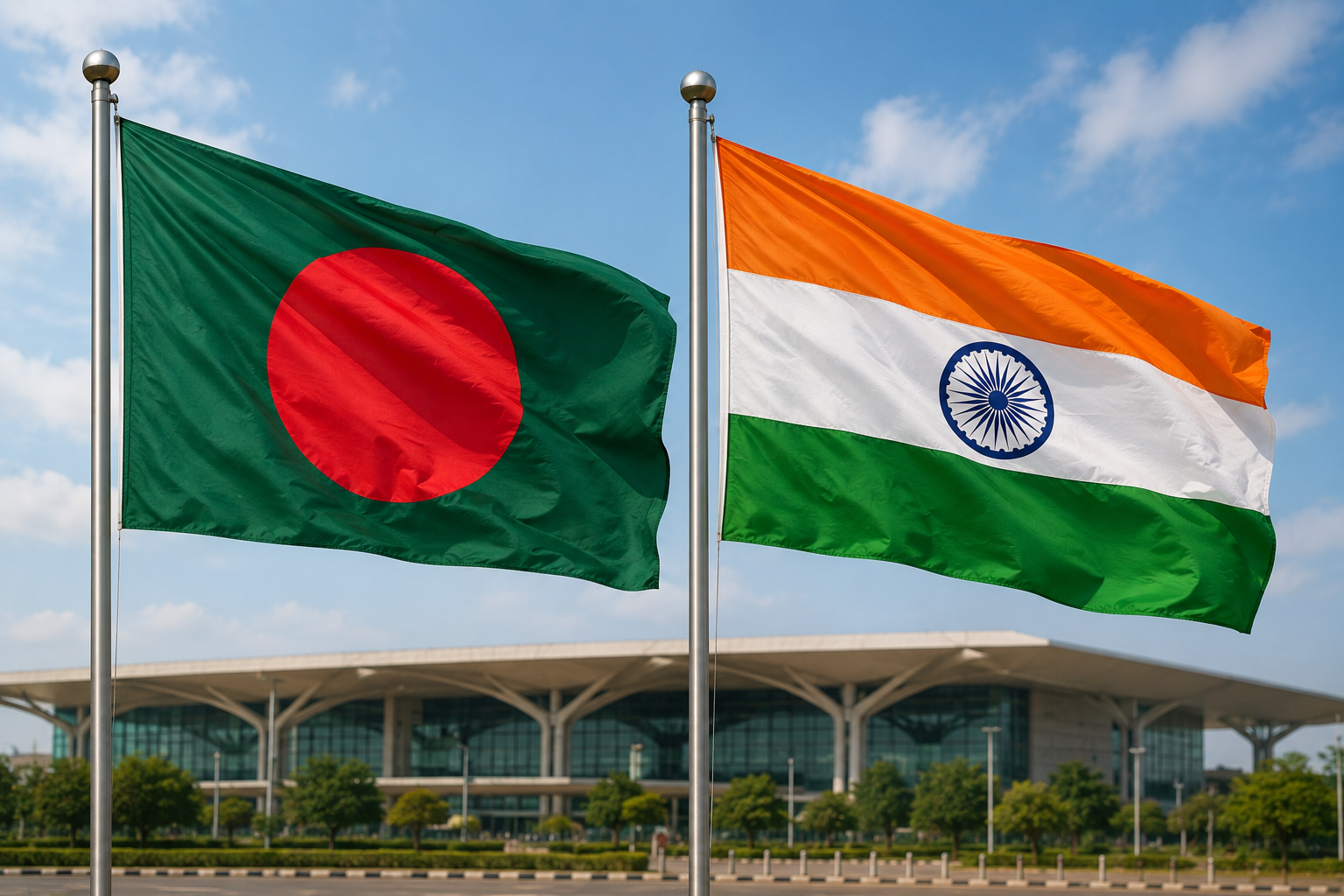
Dhaka Seeks Greater Clarification After Adviser to Bangladesh Prime Minister Was Reportedly Involved in an Incident at New Delhi Airport
Bangladesh has expressed dissatisfaction with India's explanation regarding an incident involving Prime Minister's Adviser for Information and Strategy, Zahed Ur Rahman, at Indira Gandhi International Airport (IGIA) in New Delhi. The development has prompted fresh diplomatic engagement between the two neighbouring countries, with Dhaka describing the response from the Indian side as "unsatisfactory" and calling the incident "unfortunate and regrettable."
According to Bangladesh's state-run BSS News Agency, a spokesperson for the country's Ministry of Foreign Affairs stated that the clarification provided by Indian authorities did not adequately address the concerns raised by Bangladesh.
While the exact circumstances surrounding the airport incident have not been officially disclosed by either side, the issue has become a subject of diplomatic communication through established bilateral channels.
Bangladesh Seeks More Comprehensive Clarification
Speaking on the matter, the spokesperson for Bangladesh's Foreign Ministry said the explanation received from New Delhi failed to satisfactorily explain the events involving the senior government adviser.
According to the ministry, Bangladesh considers the matter significant given the official status of the individual involved and expects greater clarity regarding the circumstances surrounding the incident.
Officials reiterated that Dhaka remains engaged with Indian authorities and hopes the issue will be resolved through constructive diplomatic dialogue.
Incident Involved Prime Minister's Adviser
The incident reportedly involved Zahed Ur Rahman, who serves as the Adviser for Information and Strategy to Bangladesh's Prime Minister.
Reports indicate that the episode occurred at Indira Gandhi International Airport during his visit to New Delhi.
However, neither the Indian nor Bangladeshi governments have publicly released detailed information regarding the sequence of events or the nature of the incident.
The matter is currently being addressed through diplomatic communication rather than public exchanges.
India Responds Through Diplomatic Channels
India has already shared its explanation with Bangladesh through official diplomatic channels.
However, according to Bangladesh's Foreign Ministry, the response has not fully addressed the concerns raised by Dhaka.
Diplomatic discussions between the two governments are expected to continue as both sides work towards resolving the matter without affecting broader bilateral cooperation.
Officials from both countries have not indicated any disruption to ongoing diplomatic engagements.
Importance of Diplomatic Protocol
Incidents involving senior government officials travelling internationally are generally treated with considerable diplomatic sensitivity.
International protocol emphasizes:
-
Respect for visiting dignitaries.
-
Timely communication between governments.
-
Transparency in resolving official concerns.
-
Mutual respect and cooperation.
-
Preservation of bilateral relationships.
Experts note that prompt diplomatic engagement often helps prevent isolated incidents from escalating into larger diplomatic disputes.
India-Bangladesh Relations Extend Beyond Individual Incidents
Despite occasional differences, India and Bangladesh share one of the strongest bilateral relationships in South Asia.
Cooperation between the two countries spans several strategic sectors, including:
-
Trade and commerce.
-
Energy cooperation.
-
Border management.
-
Inland waterways.
-
Railway connectivity.
-
Counter-terrorism.
-
Defence cooperation.
-
Digital connectivity.
-
Cultural exchanges.
Over the past decade, both governments have expanded collaboration through infrastructure projects, cross-border trade initiatives and regional connectivity programmes.
Economic Ties Continue to Strengthen
India is among Bangladesh's largest trading partners, with bilateral trade covering a wide range of products and industries.
Major areas of economic cooperation include:
-
Textiles and garments.
-
Pharmaceuticals.
-
Agricultural products.
-
Engineering goods.
-
Petroleum products.
-
Power transmission.
-
Infrastructure development.
-
Logistics and transport.
Several cross-border projects involving railways, roads, ports and inland waterways continue to strengthen economic integration between the two countries.
Analysts believe maintaining stable diplomatic relations remains essential for sustaining these long-term economic partnerships.
Regional Cooperation Remains a Shared Priority
India and Bangladesh continue to collaborate through various regional and multilateral platforms aimed at enhancing connectivity and economic development.
Current areas of cooperation include:
-
BBIN (Bangladesh-Bhutan-India-Nepal) initiatives.
-
BIMSTEC projects.
-
Coastal shipping agreements.
-
Border infrastructure development.
-
Power grid connectivity.
-
Disaster management cooperation.
-
Tourism promotion.
Observers note that both countries have consistently demonstrated a willingness to resolve bilateral issues through dialogue while advancing shared regional interests.
Diplomatic Dialogue Expected to Continue
Foreign policy experts believe the matter is likely to be addressed through established diplomatic mechanisms.
Potential next steps may include:
-
Further exchange of official communications.
-
Additional clarification from Indian authorities.
-
Continued consultations between foreign ministries.
-
Administrative review of the reported incident.
-
Coordination through diplomatic missions in New Delhi and Dhaka.
Such processes are common in cases involving concerns raised by one government regarding the treatment of senior officials abroad.
Market and Business Perspective
Although the incident has attracted diplomatic attention, analysts do not expect any immediate impact on economic relations between India and Bangladesh.
The two countries maintain extensive commercial partnerships supported by:
-
Strong bilateral trade.
-
Cross-border investments.
-
Manufacturing supply chains.
-
Infrastructure cooperation.
-
Energy connectivity.
-
Growing private-sector engagement.
Business leaders generally view diplomatic dialogue as the appropriate mechanism for resolving isolated issues while ensuring that broader economic cooperation remains unaffected.
Outlook
Bangladesh's description of India's explanation as "unsatisfactory" reflects its expectation of greater clarity regarding the airport incident involving Prime Minister's Adviser Zahed Ur Rahman. While the issue has introduced a fresh diplomatic discussion, both governments continue to engage through official channels, underscoring the maturity of their bilateral relationship.
Given the strategic importance of India-Bangladesh ties, analysts believe both countries are likely to resolve the matter through dialogue while preserving cooperation in trade, connectivity, security and regional development. As further information becomes available, attention will remain focused on diplomatic engagement and efforts to ensure that the incident does not overshadow the broader partnership shared by the two neighbours.