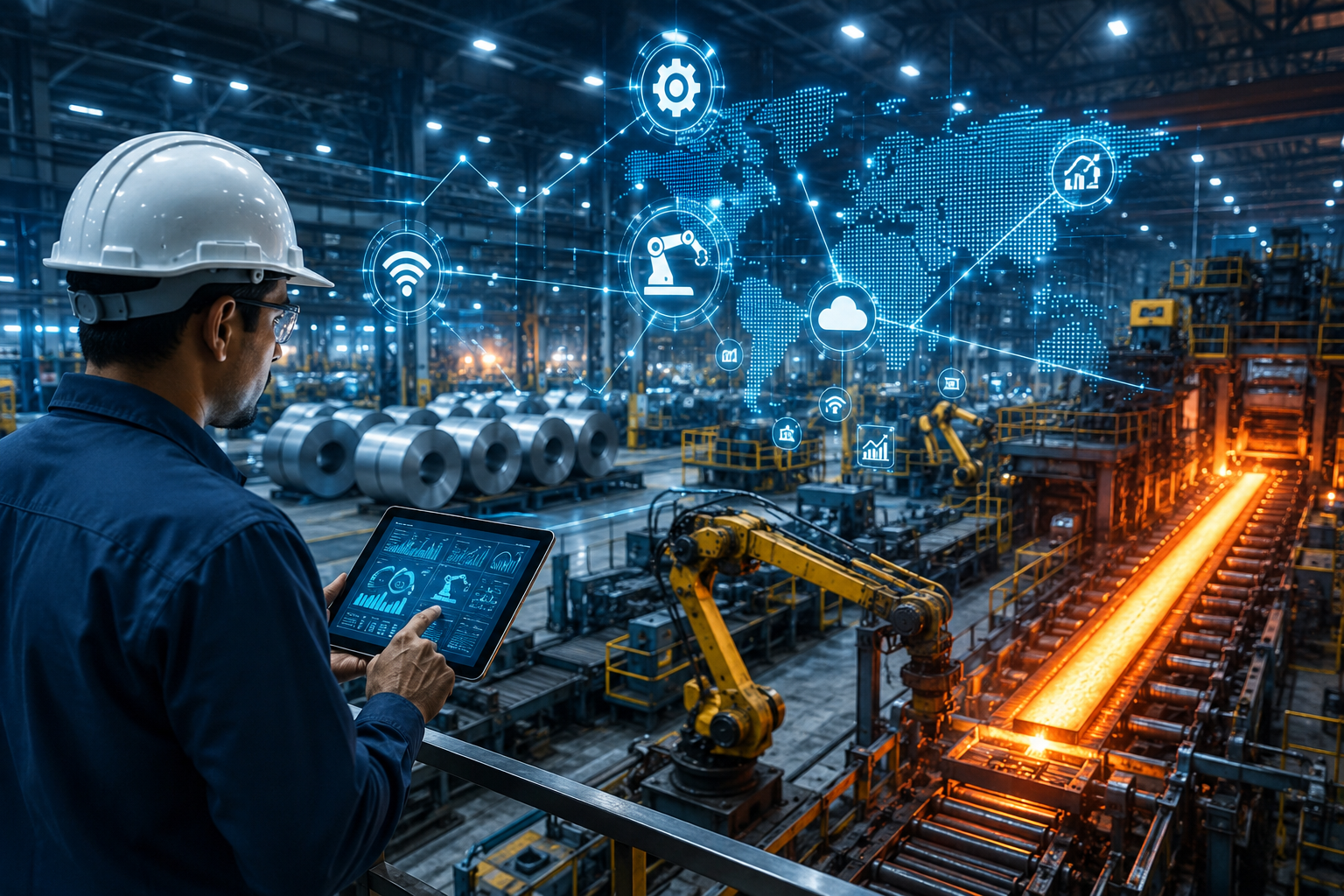
Digital Transformation, Automation and Smart Manufacturing Seen as Key Drivers of Future Growth
India's steel industry must rapidly adopt emerging technologies to enhance productivity, improve operational efficiency, and strengthen its global competitiveness, Union Steel Minister H.D. Kumaraswamy said on Wednesday.
Speaking at the Chintan Shivir 2026 on Digitalisation in the Steel Sector, organized by the Ministry of Steel in New Delhi, the minister emphasized that the future of the industry will be determined not only by production volumes but also by the creation of intelligent and digitally connected industrial ecosystems.
Technology to Become the Backbone of Steel Manufacturing
Addressing industry leaders, policymakers, and representatives from both public and private sector steel companies, Kumaraswamy highlighted the growing importance of technologies such as Artificial Intelligence (AI), Machine Learning, Internet of Things (IoT), robotics, automation, and advanced data analytics in transforming steel production.
According to the minister, these technologies can significantly improve plant efficiency, reduce operational costs, optimize energy consumption, and enhance product quality. As global competition intensifies, companies that successfully integrate digital solutions into their manufacturing processes will be better positioned to capture market opportunities and sustain long-term growth.
Smart Factories to Drive the Next Phase of Growth
Industry experts participating in the event noted that the steel sector is gradually moving toward smart manufacturing models where production facilities are increasingly automated and interconnected.
The adoption of predictive maintenance systems, real-time monitoring, digital twins, and AI-powered decision-making tools can help steel producers minimize downtime, improve asset utilization, and achieve higher productivity levels. These innovations also enable faster responses to changing market conditions and customer requirements.
Experts believe that digital transformation will help steel manufacturers achieve greater operational resilience while maintaining cost competitiveness in a rapidly evolving global environment.
Enhancing Sustainability Through Innovation
Beyond productivity gains, digital technologies are also expected to play a crucial role in improving sustainability across the steel industry. Advanced monitoring systems can help companies reduce carbon emissions, optimize resource usage, and improve environmental compliance.
As governments worldwide tighten environmental regulations and industries move toward greener production methods, technology-driven efficiency improvements are becoming increasingly important for steelmakers.
The minister stressed that sustainability and digitalization must go hand in hand as India seeks to build a modern and environmentally responsible steel sector.
India's Steel Industry Positioned for Expansion
India remains one of the world's largest steel producers and continues to witness strong demand from infrastructure development, construction, manufacturing, renewable energy projects, railways, and urbanization initiatives.
With significant investments planned across these sectors, industry stakeholders expect steel consumption to remain on a growth trajectory over the coming years. To meet this demand efficiently, companies will need to modernize operations and embrace advanced manufacturing technologies.
The government has also been encouraging greater innovation, research, and digital adoption to strengthen the sector's competitiveness on the global stage.
Public-Private Collaboration Critical for Digital Adoption
Kumaraswamy emphasized the importance of collaboration between government bodies, industry participants, technology providers, and research institutions to accelerate digital transformation.
He noted that knowledge-sharing initiatives, skill development programs, and investments in digital infrastructure will be essential to ensure the successful implementation of advanced technologies across the sector.
Industry leaders attending the event also called for stronger partnerships to support innovation, workforce training, and technology deployment throughout the steel value chain.
Outlook: Digitalization Set to Reshape India's Steel Future
As global manufacturing becomes increasingly technology-driven, India's steel sector is entering a new phase where innovation and digital capabilities will play a defining role in determining competitiveness and growth.
Industry observers believe that companies investing in automation, AI-driven analytics, and smart manufacturing systems today will be better equipped to improve efficiency, manage costs, and capture future opportunities.
With supportive government policies and rising industry awareness, digital transformation is expected to become a key pillar of India's strategy to emerge as a global steel manufacturing powerhouse.