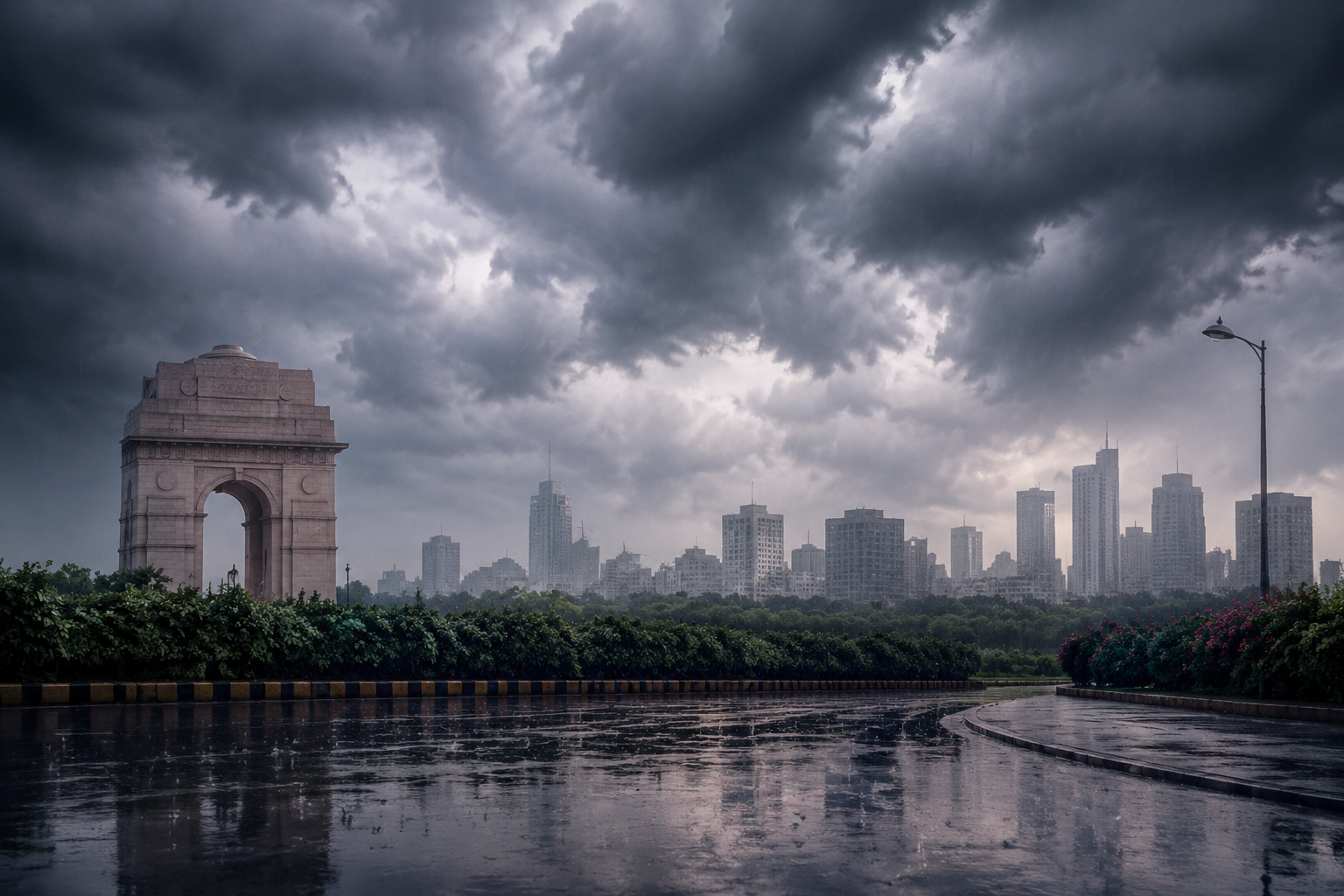
Thunderstorms, Gusty Winds and Scattered Rain Expected Till June 21; Weather Shift May Influence Power, FMCG and Agri Sentiment
The India Meteorological Department (IMD) has forecast an extended spell of rain and thunderstorms across Delhi-NCR over the next five days, with intermittent showers, lightning activity, and gusty winds expected to continue until at least June 21. The weather system is likely to bring temporary relief from the recent heatwave conditions while reshaping short-term consumption and sectoral demand trends.
According to the latest update from the India Meteorological Department, the region will experience generally cloudy skies with light to moderate rain and wind speeds ranging between 30–40 kmph, occasionally gusting up to 50–60 kmph during thunderstorm activity.
Delhi-NCR Weather Outlook: Cooling Effect After Heat Spike
Delhi and surrounding regions are expected to remain under unstable weather conditions between June 16 and June 21.
Key highlights include:
- Intermittent light rain and thunderstorms across multiple districts
- Strong surface winds during evening and night thunderstorm phases
- Temporary dip in daytime temperatures
- Increased humidity levels due to moisture inflow
Meteorologists suggest that this pattern is typical of pre-monsoon transitions and may gradually stabilize as monsoon currents strengthen further across northern India.
Broader Monsoon Progress: Uneven but Expanding Coverage
The southwest monsoon has already advanced along key central and eastern corridors, passing through cities including Ranchi, Hyderabad, Solapur, and Muzaffarpur.
IMD indicates favorable conditions for further advancement into:
- Telangana and Odisha
- Jharkhand and Bihar
- Parts of Chhattisgarh
However, rainfall distribution remains uneven, with eastern, northeastern, and southern India receiving comparatively stronger precipitation activity.
Sectoral Impact: Weather Shift to Influence Market Trends
From an investment perspective, the current weather pattern carries implications across multiple sectors, particularly in consumption, energy, and agriculture-linked themes.
1. Power and Energy Demand May Moderate Temporarily
Lower temperatures in northern India typically reduce peak electricity demand driven by air conditioning loads. This may result in:
- Short-term easing of peak power prices
- Lower spot demand for thermal generation
- Stabilisation in distribution load in urban clusters
However, demand is expected to rebound once humidity rises again in late June.
2. FMCG and Rural Demand Outlook Improves Gradually
Early monsoon activity often supports rural liquidity and improves sentiment for consumption-oriented sectors. Investors typically track:
- Rural FMCG recovery
- Increased demand for packaged goods and beverages
- Improved traction for agri-input companies
If rainfall spreads uniformly, FMCG volumes in semi-urban and rural markets may see incremental improvement.
3. Agriculture and Kharif Season Watchlist Strengthens
The agriculture sector remains highly sensitive to monsoon progression. With El Niño conditions present in the Pacific, rainfall variability remains a key risk factor this year.
States including Uttar Pradesh, Maharashtra, Madhya Pradesh, and Gujarat remain under watch for uneven rainfall distribution, which may affect:
- Sowing progress of kharif crops
- Fertilizer and seed demand cycles
- Rural credit and procurement trends
4. Inflation and Commodity Sensitivity
Weather conditions indirectly influence inflation trends through food supply dynamics:
- Excess rainfall in eastern India may disrupt logistics
- Uneven monsoon may impact vegetable prices
- Stable monsoon progress generally supports softening food inflation
Market participants are closely tracking how rainfall evolves through July.
El Niño Factor: Key Macro Risk for Monsoon Stability
The agriculture ministry has flagged that El Niño conditions may impact rainfall distribution across several Indian states during the Kharif season. Historically, El Niño phases are associated with:
- Uneven monsoon spread
- Higher weather volatility
- Agricultural output uncertainty
As per the India Meteorological Department, El Niño conditions currently exist over the equatorial Pacific and may strengthen further during the June–September monsoon period.
Market Takeaway: Weather as a Short-Term Macro Driver
While the immediate impact of Delhi-NCR’s rainy spell is largely localised, broader monsoon progression remains a key macroeconomic driver for India’s equity markets.
Investors should closely monitor:
- Monsoon distribution across key agricultural states
- Energy demand trends during weather fluctuations
- FMCG and rural consumption recovery signals
- Food inflation trajectory in July–August
In the near term, weather-driven volatility is expected to remain a secondary but relevant input for sector rotation strategies, particularly in consumption and agri-linked stocks.