CEO Sriharsha Majety Says Company Will Focus on Sustainable Growth Instead of Aggressive Spending
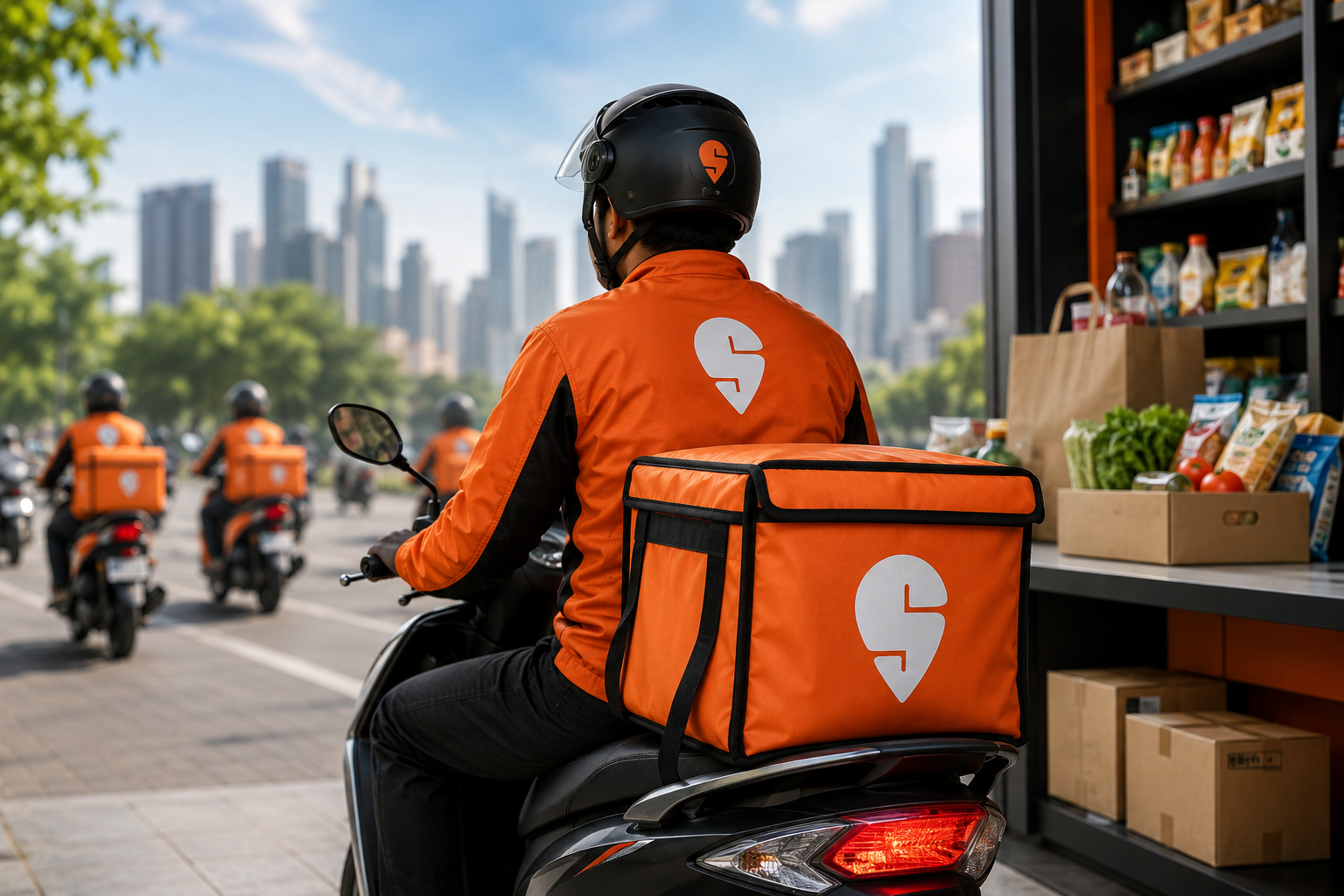
Food delivery and quick commerce platform Swiggy has decided to stay away from the aggressive spending war unfolding in India’s fast-growing quick commerce market, even as rivals Amazon, Flipkart and Reliance Retail continue expanding their ultra-fast delivery operations across the country.
Swiggy CEO Sriharsha Majety said the company is prioritising profitability, customer retention and operational efficiency instead of chasing short-term market share through heavy discounts and rapid expansion. According to him, blindly matching competitors’ spending strategies could weaken the company’s long-term financial position.
India’s quick commerce sector has emerged as one of the world’s hottest consumer-tech battlegrounds, attracting billions of dollars from investors including SoftBank, Temasek and several sovereign wealth funds. Companies are competing to deliver groceries, electronics and daily essentials within 10 minutes, particularly in densely populated urban areas.
However, Majety believes the market will eventually reward companies with stronger business fundamentals rather than those spending heavily to gain temporary traction. He said Swiggy’s approach is centered on retaining high-value customers and building differentiated services rather than relying solely on discounts.
Swiggy’s Instamart business currently operates more than 1,100 dark stores across India, supporting its rapid delivery network. Despite industry pressure to expand aggressively, the company added only a limited number of stores during the March quarter, reflecting its cautious strategy.
The company has also been focusing on improving unit economics within Instamart. According to Majety, the business has improved profitability metrics significantly over the last four quarters. Swiggy is increasingly investing in private-label grocery products and fresher food offerings that are difficult for competitors to replicate.
Majety compared the strategy to premium retail positioning seen globally, where businesses differentiate themselves through product quality and customer experience rather than only competing on pricing. He pointed to products such as fresh cottage cheese and clotted cream that encourage repeat purchases and stronger customer loyalty.
Swiggy’s stance comes at a time when investor concerns around profitability in India’s quick commerce sector are rising. Analysts have warned that companies relying excessively on cash burn and discounts may struggle to sustain growth if funding conditions tighten in the future.
The company’s shares have faced pressure in recent months, falling more than 30 percent this year despite Swiggy raising nearly ₹10,000 crore in fresh capital. Market observers are closely watching whether the company can balance growth and profitability while facing competition from larger rivals with deeper financial resources.
Majety also referenced the telecom industry’s past price wars, particularly the response of Bharti Airtel during the entry of Reliance Jio. Instead of aggressively cutting prices to match competitors, Airtel focused on protecting business economics and eventually emerged stronger after industry consolidation.
According to Majety, Swiggy’s long-term success will depend more on execution, logistics efficiency and customer loyalty rather than access to unlimited capital. He maintained that the company remains financially strong and well-positioned to compete sustainably in India’s rapidly evolving quick commerce market.