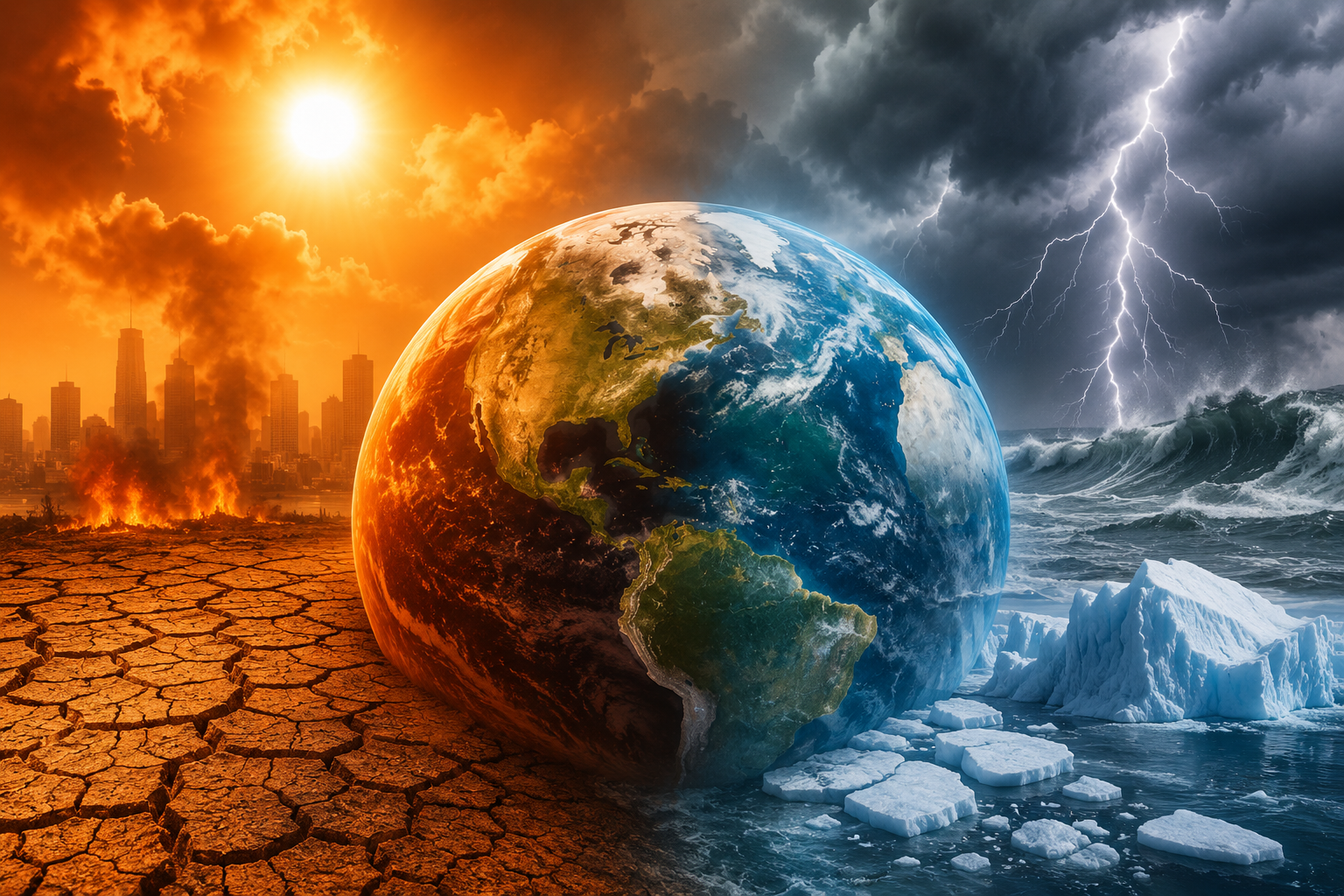
Arctic Warming and Strong El Niño Could Trigger More Extreme Weather Worldwide
A fresh climate outlook released by the United Nations has warned that global temperatures are expected to remain dangerously close to record highs over the next five years, raising concerns about worsening heatwaves, melting Arctic ice and increasingly severe weather conditions across the world.
The report, published jointly by the World Meteorological Organization (WMO) and the UK Met Office, stated that average global temperatures between 2026 and 2030 are projected to stay between 1.3°C and 1.9°C above pre-industrial levels recorded during 1850-1900. Scientists said there is a very high probability that at least one year during this period will temporarily cross the critical 1.5°C warming threshold outlined under the Paris Climate Agreement.
Experts clarified that a temporary rise above 1.5°C does not officially mean climate goals have failed, since the Paris Agreement measures long-term warming trends over decades rather than individual years. However, the repeated crossing of this threshold would signal that the planet is moving closer to dangerous and potentially irreversible climate impacts.
Researchers also warned that 2024’s record as the warmest year ever recorded may soon be broken. Rising greenhouse gas emissions, combined with natural climate patterns such as El Niño, are expected to push temperatures even higher in the coming years.
The Arctic region is projected to warm at a much faster pace than the rest of the planet. Winter temperatures in the Arctic could rise more than three times the global average over the next five years. Scientists expect further melting of sea ice in regions including the Barents Sea, Bering Sea and Sea of Okhotsk, which may disrupt global weather systems and intensify storms in several northern regions.
The report also predicts wetter-than-normal conditions in northern Europe, Alaska, Siberia and parts of the Sahel region in Africa during upcoming seasons. In contrast, the Amazon rainforest region is likely to experience drier weather conditions, increasing concerns over droughts and forest fires.
Climate scientists further warned about the possible return of a strong El Niño weather pattern later this year, which could continue into 2027. El Niño typically causes warming in Pacific Ocean waters and often leads to higher global temperatures, heatwaves, flooding and extreme weather events in many countries.
Scientists stressed that the findings once again underline the urgent need for countries to accelerate climate action, reduce fossil fuel dependence and invest in sustainable energy systems before global warming reaches even more dangerous levels.