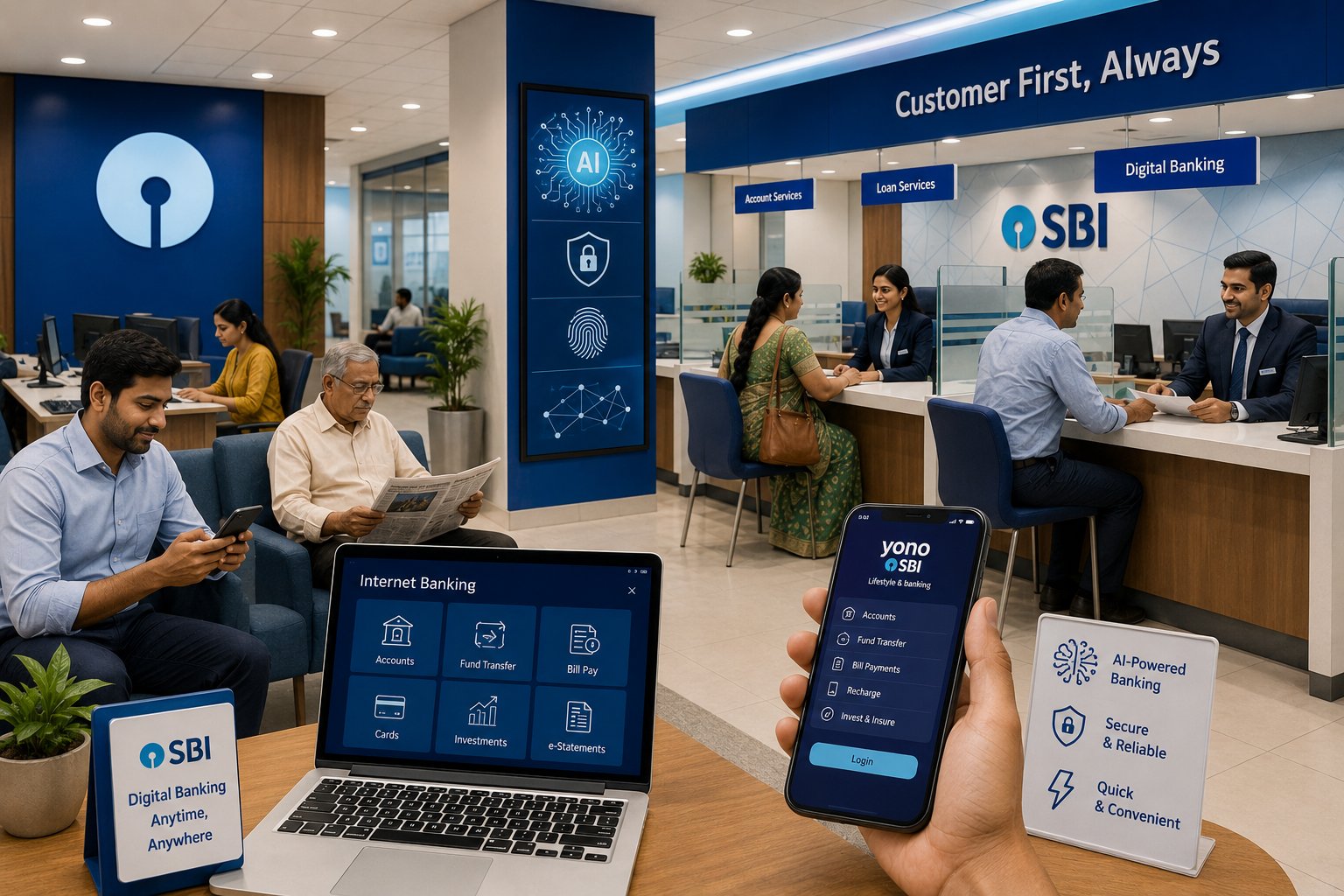
India’s Largest Lender Pursues Hybrid Banking Strategy Combining Technology, Trust And Physical Reach
The statement from SBI Chairman CS Setty comes at a time when the banking industry globally is witnessing rapid digital transformation driven by AI, data analytics and technology-led customer engagement models.
Despite the growing adoption of mobile banking and digital financial services, SBI believes its extensive branch network remains a critical competitive advantage in India’s evolving banking landscape.
SBI Strengthens ‘Digital First, Customer First’ Vision
In its FY26 annual report, SBI said it is intensifying its “Digital First, Customer First” strategy with continued investments planned across artificial intelligence, cybersecurity, data analytics and digital infrastructure.
The bank said the next phase of transformation will focus on creating highly personalised, seamless and intuitive banking experiences across all customer channels.
Management emphasised that digital transformation is no longer limited to customer convenience but is increasingly becoming central to operational efficiency, customer engagement and long-term competitiveness.
Industry experts believe SBI’s aggressive technology investments could significantly strengthen its ability to compete with private banks and fintech platforms over the coming years.
Physical Branches To Continue Playing Key Role
While digital banking adoption continues to accelerate across India, SBI said physical banking will remain a core part of its relationship-led business model.
The bank plans to integrate the strength of its extensive branch network with digital platforms to deliver a true omni-channel banking experience.
Analysts believe this hybrid approach reflects the realities of the Indian market, where branch banking continues to play an important role in customer trust, rural outreach, SME lending and relationship management.
Physical branches remain particularly important for senior citizens, rural customers, business banking and complex financial advisory services.
SBI Looks To Combine Technology With Human Trust
According to management, the bank’s long-term vision is to build a future-ready institution that combines technological leadership with human trust.
SBI stated that while digital platforms improve speed and convenience, strong customer relationships and branch-level engagement continue to remain critical for sustainable banking growth.
The lender also highlighted that customer trust and social responsibility would remain key priorities alongside technological modernisation.
Industry observers note that India’s public sector banks continue to enjoy strong customer trust due to their physical presence and government backing, especially in semi-urban and rural regions.
Project SARAL To Drive Next-Generation Banking Transformation
A major component of SBI’s transformation roadmap is Project SARAL, which aims to improve operational efficiency through process re-engineering, automation and digital integration.
The project will focus on standardising banking operations and increasing the use of artificial intelligence and automation technologies across multiple business functions.
The initiative is expected to simplify processes, improve turnaround times and enhance customer experience while reducing operational inefficiencies.
Analysts believe large-scale automation and AI adoption could help SBI improve productivity and optimise costs over the long term.
AI, Data Analytics And Cybersecurity In Focus
SBI said future investments will continue to focus heavily on emerging technologies including AI, machine learning and advanced data analytics.
The bank is also strengthening cybersecurity capabilities as digital transactions and online banking volumes continue to rise rapidly across India.
Experts believe cybersecurity investments have become increasingly critical for banks amid rising digital adoption and growing threats linked to online fraud and cyberattacks.
The integration of AI and analytics is also expected to help SBI improve risk management, customer targeting and personalised financial services.
Bank Eyes Growth In Digital Onboarding And SME Ecosystem
The lender sees significant opportunities in expanding digital onboarding, transaction banking and relationship-driven banking services for small and medium enterprises (SMEs).
SBI plans to strengthen customer engagement while building a more granular and low-cost deposit base through integrated digital and branch-led strategies.
Management also highlighted the importance of expanding transaction banking and ecosystem-based financial solutions for business customers.
Industry experts believe India’s fast-growing SME sector represents one of the largest long-term growth opportunities for the banking industry.
Wealth Management And Advisory Business To Expand
SBI also intends to strengthen its wealth management and advisory services business using technology-enabled engagement models.
The bank believes rising income levels, financial awareness and investment participation across India are creating significant demand for personalised financial planning and wealth advisory services.
Analysts expect traditional banks to increasingly compete with fintech firms and specialised wealth platforms in the coming years.
SBI Aligns Long-Term Strategy With India’s Growth Vision
The bank reiterated its commitment to supporting India’s long-term economic growth ambitions under the government’s Viksit Bharat initiative.
SBI said sustainability, workforce development, governance and prudent capital management would remain important pillars of its long-term strategy.
As India’s largest lender continues modernising operations, the bank aims to position itself as a future-ready financial institution capable of balancing rapid technological innovation with strong customer relationships and nationwide accessibility.
Hybrid Banking Seen As SBI’s Competitive Advantage
Market experts believe SBI’s hybrid strategy — combining digital innovation with one of the country’s largest branch networks — could provide a significant competitive advantage over purely digital banking models.
While fintech adoption and app-based banking continue to expand rapidly, analysts note that physical infrastructure still remains essential for large-scale financial inclusion and relationship banking in India.
With its massive customer base, nationwide reach and growing technology investments, SBI is expected to remain a dominant force in India’s banking sector as the industry transitions toward a more digitally integrated future.