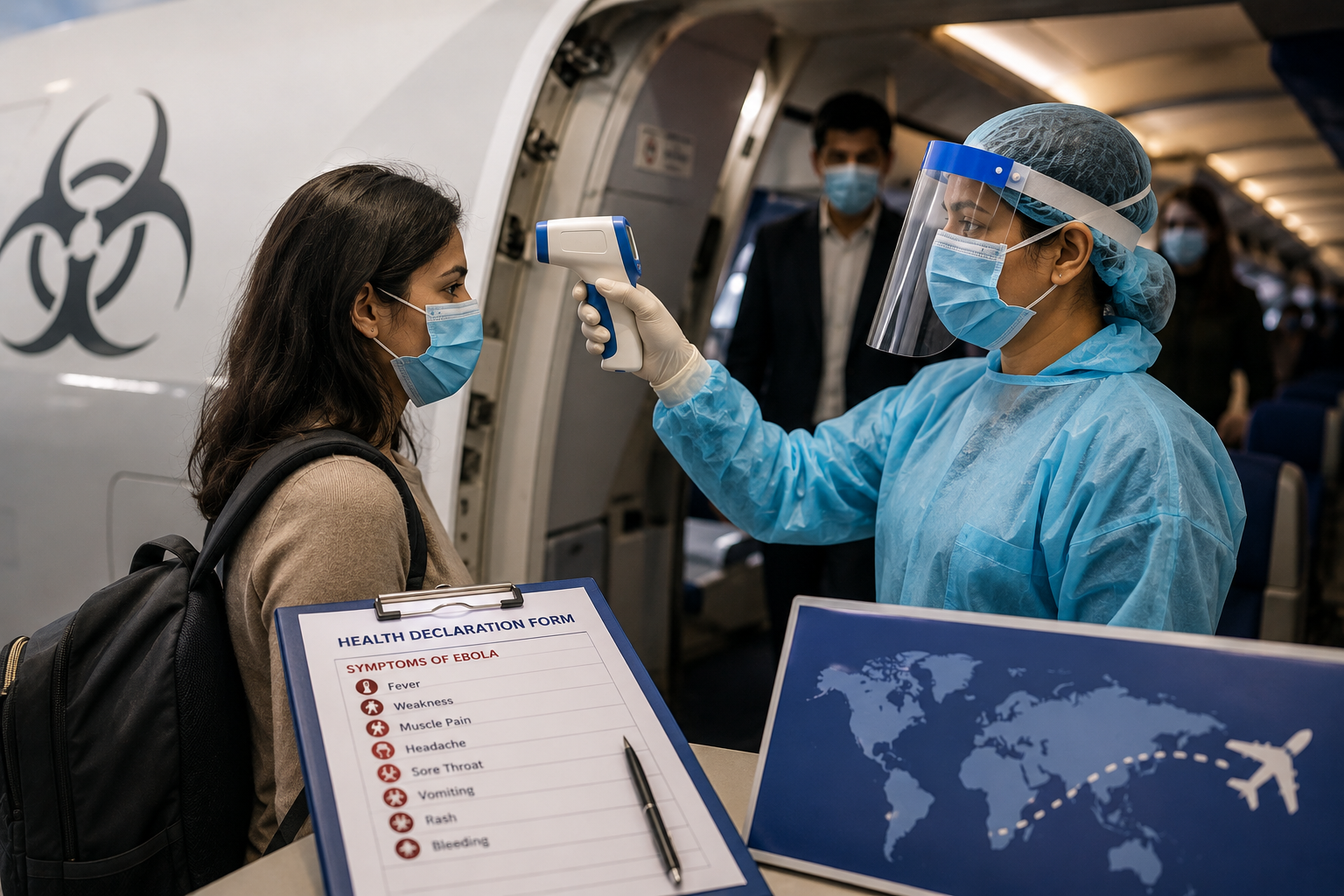
Mandatory passenger screening, self-declaration forms, and in-flight health monitoring introduced for travellers arriving from Uganda and Congo
India has strengthened its aviation health surveillance framework after the Directorate General of Civil Aviation (DGCA) issued fresh standard operating procedures (SOPs) to airlines in response to the Ebola outbreak in parts of Africa. The aviation regulator has made mandatory health screening and self-declaration procedures compulsory for passengers travelling from or transiting through Ebola-affected countries including Uganda and the Democratic Republic of the Congo.
The move comes after the World Health Organization classified the Ebola outbreak as a Public Health Emergency of International Concern (PHEIC), raising concerns about the possibility of cross-border transmission through international travel.
Airlines Ordered to Implement Mandatory Screening Measures
According to the DGCA’s latest directive, all passengers and crew members arriving from affected regions must compulsorily fill out self-declaration forms before deboarding in India. The forms will be submitted at designated immigration and airport health counters to help authorities identify and monitor potential cases at an early stage.
Airlines have also been instructed to make special in-flight health announcements informing passengers about Ebola symptoms and precautionary measures.
The aviation regulator stated that countries neighbouring Uganda and Congo, including South Sudan, have also been categorised as high-risk zones due to the possibility of disease transmission across borders.
Passengers Asked to Immediately Report Symptoms
Under the new SOPs, passengers have been advised to promptly report symptoms associated with Ebola infection either during the flight or immediately after arrival.
The symptoms highlighted by authorities include:
- Fever
- Severe weakness
- Muscle pain
- Headache
- Sore throat
- Vomiting
- Skin rash
- Unexplained bleeding
Travellers who develop symptoms within 21 days of arriving in India have been directed to immediately seek medical treatment at designated healthcare facilities and inform airport health authorities without delay.
Health experts say early detection and isolation remain the most effective tools to prevent the spread of the Ebola virus.
Dedicated Cabin Crew Member for Suspected Cases
The DGCA has also instructed airlines operating on routes connected to outbreak regions to designate a single cabin crew member exclusively to attend to any passenger showing Ebola-like symptoms during the flight.
Airlines have been ordered to ensure strict onboard safety protocols, including:
- Isolation of symptomatic passengers where possible
- Use of protective equipment by crew members
- Proper handling of potentially contaminated materials
- Full aircraft disinfection after landing
The regulator additionally mandated specialised training programmes for airline crew to prepare them for handling medical emergencies linked to infectious diseases.
India Steps Up Aviation Health Preparedness
The latest measures reflect India’s efforts to strengthen border health security and prevent the entry of highly infectious diseases through international travel routes. Aviation authorities are working closely with airport health organisations, immigration departments, and state health agencies to enhance surveillance at major airports.
Experts believe the aviation sector remains one of the most critical frontline defence systems during global health emergencies due to the speed and scale of international passenger movement.
Global Health Authorities Closely Monitoring Ebola Outbreak
The Ebola outbreak in Central and East Africa has triggered concern among international health agencies due to the disease’s high fatality rate and potential for rapid spread if not contained quickly.
The virus spreads through direct contact with bodily fluids of infected individuals and contaminated surfaces. Symptoms often appear suddenly and can worsen rapidly without immediate medical care.
While no major outbreak has been reported in India, authorities are taking preventive measures to minimise any risk of imported infections through air travel.
Aviation Sector Faces Renewed Focus on Health Safety
The DGCA’s latest directives highlight how global health emergencies continue to influence aviation regulations even years after the Covid-19 pandemic reshaped international travel norms.
Industry observers believe airlines and airports may increasingly adopt stricter health-monitoring systems, digital passenger declarations, and rapid response protocols as part of long-term aviation safety planning.