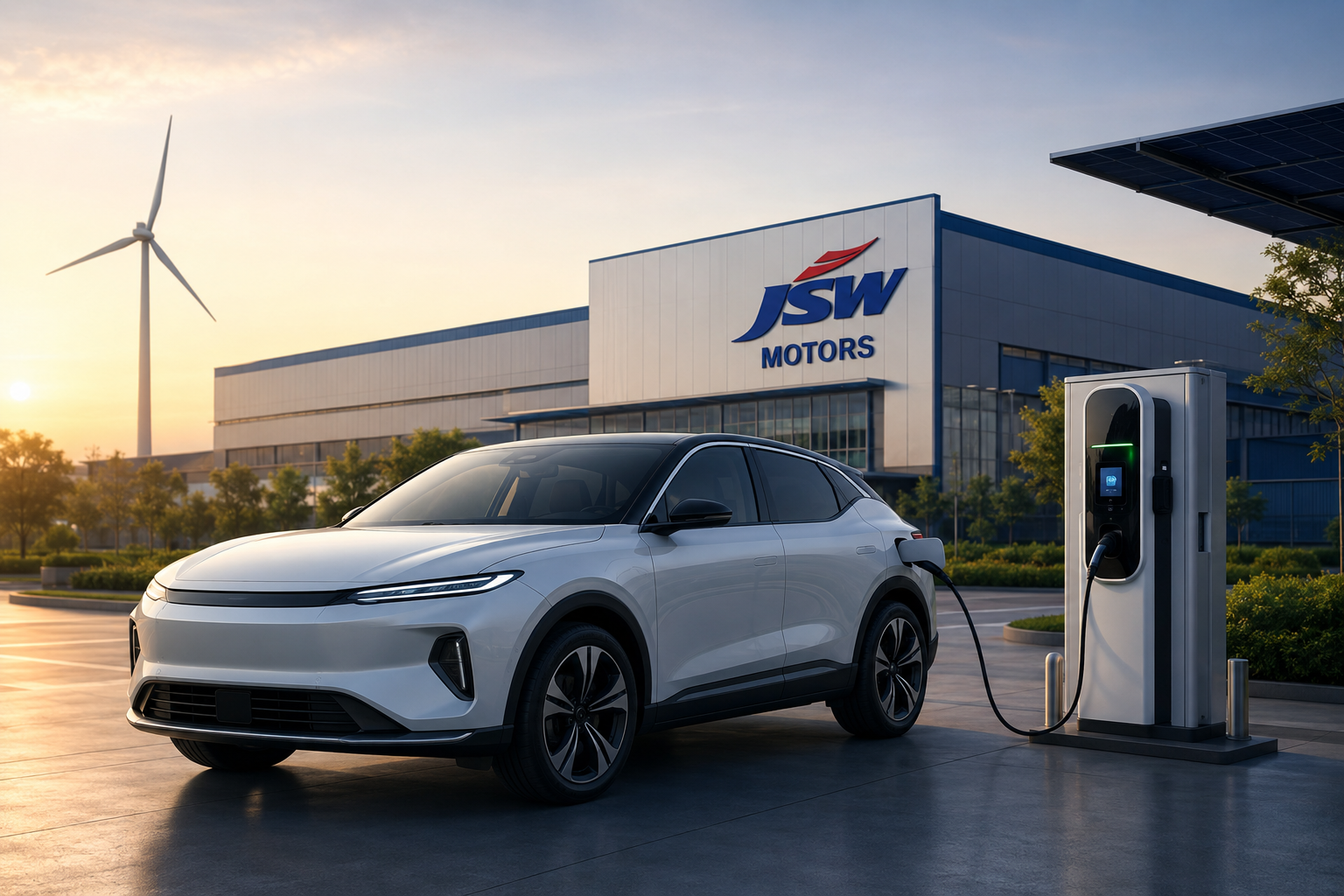
Sajjan Jindal-led venture accelerates plans for a large-scale electric vehicle manufacturing hub in Maharashtra amid rising investor confidence in India’s clean mobility sector
India’s electric vehicle ambitions received a major boost after Sajjan Jindal-backed JSW Motors secured an Rs.8,000 crore financing line from State Bank of India (SBI) to support its upcoming EV manufacturing operations. The funding marks one of the largest recent financial commitments toward India’s emerging new-energy vehicle ecosystem and underlines growing confidence among lenders in the country’s long-term electric mobility story.
The loan facility, which reportedly carries a tenure of more than 10 years, will partly finance JSW Motors’ greenfield manufacturing facility planned in Maharashtra. The project is expected to become a key pillar of the company’s strategy to establish itself as a serious player in India’s rapidly expanding passenger EV market.
Major Push for Domestic EV Manufacturing
The development comes at a time when India is aggressively promoting local manufacturing of electric and hybrid vehicles through policy incentives, subsidies, and infrastructure expansion. Industry experts believe the funding will not only help JSW Motors fast-track its production plans but also strengthen the broader domestic EV supply chain.
With global automakers and Indian conglomerates increasingly investing in clean mobility technologies, the sector has become one of the fastest-growing segments of the Indian economy. Rising fuel prices, stricter emission norms, and increasing consumer awareness are further accelerating the shift toward electric mobility.
According to market estimates, India’s EV market is expected to witness strong double-digit growth over the coming years, creating opportunities across vehicle manufacturing, battery production, charging infrastructure, and component supply chains.
SBI’s Confidence Reflects Strong Credit Outlook
The participation of State Bank of India, India’s largest public sector lender, is being viewed as a significant endorsement of the EV sector’s long-term growth potential. Reports suggest the bank may later distribute a portion of the exposure to other financial institutions depending on demand in the secondary loan market.
The transaction also arrives amid expectations of healthy credit growth in the Indian banking sector during the current financial year. Rating agencies estimate that lending growth could outpace deposit growth as banks continue focusing on expanding their balance sheets and supporting industrial investments.
Analysts say large-ticket infrastructure and manufacturing loans, particularly in sunrise sectors like electric mobility and renewable energy, are likely to remain key drivers of banking sector growth over the next few years.
JSW Motors Aims to Build Homegrown EV Brand
JSW Motors is expected to launch one of India’s first major homegrown passenger vehicle brands in decades. The company is positioning itself strongly in the new-energy vehicle segment as competition intensifies among established automakers and emerging EV startups.
The broader JSW Group already has a growing footprint in the automotive sector through its partnership with SAIC Motor Corporation under JSW MG Motor India. The group is also associated with projects involving Chery Automobile for future mobility technologies.
While the company has not yet disclosed product details or launch timelines, industry observers expect JSW Motors to focus heavily on premium electric SUVs and technologically advanced passenger vehicles tailored for Indian consumers.
India’s EV Ecosystem Gains Momentum
India’s transition toward cleaner transportation continues to gather pace as both government and private sector investments surge across the EV value chain. Several state governments are introducing dedicated EV policies, tax benefits, and manufacturing incentives to attract investments into battery and vehicle production facilities.
Experts believe the entry of diversified industrial groups such as JSW into the automobile space could significantly strengthen India’s ambitions of becoming a global EV manufacturing hub. Increased domestic production is also expected to reduce import dependence and create large-scale employment opportunities across manufacturing and allied industries.
With financing now secured and infrastructure development expected to begin soon, JSW Motors’ EV venture could emerge as one of the most closely watched developments in India’s evolving automotive landscape.