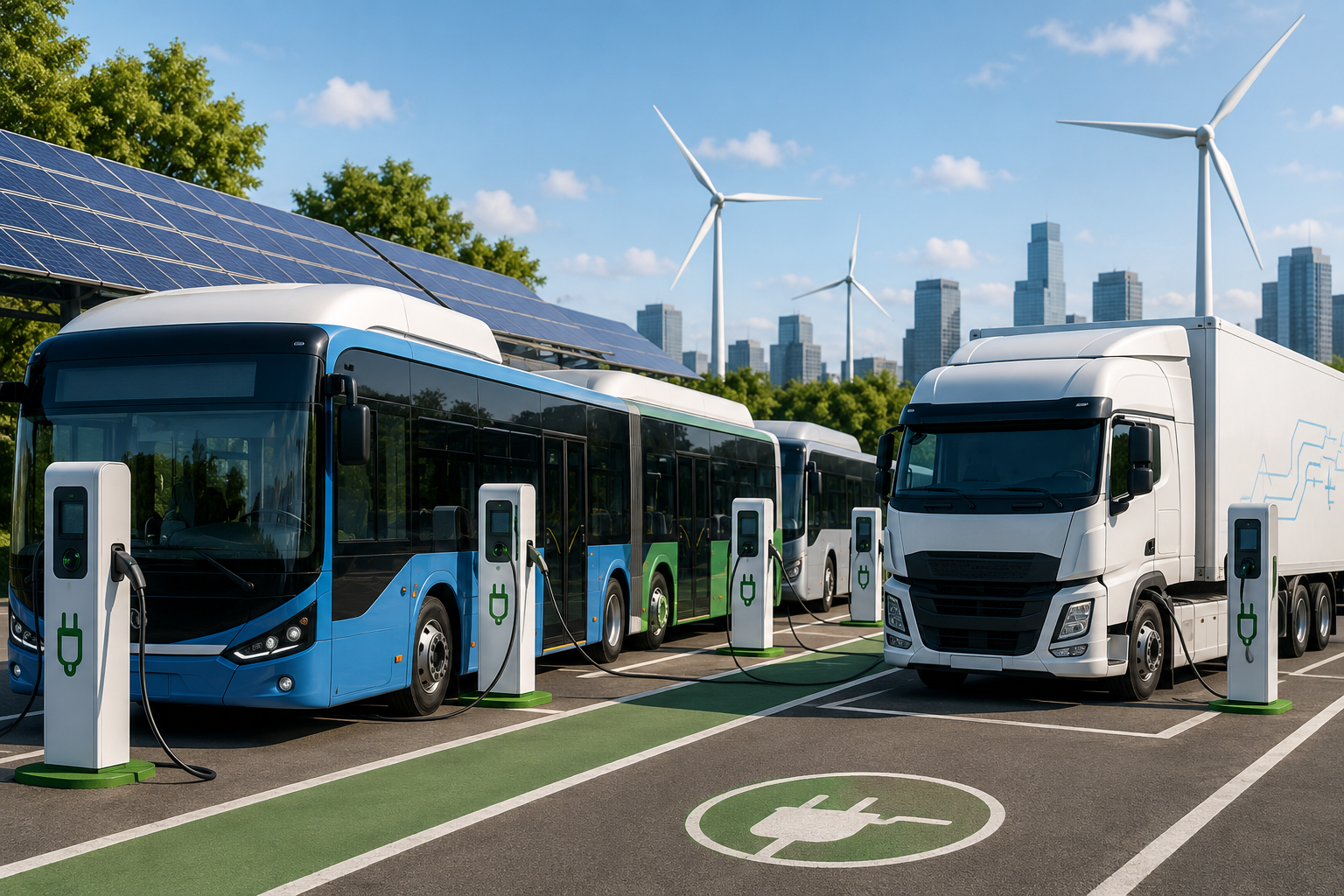
Centre Looks to Accelerate Commercial Vehicle Electrification to Reduce Diesel Dependence
India is preparing a major policy push to accelerate the adoption of electric buses and trucks as the government intensifies efforts to reduce dependence on imported fossil fuels amid the ongoing global energy crisis.
According to officials familiar with the discussions, the Centre is considering incentives worth more than $1 billion for private-sector operators to encourage large-scale adoption of electric commercial vehicles over the next decade.
The proposed programme is expected to focus primarily on:
- Inter-city electric buses
- Commercial trucking fleets
- Private transport operators
- Logistics and freight companies
The initiative comes as rising geopolitical tensions in West Asia continue to disrupt global energy markets and increase pressure on crude oil prices, fuel imports and inflation.
Energy Security Becomes Top Priority
India imports nearly 90 per cent of its crude oil requirements, making the country highly vulnerable to:
- Global oil price volatility
- Supply disruptions
- Currency depreciation
- Imported inflation
The recent energy market instability linked to the West Asia crisis has prompted policymakers to accelerate long-term plans aimed at reducing fossil-fuel dependence across major sectors of the economy.
Commercial transport remains one of India’s largest diesel-consuming sectors, and officials believe electrification could significantly improve:
- Energy security
- Fuel import savings
- Long-term economic resilience
- Urban air quality
Industry experts say reducing diesel consumption in freight and passenger transport could become a key pillar of India’s broader clean energy transition strategy.
Proposed Scheme to Focus on Private Commercial Fleets
Unlike passenger electric vehicles, India’s commercial transport sector is dominated by private operators.
According to estimates discussed during policy consultations:
- India has more than 2 million buses
- Nearly all heavy trucks are privately operated
- Government-controlled fleets account for only a small portion of total commercial vehicles
Officials believe private fleet operators will therefore play a critical role in scaling electric mobility adoption nationwide.
The proposed scheme may include:
- Interest subvention benefits
- Lifetime financial incentives
- Lower-cost financing
- Partial credit guarantees
- Support for charging infrastructure
Sources indicated that incentives worth up to:
- ₹15 lakh per vehicle
could be offered over the operational life of electric commercial vehicles.
Financing and High Costs Remain Major Challenges
One of the biggest obstacles to electric bus and truck adoption continues to be the high upfront cost of vehicles and batteries.
Smaller fleet operators often struggle with:
- Limited financing access
- High borrowing costs
- Long payback periods
- Charging infrastructure gaps
To address these concerns, the government is reportedly exploring:
- Credit guarantee mechanisms
- Easier lending support
- Lower financing costs through banks and NBFCs
- Public-private charging infrastructure partnerships
Consultations are currently underway with:
- Vehicle manufacturers
- Fleet operators
- Financial institutions
- Infrastructure developers
- Industry bodies
Officials are expected to hold further discussions with the Prime Minister’s Office and stakeholders in the coming weeks before finalising the framework.
Initial Rollout Could Support 10,000 Electric Buses
According to officials familiar with early discussions, the first phase of the programme may support:
- Around 10,000 electric buses initially
Over time, the scheme could potentially expand to:
- 40,000–50,000 electric commercial vehicles
Industry participants are also seeking additional policy support measures, including:
- Toll waivers
- Road tax exemptions
- Lower electricity tariffs
- Dedicated charging corridors
- Fast-charging parks for highways
Experts say large-scale charging infrastructure will be essential for the success of inter-city and freight electrification.
India Still Behind Global Commercial EV Adoption
While India has made progress in electric two-wheelers and passenger EVs, commercial fleet electrification remains relatively limited compared to global markets.
Countries such as:
- China
- United States
- European nations
have rapidly expanded electric bus and truck adoption over the past decade.
China alone operates hundreds of thousands of electric buses and commercial trucks across major urban and logistics networks.
In India, electric bus adoption has largely been driven by:
- State transport undertakings
- Urban public transport schemes
- Government procurement programmes
However, diesel vehicles still dominate the country’s logistics and commercial transport ecosystem.
EV Push Could Also Help Reduce Urban Pollution
Apart from energy security, the proposed programme is also expected to support India’s fight against urban air pollution.
Vehicular emissions contribute significantly to:
- Fine particulate matter pollution
- Urban smog
- Respiratory illnesses
- Carbon emissions
Studies indicate that commercial diesel vehicles are among the largest contributors to pollution levels in several major Indian cities.
Experts believe electric buses and trucks could substantially reduce:
- Tailpipe emissions
- Noise pollution
- Fossil-fuel consumption
- Urban pollution intensity
Cities such as:
- Delhi
- Mumbai
- Bengaluru
- Kolkata
could particularly benefit from cleaner commercial transport systems.
Major Opportunity for India’s EV Ecosystem
A large-scale commercial EV programme could also create significant opportunities across India’s broader electric mobility ecosystem.
Potential beneficiaries include:
- Battery manufacturers
- Charging infrastructure firms
- Renewable energy companies
- Auto component suppliers
- Fleet technology providers
The initiative could further support:
- Domestic manufacturing growth
- Employment generation
- Green industrial investments
- Renewable energy integration
Industry analysts believe commercial transport electrification may emerge as one of the largest growth segments in India’s EV market over the next decade.
Govt Likely to Balance Fiscal Costs With Long-Term Benefits
While the proposed incentive package could require substantial public spending, policymakers believe the long-term economic benefits may outweigh the fiscal burden.
Reduced diesel imports could potentially help:
- Lower India’s trade deficit
- Reduce vulnerability to oil shocks
- Stabilise inflation
- Improve energy independence
However, experts caution that successful implementation will depend on:
- Affordable financing
- Reliable charging infrastructure
- Battery cost reductions
- Stable policy support
- Private-sector participation
As global energy markets remain volatile, India’s commercial transport electrification strategy is increasingly being viewed not just as an environmental initiative, but as a long-term economic and energy-security imperative.