Government Moves to Secure Crude Imports as West Asia Conflict Disrupts Global Shipping Routes
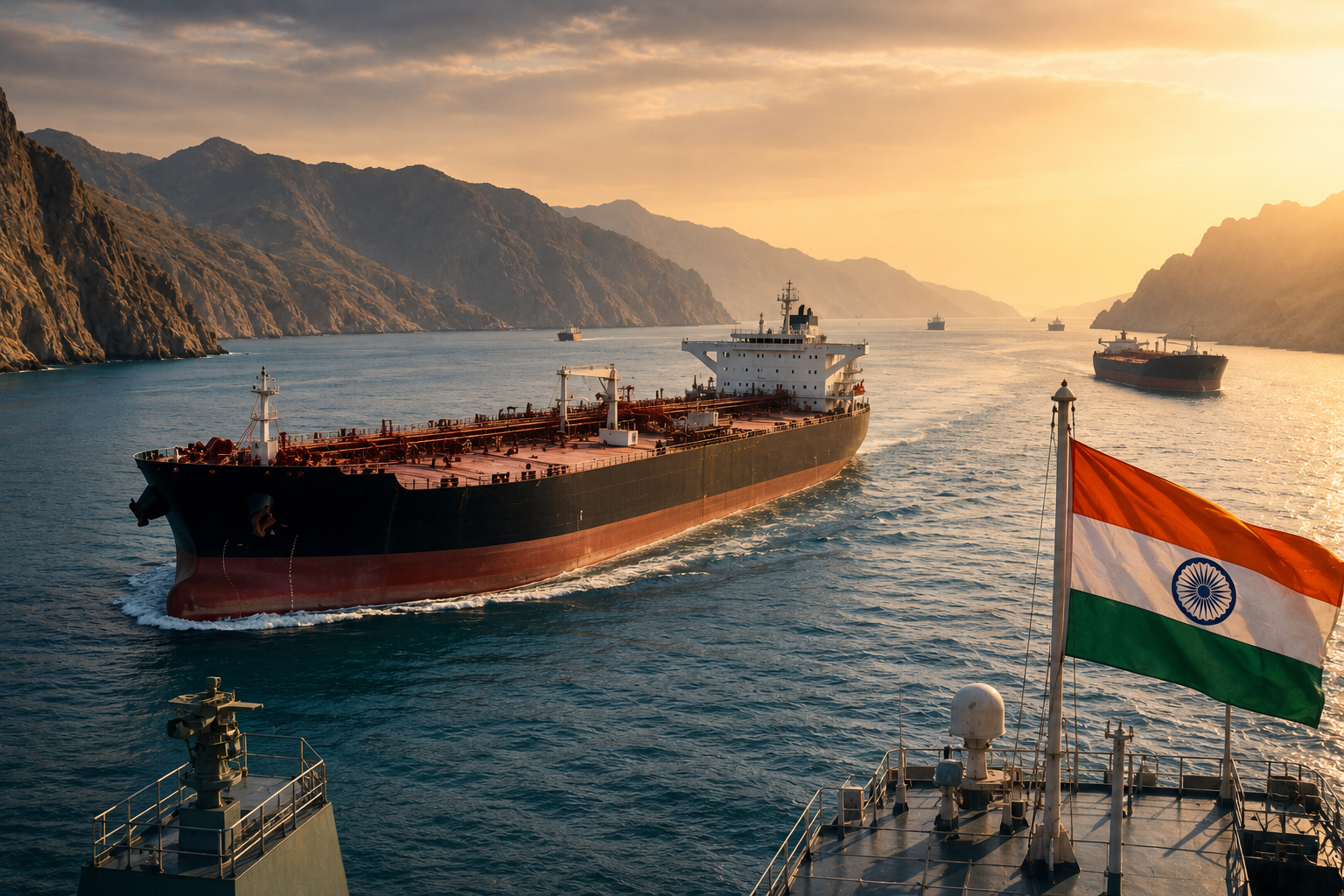
India is preparing to resume the movement of oil tankers through the strategically critical Strait of Hormuz in an effort to safeguard energy supplies and reduce the risk of prolonged disruptions caused by the ongoing West Asia conflict.
According to sources familiar with the matter, the government is finalising plans to allow Indian vessels to re-enter the region and load crude oil cargoes from traditional suppliers in the Persian Gulf. The move would mark the first major attempt by India to restore direct energy shipments through the volatile waterway since tensions escalated earlier this year.
The development highlights India’s growing concern over energy security as crude prices remain volatile and global shipping routes face increasing geopolitical risks.
Strait of Hormuz Remains Critical for Global Oil Trade
The Strait of Hormuz is considered one of the world’s most important energy chokepoints, handling nearly one-fifth of global oil shipments.
The narrow maritime route connects major oil-producing countries in West Asia to global markets, making it vital for large energy-importing nations like India, China, Japan and several European economies.
However, shipping activity through the route has been severely disrupted since the Iran conflict intensified at the end of February. Military tensions, naval blockades and heightened security risks have significantly reduced tanker movements, creating uncertainty in global oil markets.
The disruption has already contributed to:
-
Rising crude oil prices
-
Higher freight and insurance costs
-
Supply-chain instability
-
Increased pressure on importing economies
India Wants to Maintain Traditional Energy Supplies
Despite increasing crude purchases from Russia and other suppliers in recent years, India continues to rely heavily on oil imports from West Asia.
Officials believe sourcing energy from alternate regions would:
-
Increase transportation time
-
Raise import costs
-
Disrupt refinery operations
-
Add pressure on inflation and trade balances
For this reason, India is seeking to maintain uninterrupted imports from key Gulf producers while balancing geopolitical risks.
Sources said the government considers energy security a top priority amid continuing global uncertainty.
Shipping Corporation and Indian Navy on Standby
State-owned Shipping Corporation of India is reportedly ready to resume operations in the Persian Gulf once it receives final approvals from the government and the Indian Navy.
Officials familiar with the matter indicated that Indian warships have already increased their presence in the region to support maritime security operations.
India has:
-
Doubled naval deployments in nearby waters
-
Increased aerial surveillance
-
Escorted Indian-flagged vessels
-
Enhanced monitoring around strategic shipping lanes
The Indian Navy is also believed to be coordinating closely with shipping operators to ensure safe passage for cargo vessels moving in and out of the region.
Insurance and Freight Costs Rise Sharply
One of the biggest challenges facing global shipping companies during the crisis has been the sharp rise in marine insurance premiums.
To address the situation, the Indian government recently launched a special marine insurance initiative aimed at providing uninterrupted coverage for Indian ships and cargoes operating in high-risk zones, including the Strait of Hormuz.
Industry experts say war-risk insurance costs have surged significantly since the conflict escalated, increasing the overall cost of crude imports.
Freight rates for oil tankers have also climbed due to:
-
Security concerns
-
Reduced vessel availability
-
Longer shipping routes
-
Increased operational risk
Energy Crisis Adds Pressure on Indian Economy
The ongoing energy disruption is beginning to impact India’s broader economy.
Higher crude oil prices could lead to:
-
Rising fuel costs
-
Increased inflation
-
Pressure on the rupee
-
Higher transportation expenses
-
Fiscal challenges for the government
India, which imports more than 80 per cent of its crude oil requirements, remains highly sensitive to fluctuations in global energy markets.
The weakening rupee and elevated import bills are already raising concerns among policymakers and businesses.
Prime Minister Narendra Modi has reportedly urged citizens to conserve fuel and reduce unnecessary consumption as the country navigates growing external economic pressure.
Global Markets Closely Watching Hormuz Situation
Global energy traders and financial markets are closely monitoring developments around the Strait of Hormuz, as any prolonged disruption could have significant consequences for oil prices and global inflation.
Analysts warn that if shipping flows remain constrained for an extended period:
-
Crude prices may remain elevated
-
Import-dependent economies could face inflation shocks
-
Global supply chains may weaken further
-
Energy markets could remain volatile
For India, ensuring stable crude supplies while managing rising geopolitical risks will remain one of the government’s key economic challenges in the coming months.
As diplomatic discussions continue and security conditions evolve, policymakers and investors alike will closely watch whether India can successfully restore safer energy transit through one of the world’s most sensitive maritime routes.