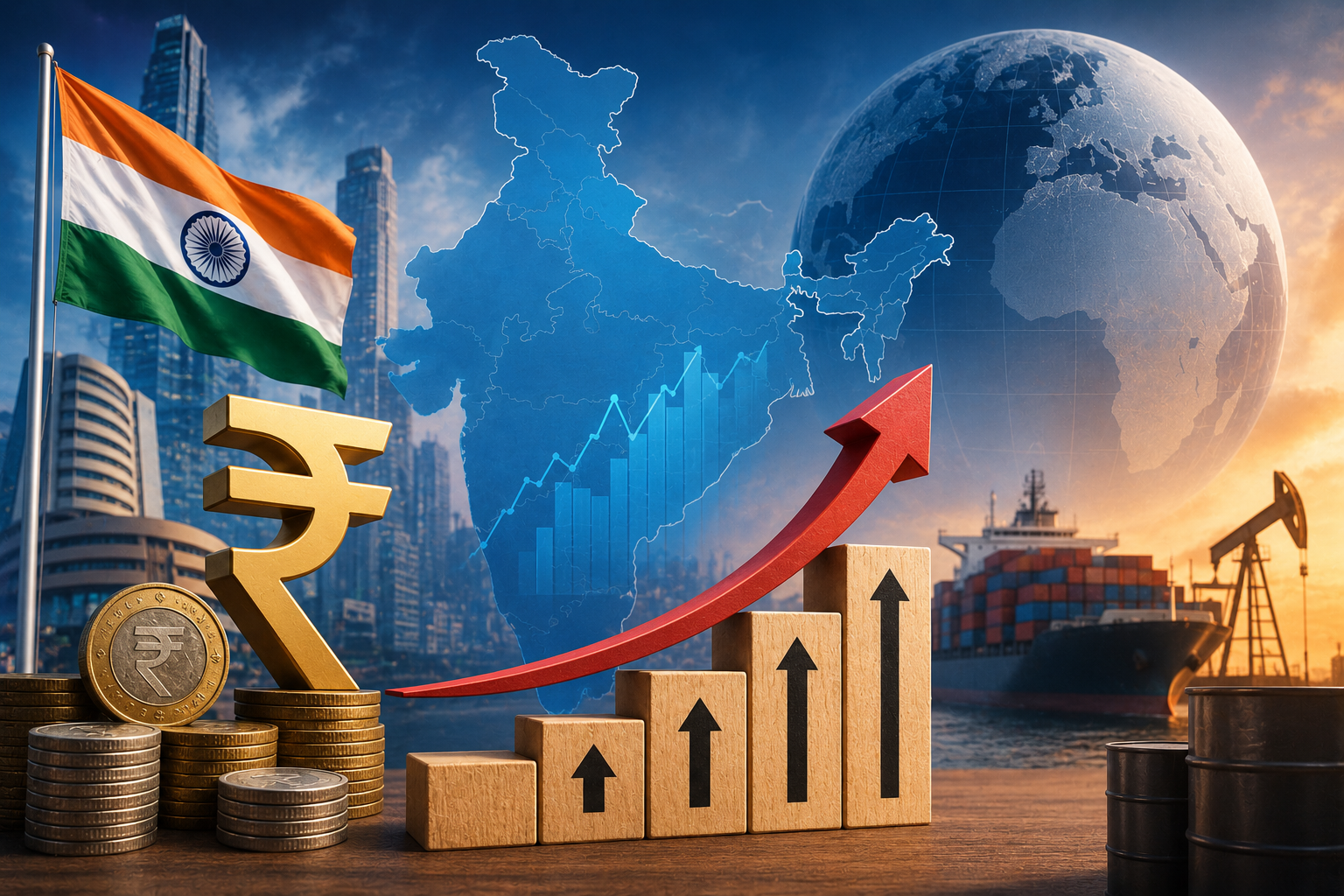
West Asia Conflict, Inflation Pressures and Higher Energy Costs Cloud Global Economic Outlook
The United Nations has lowered India’s GDP growth forecast for 2026 to 6.4 per cent, warning that escalating geopolitical tensions and global economic uncertainty could weigh on growth momentum across emerging economies.
The revised estimate, released in the latest economic outlook report by the United Nations Department of Economic and Social Affairs (UN DESA), is lower than the earlier projection of 6.6 per cent. However, despite the downgrade, India is expected to remain among the world’s fastest-growing major economies.
The report comes at a time when global markets are facing renewed volatility due to the ongoing West Asia crisis, rising crude oil prices, supply-chain disruptions and tightening global financial conditions.
Global Economy Faces Fresh Shock
According to the UN report, the worsening geopolitical situation in West Asia has created another major shock for the global economy by:
- Slowing economic activity
- Increasing inflationary pressure
- Disrupting energy markets
- Raising uncertainty for businesses and investors
The report stated that rising fuel prices and logistics costs are beginning to impact economic growth worldwide, especially in countries heavily dependent on imported energy.
Global GDP growth for 2026 has now been projected at 2.5 per cent, which is lower than earlier expectations and remains below pre-pandemic averages.
Economists warn that persistent geopolitical instability could continue affecting international trade flows, financial markets and investor sentiment in the coming quarters.
India Still Among Fastest-Growing Major Economies
Despite the downward revision, the UN maintained that India’s long-term growth fundamentals remain strong.
UN DESA officials highlighted that India’s economy continues to be supported by:
- Strong domestic consumption
- Government-led infrastructure spending
- Expanding services exports
- Rapid digitalisation
- Stable investment activity
The report noted that while growth is expected to moderate from 7.5 per cent in 2025 to 6.4 per cent in 2026, India still remains in a stronger position than many large economies facing sharper slowdowns.
The UN also projected that India’s growth could improve again to 6.6 per cent in 2027 if global conditions stabilise.
Rising Energy Costs Could Hurt Economy
One of the biggest concerns highlighted in the report is India’s dependence on imported energy.
As crude oil prices rise due to geopolitical tensions, India could face:
- Higher import bills
- Increased inflation
- Pressure on fiscal balances
- Rising transportation and manufacturing costs
Higher fuel prices often lead to increased costs across sectors such as logistics, aviation, chemicals and industrial production, eventually affecting businesses and consumers alike.
Economists also warned that inflationary pressures may complicate monetary policy decisions for the Reserve Bank of India (RBI), especially if global financial conditions remain tight.
Export Sector May Face Pressure
The report also pointed to risks for India’s export-driven sectors if global demand weakens further.
Rising freight costs, expensive industrial fuel and slowing global trade activity may affect:
- Manufacturing exports
- Industrial production
- Shipping and logistics businesses
- Small and medium exporters
UN officials noted that countries dependent on international trade could experience slower export growth if energy and transportation costs continue to rise globally.
However, India’s relatively large domestic market and growing services sector are expected to provide some cushion against external shocks.
Financial Markets Watching Inflation and Interest Rates
Global investors are closely monitoring how central banks respond to rising inflation and geopolitical uncertainty.
Higher global interest rates and tighter liquidity conditions could increase borrowing costs for businesses and emerging markets. Analysts believe this may:
- Slow private investment
- Reduce capital inflows
- Increase currency volatility
- Pressure stock markets
Despite these challenges, India continues to attract global investor interest due to its strong economic growth outlook compared to many advanced economies.
Long-Term Growth Story Remains Intact
While the downgrade reflects near-term risks, analysts believe India’s structural growth story remains largely intact.
Key long-term growth drivers include:
- Expanding middle-class consumption
- Manufacturing growth under government initiatives
- Infrastructure development
- Digital economy expansion
- Financial sector reforms
Experts say India’s ability to manage inflation, maintain fiscal stability and sustain investment momentum will be crucial in determining whether the economy can withstand global shocks over the next two years.
As geopolitical tensions and energy market volatility continue, policymakers and investors will closely watch inflation trends, oil prices and global economic conditions for further signals on India’s growth trajectory.