Weak Monsoon, Rising Food Prices and Extreme Heat Could Challenge India’s Economy
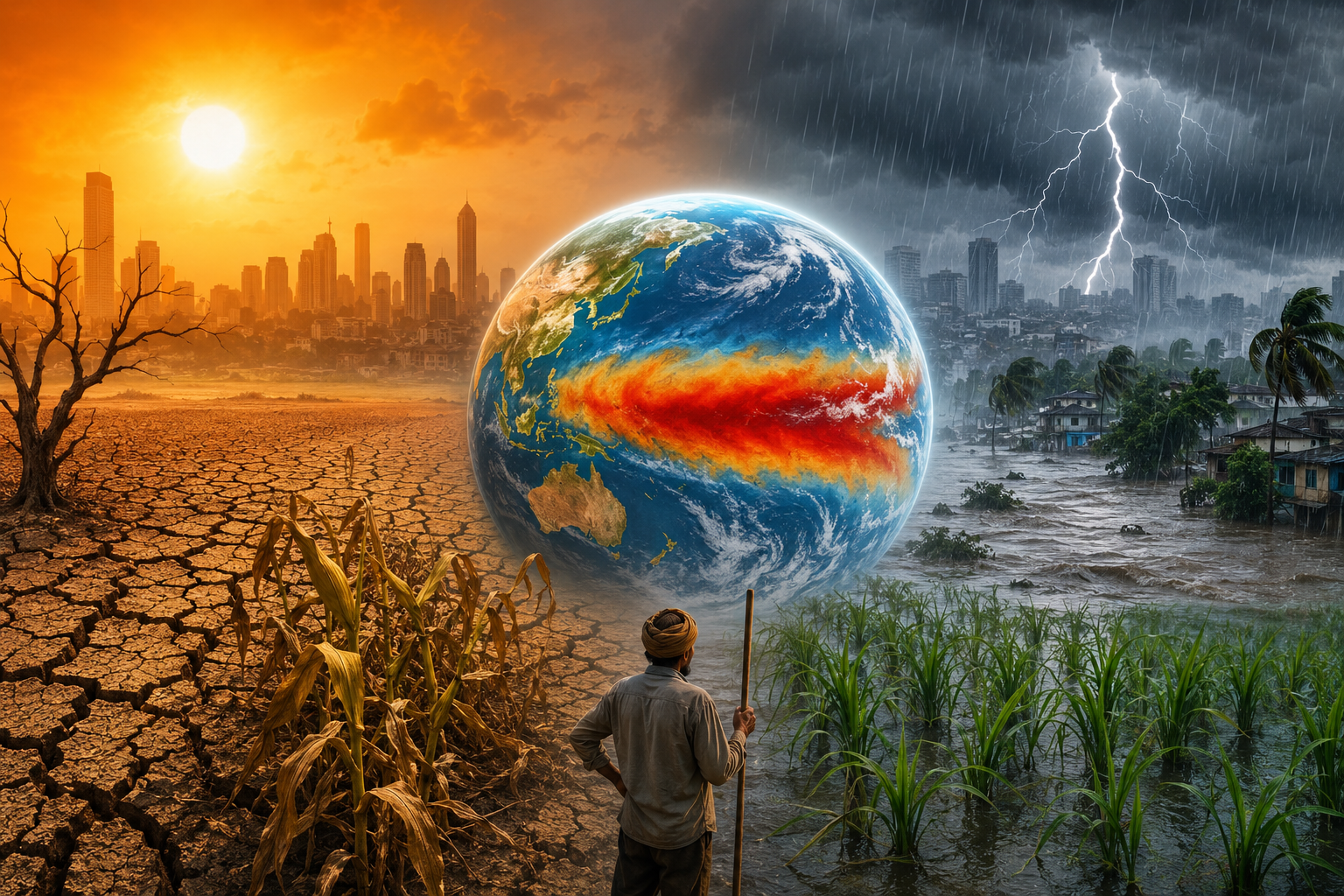
A developing “Super El Niño” is emerging as one of the biggest global climate concerns for 2026, with scientists warning that the weather phenomenon could disrupt rainfall patterns, intensify heatwaves and trigger economic stress across several countries — especially India.
Climate agencies across the world are closely monitoring rapidly warming waters in the Pacific Ocean after early indicators suggested that El Niño conditions are strengthening faster than expected. If the event intensifies into a full-scale Super El Niño, experts fear it could become one of the strongest climate disruptions seen in decades.
For India, the risks are particularly serious because of the country’s heavy dependence on the southwest monsoon, which supports agriculture, water supply, electricity generation and rural livelihoods.
What is El Niño?
El Niño is a naturally occurring climate pattern that develops when sea surface temperatures in the central and eastern Pacific Ocean become unusually warm. The warming weakens normal wind circulation and alters weather systems across the globe.
The phenomenon typically appears every two to seven years and can last for several months to over a year. While it originates in the Pacific Ocean, its impact extends worldwide, influencing rainfall, storms, droughts and temperatures across continents.
The term “El Niño,” meaning “The Little Boy” in Spanish, was first used by Peruvian fishermen who observed warmer ocean waters around Christmas.
Why a “Super El Niño” Is More Dangerous
A Super El Niño is an exceptionally powerful version of the climate event, usually identified when Pacific Ocean temperatures rise more than 2 degrees Celsius above average levels.
Such events are rare but extremely disruptive. Historically, Super El Niño years have been associated with:
-
Severe droughts
-
Massive flooding
-
Crop failures
-
Wildfires
-
Water shortages
-
Record-breaking global temperatures
Major Super El Niño episodes in 1982-83, 1997-98 and 2015-16 caused widespread economic and environmental damage across multiple countries.
Now, climate scientists fear that 2026 could witness another extreme event.
Scientists Warn of Rapid Development in Pacific Waters
According to the US-based National Oceanic and Atmospheric Administration (NOAA), El Niño conditions are developing rapidly in the Pacific Ocean.
Several climate models suggest there is a strong possibility that the phenomenon could strengthen significantly during the second half of 2026. Current observations already show sea surface temperatures in important monitoring zones rising above long-term averages.
Experts are particularly concerned because the transition from the previous La Niña cycle is happening unusually quickly. Such rapid shifts have historically been linked to stronger El Niño events.
Scientists also warn that the combination of El Niño and long-term global warming could push the world into another phase of record heat, increasing the frequency of climate extremes.
Why India Faces Greater Risk
India remains one of the countries most vulnerable to El Niño because nearly 70 per cent of its annual rainfall comes from the southwest monsoon between June and September.
During El Niño years, monsoon winds often weaken, leading to below-normal rainfall across large parts of the country. Northern, central and western India usually experience rainfall deficits, while some coastal regions may witness erratic heavy rain or flooding.
Historical data shows that nearly 60 per cent of El Niño years between 1951 and 2022 recorded weaker-than-normal monsoon rainfall in India.
States considered especially vulnerable include:
-
Gujarat
-
Maharashtra
-
Rajasthan
-
Karnataka
-
Andhra Pradesh
-
Odisha
The India Meteorological Department (IMD) has also cautioned that the developing El Niño could negatively impact the 2026 monsoon season if conditions continue to intensify.
Agriculture Could Face Major Pressure
A weak monsoon poses one of the biggest threats to India’s agriculture sector, which still supports millions of farmers and contributes significantly to rural employment.
Lower rainfall and prolonged dry spells can:
-
Reduce crop yields
-
Damage soil moisture
-
Increase irrigation dependence
-
Raise farming costs
Crops most vulnerable during El Niño years include:
-
Rice
-
Pulses
-
Sugarcane
-
Oilseeds
-
Vegetables
Agricultural disruptions can quickly translate into higher food inflation, affecting household budgets across the country.
Past El Niño events have shown how vulnerable India’s farm economy remains to climate disruptions. During the 2015-16 Super El Niño, monsoon rainfall dropped sharply and several states experienced drought-like conditions.
More recently, the 2023-24 El Niño cycle contributed to erratic rainfall and intense heatwaves. Farmers growing mangoes, cashews and apples reported weather-related crop stress in multiple regions.
Food Inflation and Economic Impact Could Rise
A weaker monsoon not only affects agriculture but also creates broader economic pressure.
Lower crop production often leads to:
-
Rising food prices
-
Higher inflation
-
Increased rural distress
-
Lower consumer spending
Food items such as rice, pulses, edible oils and vegetables are particularly vulnerable to price spikes during poor monsoon years.
At the same time, extreme heatwaves increase electricity demand for cooling while weak rainfall reduces water availability for hydroelectric power generation. This combination can place additional stress on India’s already stretched power infrastructure.
Water shortages in reservoirs and rivers could also impact industries, urban supply systems and overall economic productivity.
Climate Experts Call for Preparedness
Climate experts believe India must strengthen preparedness measures well before the monsoon season intensifies.
Key areas requiring attention include:
-
Improved water management
-
Crop diversification
-
Heatwave preparedness
-
Better irrigation planning
-
Food supply monitoring
-
Stronger disaster response systems
With global temperatures continuing to rise, scientists warn that future El Niño events could become even more intense and unpredictable.
As monitoring agencies continue tracking Pacific Ocean conditions, policymakers and businesses alike are preparing for the possibility that 2026 may become another challenging year for climate and economic stability.