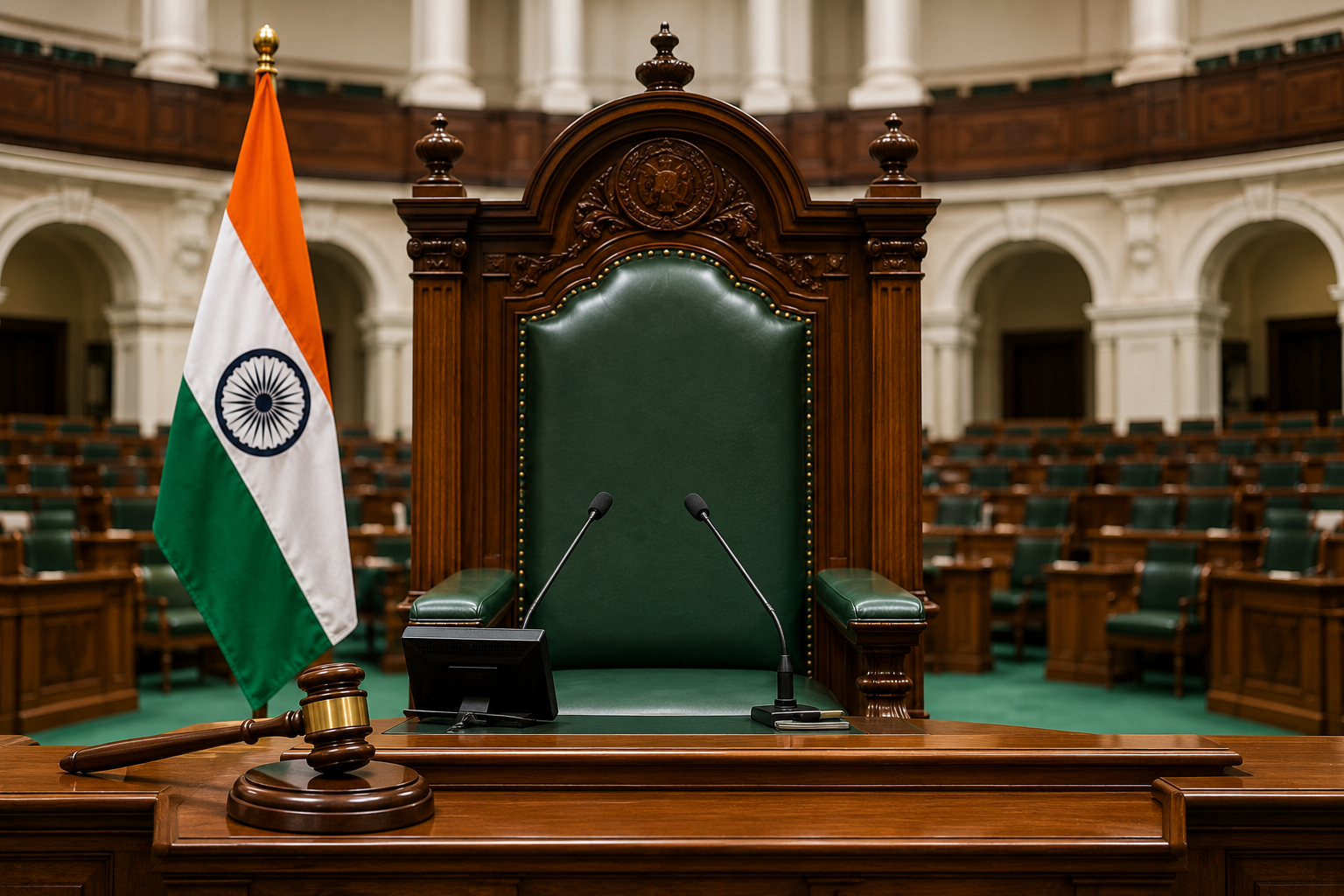
Historic Appointment Marks First Time a North Bengal MLA Assumes Speaker’s Chair in State Assembly
Rathindra Bose was elected unopposed as the Speaker of the 18th West Bengal Legislative Assembly on Friday, marking a significant political milestone in the state’s parliamentary history. Bose became the first legislator from North Bengal to occupy the Speaker’s chair since Independence, highlighting the growing political importance of the region within West Bengal’s changing electoral landscape.
The development comes after the Bharatiya Janata Party secured a commanding majority in the recently concluded assembly elections, reshaping the state’s political dynamics and strengthening the party’s position across multiple regions.
Election Conducted Smoothly in the Assembly
The election process in the assembly remained smooth and uncontested after the ruling BJP formally proposed Rathindra Bose’s name for the Speaker’s post.
The motion supporting his candidature was introduced in the House by Suvendu Adhikari, following which pro tem Speaker Tapas Roy conducted the proceedings through a voice vote.
With no opposing candidate in the contest, Bose was declared elected unopposed after receiving support from all BJP legislators present in the House.
The opposition All India Trinamool Congress (TMC) chose not to field a nominee for the Speaker’s election, effectively clearing the path for his unanimous selection.
BJP’s Massive Majority Ensures Smooth Election
The BJP’s dominant position in the 294-member assembly made Rathindra Bose’s election largely procedural. The party secured an overwhelming majority in the recent state elections, strengthening its legislative control in West Bengal.
Political observers believe the Speaker’s election reflects the BJP leadership’s attempt to consolidate administrative and political stability in the newly formed assembly while also sending a strategic regional message through the choice of candidate.
The smooth and uncontested election also indicated the BJP’s strong command over the House during the opening phase of the new legislative term.
North Bengal Gains Political Significance
Bose’s appointment is being viewed as a major symbolic and political boost for North Bengal, a region that has witnessed significant political transformation over the last several years.
North Bengal has steadily emerged as one of the BJP’s strongest electoral regions in the state, contributing significantly to the party’s rise in West Bengal politics. Analysts believe selecting a Speaker from the region demonstrates the party’s intention to strengthen regional representation and maintain political momentum in northern districts.
The move may also help the BJP reinforce its outreach among voters in districts such as Cooch Behar, Jalpaiguri, Alipurduar and Darjeeling, where the party has gained substantial support in recent elections.
Constitutional Importance of the Speaker’s Role
The Speaker of the Legislative Assembly plays a crucial constitutional role in ensuring the smooth functioning of the House. The Speaker is responsible for maintaining order during proceedings, interpreting legislative rules and ensuring fair conduct of debates and voting processes.
As Speaker, Rathindra Bose will be expected to maintain neutrality while overseeing legislative business, managing discussions on important state issues and ensuring parliamentary discipline within the assembly.
Political experts note that the functioning of the Speaker’s office becomes especially important during periods of strong political competition and legislative debate.
Focus on Stability in Newly Constituted Assembly
The formation of the new assembly comes at a time when West Bengal is expected to witness significant policy debates related to infrastructure development, industrial growth, employment generation and rural welfare.
The BJP government is likely to focus on establishing legislative stability during the early sessions of the assembly while advancing its governance agenda across the state.
Analysts believe the Speaker’s role will be central in managing legislative proceedings smoothly as the government introduces new policy measures and budgetary proposals in the coming months.
Political Signals Ahead of Future Electoral Battles
The appointment of a Speaker from North Bengal is also being interpreted as a broader political message ahead of future electoral contests in the region.
Political strategists believe the BJP is attempting to deepen its organisational roots in North Bengal while balancing regional representation within the state leadership structure.
The move may also strengthen the party’s narrative of inclusive representation across different geographical regions of West Bengal.
Meanwhile, opposition parties are expected to recalibrate their political strategies as the BJP consolidates its legislative and administrative presence following its electoral victory.
Market and Governance Outlook
Although the Speaker’s election is primarily a political development, investors and industry observers are closely watching the functioning of the new government and assembly for signals related to policy continuity, infrastructure spending and industrial reforms.
Political stability in the state legislature is often viewed positively by businesses and investors, particularly in sectors linked to manufacturing, logistics, infrastructure and urban development.
Analysts believe smoother legislative functioning could support faster decision-making and implementation of economic initiatives over the coming years.
West Bengal Enters New Political Phase
With the election of Rathindra Bose as Speaker, West Bengal has formally entered a new legislative phase under the BJP-led administration.
The coming assembly sessions are expected to shape the direction of governance, regional development priorities and political discourse in the state as the new government begins its tenure with a strong legislative majority and renewed political momentum.